






One Detroit pharmacy spent $16 to acquire 60 pills of a generic heartburn medication, similar to what can be found over-the-counter at any CVS.
The pharmacy also spent $25 for generic naproxen sodium, a pain reliever better known by the brand name Aleve.
Then after dispensing those medications to people recovering from car accidents, the East Paris Pharmacy applied major markups when billing the patients' auto insurance.
The pharmacy charged CURE Auto Insurance $6,826 for the heartburn meds with omeprazole that it gave to one Detroit patient, the same 60-pill supply it had acquired wholesale for $16, according to pricing documents that emerged this year in a still-pending lawsuit filed in May 2025 in Wayne County Circuit Court.
It also billed $5,343
for the same patient's naproxen, the pain meds it had gotten for $25.

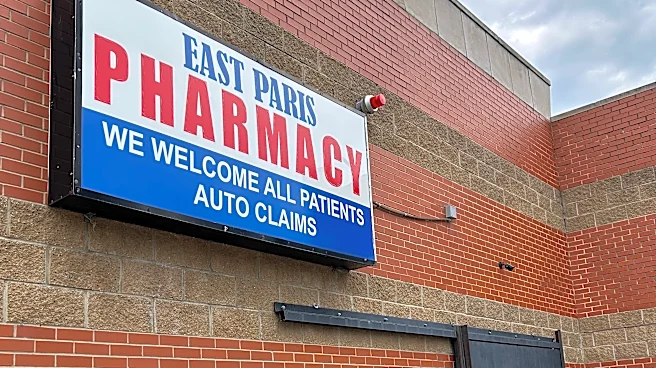
The East Paris Pharmacy, which is situated in a shopping center at 13637 Seven Mile, filed the lawsuit against CURE after the insurer balked at paying those and other drug charges for the Detroit patient and two others whom it insured.
For CURE and other auto insurance companies doing business in Michigan, such markups in drug prices represent a loophole in the 2019 overhaul of the state's no-fault auto insurance system, and are part of the the reason why not all drivers have seen drops in their car insurance rates since the new system went into effect.
At the time of the overhaul, Michigan had the highest auto insurance rates in the country by some measures — especially in urban areas such as Detroit. The overhaul was designed to reduce rates across the state.
The revamped system introduced price controls, or fee caps, on most medical services that are covered by no-fault insurance. The caps succeeded in bringing down prices that no-fault critics once complained about, such as $5,300 per-image MRI bills that would have only cost about $500 if Medicare were paying.
But the new fee caps don't apply to many prescription and over-the-counter drugs that pharmacies dispense to car accident patients.
For such drugs, the no-fault law only limits pharmacies to billing "reasonable charges" for such "reasonably necessary products." And what constitutes reasonable can be up for debate in every court case.
Exploiting a no-fault loophole?
Insurance companies say that some pharmacies are exploiting the loophole and profiteering through big markups. These pharmacies are generally small locally owned businesses, they say, not big chains like CVS or Walgreens.
Insurers contend that they ultimately have little choice but to pass on the cost of these runaway pharmacy bills — and the legal costs of fighting the bills — to drivers in the form of higher insurance premiums.

"This is the racket that occurs," CURE CEO Eric Poe said. "Who ends up paying that bill? It’s the consumer.”
Citing the pricing documents that surfaced in the East Paris Pharmacy case during the legal fact-finding process, known as discovery, CURE says the pharmacy charged it nearly $123,000 in total over several months for the three patients' various medications — yet the pharmacy's acquisition cost for all the meds was only $561.
Most of the meds were generic versions of common prescription drugs or slightly stronger versions of over-the-counter painkillers. Additionally, the bills included several $299 delivery charges for the drugs.
“The unreasonably excessive bills should shock the conscious of this court," CURE's lawyer, Chad Sponder, wrote in court documents.
'Reasonable and customary' charges
For its part, East Paris Pharmacy has argued in the lawsuit that its drug charges were "reasonable and customary" for the area and CURE therefore is required by the no-fault law to pay in full.
The pharmacy's attorney, Joshua Beagle of Vanstone Injury Law in West Bloomfield, did not respond to repeated Free Press inquiries about the pharmacy's charges.
East Paris Pharmacy appeared closed during two recent attempts on weekday afternoons by a reporter to visit. The pharmacy's owner did not return a message left for him at another Detroit pharmacy he is said to own.
$4,716 for a gel
In Lincoln Park, a pharmacy has been accused of charging another auto insurance company over $23,000 for various medications for a 24-year-old car accident patient after having acquired all the drugs for just $295 in total wholesale costs, according to pricing documents in that case's lawsuit, which was filed in January 2024 in 25th District Court in Lincoln Park.

CET Pharmacy, located in a small medical plaza at 25880 Outer Drive, billed Allstate Insurance $4,716 for a 30-day supply of an anti-inflammatory gel, Diclofenac Sodium 3%, that it acquired for $22.
It also billed $1,078 for a muscle relaxant, Metaxalone 800 milligrams, that it bought for $23.45, and $616 for Lidocaine 5% patches it had acquired for $52, according to Allstate's analysis of pricing documents that emerged in discovery. The lawsuit is still ongoing.
Allstate also accused the pharmacy of fraud for using a "non-emergency transportation" billing code when charging $299 delivery fees, saying that code is ordinarily used when transporting patients to medical providers — not when transporting drugs from the pharmacy.
CET Pharmacy brought the lawsuit against Allstate after the insurance company refused to pay the bills. In the court documents, the pharmacy's lawyer defended the business' billing prices and denied any fraud, and also accused the insurer of ignoring the pharmacy's other costs of doing business beyond drug acquisition, such as rent and payroll.
CET Pharmacy "is entitled to charge what it charges, as long as it is reasonable and customary with respect to the no-fault statute," the lawyer wrote. "Defendant (Allstate) is grasping at air in an attempt to dismiss plaintiff's claims based upon their contention that the prices are 'excessive.' "
CET's lawyer, Sandra Kas-Mikha of the Southfield-based Kas-Mikha Legal Group, did not respond to requests for comment about the pharmacy's billings. The case is scheduled for a hearing on Wednesday, Sept. 23.
According to lawyers who defend insurance companies in such lawsuits, in situations when pharmacies lose the cases, they generally do not then attempt to go after patients for portions of the bills insurers didn't pay.
'Average Wholesale Price'
During a brief interview this month in the lobby of the medical plaza, CET Pharmacy's owner Abdul Chudhry said his charges are based on the Average Wholesale Price for drugs. They generally don't charge insurance companies anything beyond that benchmark, he said.
“The Average Wholesale Price, if $10 — we $10," Chudhry said.
One exception is when his pharmacy is billing CURE, he said: "I have to double charge, because they’re not paying us anything."
Chudhry said he is forced to sue insurance companies if four to six months go by and they still haven't paid his bills. In the past, Allstate has typically settled the pharmacy's lawsuits by paying 50% to 70% of the billings, he said.
As for the $299 transportation charges that Allstate claims are fraudulent, Chudhry said that an outside billing company — not his pharmacy — was in charge of that billing code.
Insurance companies including CURE have argued in court that Average Wholesale Price, or AWP, is an outdated and easily manipulated metric that, contrary to its name, doesn't represent the actual average wholesale price for a drug and often results in insurance overpayments.
'Forum shopping'

In an interview this month, Poe, the CURE CEO, said that about 15% of the lawsuits in Michigan that his insurance company is involved in concern pharmacy drugs. It can be tough to prevail in such cases, he said, as some judges will not allow for the fact-finding discovery process to happen.
The discovery process is how CURE learned that the Detroit pharmacy on 7 Mile was, according to court documents, charging $5,343 for a generic pain medication that it had acquired for $25.
Poe said lawyers for pharmacies will sometimes engage in "forum shopping" by filing their payment-seeking lawsuits in specific courts where they believe the judges are inclined to deny discovery. These courts tend to be district courts, where the amount in dispute must be under $25,000. The lawyers will file in courts that aren't even near the pharmacies, he said.
“They’ll file lawsuits specifically in those districts to specific judges who will deny discovery on the reasonableness of the costs — (and) we don’t get the actual acquisition cost," Poe said.
One explanation
Wayne Miller is a longtime attorney for plaintiffs in no-fault insurance lawsuits and an adjunct professor at Wayne State University Law School. He also is president-elect of the Michigan Association of Justice, which represents trial lawyers.
He said there may be some truth to Poe's forum shopping theory, but "the truth does not match his paranoia.”
What is likely happening, Miller said, is that the pharmacies' lawyers are handling lots of lawsuits prompted by insurance companies failing to pay their clients' bills. The lawyers will then go to courts known for speedier resolutions — meaning less time spent on discovery — to deal with the high volume of cases.
“So the attorneys go to district courts where judges do not allow discovery ... so they don’t have to spend a lot of time in handling large numbers of very small cases," he said.
Miller also said that insurance companies have a history of trying to draw attention to very unique instances of behavior within the no-fault insurance system that are unrepresentative of how the system actually works day to day.
“Of course, there are providers for any kind of service that are outliers in the marketplace," he said. "So I’m not going to be able to, with a straight face, say that there isn’t fraud and that there aren't providers that abuse the system.
“That said, those outliers should not be viewed as the true face or character of the industry. Generally speaking, the market is pretty well defined and rigorously enforced and policed by insurance companies.”
Contact JC Reindl: 313-378-5460 or jcreindl@freepress.com. Follow him on X @jcreindl
This article originally appeared on Detroit Free Press: Insurers say pharmacy loophole in auto no-fault causes higher rates