





Northville residents could someday see apartments over backyard garages, small multifamily buildings added in existing neighborhoods and other types of housing on former industrial property.
Those are just a few possibilities city leaders plan to explore as they work to rewrite Northville’s master plan and take a fresh look at how the community should grow and change over the next 15 to 20 years.
Presenting a detailed list of topics for consideration to the city’s planning commission Sept. 15, Community Development Director Justin Quagliata said changing conditions, including development of The Downs, make it time for a complete re-write of the existing master plan.
“We have a huge development in The Downs that’s expected to increase our population
by 15%,” Quagliata said. “We’ve had a lot of redevelopment in downtown or around downtown, and there’s more coming. So it’s time to do a larger look at the whole vision of land use.”
The master planning process is expected to take 12-18 months. The city will look at a long list of topics, including housing density, redevelopment of vacant properties, parking, transportation, future needs of city hall and the police and fire departments, as well as the potential for allowing accessory dwelling units – sometimes called granny flats or mother-in-law suites.
Could Northville allow backyard apartments?
ADUs, a separate living space on the same property as a primary home, are not currently allowed under Northville’s single-family zoning.
These could include an apartment over a detached garage, for example, or a portion of a house designed to function independently from the main home.
Consideration for adding the topic to the master plan discussion, Quagliata said, comes from Northville City Council.
The council's 2025-2026 strategic priorities say the city should consider allowing ADUs in appropriate zoning districts as a way to support residents aging in place, calling it a “big picture concept” and, if implemented, a “major policy change.”
Quagliata said allowing ADUs could be an option not only for aging residents, but also for younger people who can’t afford their own homes or families interested in multigenerational living.
“The idea is that housing today is not as attainable as it was in the past,” Quagliata said. “It’s not uncommon for (young adults) to continue living with their parents or someone in their family, but they want their own space.”
An ADU, he noted, has its own entrance and its own kitchen, bedroom and bathroom.
Commissioners were generally in favor of having the discussion during the master planning process, but noted careful consideration would be warranted to avoid unintended outcomes.
“I like the idea because I think multi-generational housing is really good for most communities,” Commissioner Joseph Engerer said. “(But) how do we approach this issue without opening a can of worms on short-term rentals?”
ADUs draw interest, concern
According to Michigan State University Extension, more communities are addressing the increased demand for housing in traditional neighborhoods by allowing ADUs. Examples include Grand Rapids, Traverse City, Ann Arbor, Westland, Ferndale and Hamburg Township.
Rules vary by community, with local ordinances setting requirements for size, location, parking, occupancy and other conditions.
But not every community has been willing to embrace ADUs.
“Resistance to accessory dwelling units often relates to concern about overcrowding, declining structural conditions, and increasing traffic,” MSU Extension said.
Quagliata said allowing ADUs would not necessarily mean permitting the units everywhere in Northville, noting the city could determine that certain neighborhoods are better suited than others.
In addition to ADUs, commissioners also suggested adding to the discussion the possibility of small multifamily buildings, such as four-, six- or 12-unit buildings, that could potentially provide smaller and more attainable housing while fitting into existing neighborhoods.
Properties could be envisioned for something new

The master plan will also look at properties that could be redeveloped.
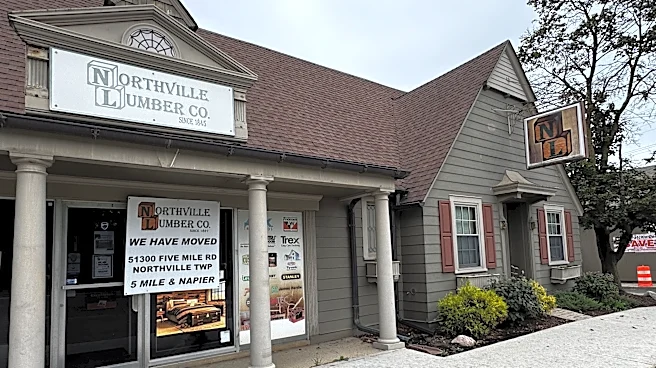
The multi-acre Northville Lumber property on Baseline Road, which closed in 2025 when the business relocated to Northville Township after more than a century in the city, is included for discussion.
Quagliata said the city could consider whether the current industrial zoning remains the best long-term choice for the property, which borders a residential neighborhood.
“Maybe some type of residential use is more appropriate,” he said. “People want to live in Northville. There’s a demand for housing.”
Changing the master plan would not rezone the property, but could make future redevelopment easier if the city ultimately identifies residential or another use as appropriate there.
In 2025, Northville Lumber owner Stewart Oldford Jr. told Hometown Life the property had significant sentimental value to his family and that he planned to be involved in any potential future project.
Foundry Flask on East Cady Street is another property that could eventually see new life. A mixed-use redevelopment was previously approved but did not move forward, Quagliata said. A city contractor is using the space for staging.
Parking, transit and city hall
Long-term downtown parking needs will be another topic for discussion, including whether Northville has the right balance of street parking, public and private lots and whether structured parking could eventually be needed.
During the meeting, commissioners noted dissatisfaction with the results of a recent parking study. Quagliata said a more detailed study will likely be necessary.
Transportation planning could also take on greater importance following passage of the countywide transit millage in August. Commissioners said Northville should prepare for potential future transit service as well as emerging transportation technology, such as robotaxis.
The plan will even consider the long-term future of the city hall, police and fire property.
Quagliata stressed there is no proposal to relocate those operations. Instead, he said, a plan intended to look down the road 15 or 20 years should consider what would happen if the city eventually needed more space and whether expansion could occur at the existing site.
Other issues for discussion include parks and greenways, historic preservation, pedestrian and bicycle connections, traffic calming, commercial corridors and the city’s infrastructure needs as its population changes.
'A common vision' for Northville's future
To facilitate its plan, the city will seek proposals from planning consultants later this year.
Planning Commission Chair Donna Tinberg said selecting the right consultant would be critical, and noted the process could involve “politically sensitive” issues, such as the use of downtown streets.
The city has long been involved in a debate over street closures and is currently appealing a court ruling requiring Main and Center streets to remain open to vehicle traffic.
“We've avoided a lot of that controversy by kind of punting those issues to city council,” Tinberg said. “This might bring some of that heat back here to our table. I don't think that's a bad thing. I just hope we'll be able to find a skilled consultant who can ... help us facilitate those difficult conversations with the community and build a common vision for the future.”
Quagliata said residents will have numerous opportunities to weigh in through public meetings, workshops, online surveys and design charrettes during the master planning process.
Northville’s current master plan was adopted in 2018, with an update in 2022 for areas surrounding The Downs. Michigan law requires communities with master plans to review the plans at least every five years to determine if changes are needed.
The preliminary list of master plan discussion topics, which could change as the process moves forward, can be found on the city's website.
Contact reporter Laura Colvin: lcolvin@hometownlife.com
This article originally appeared on Detroit Free Press: Northville eyes granny flats, redevelopment as future planning begins