




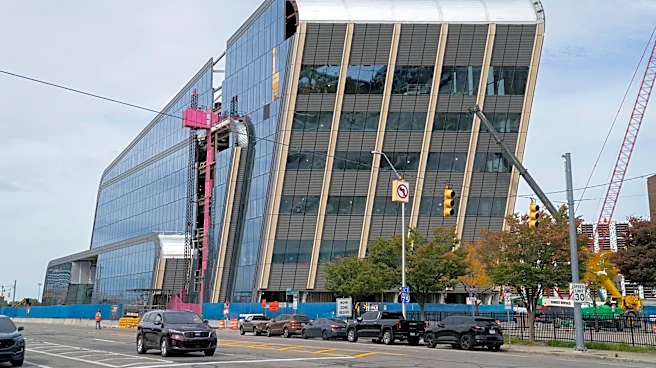
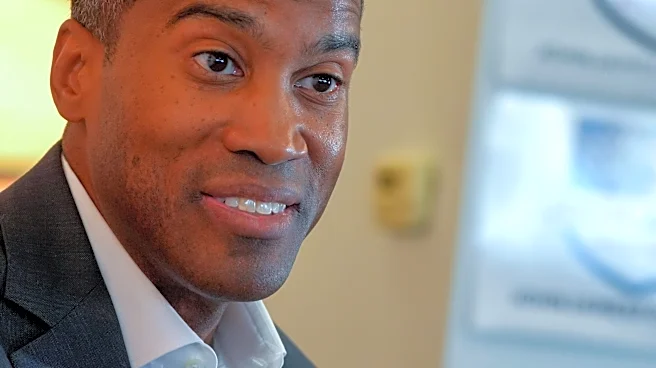
Serving as chair of the Neighborhood Advisory Council for the Renaissance Center/East Riverfront project has been both an honor and a privilege. It has allowed me to merge key parts of my professional experience with my personal passion: Detroit.
Years ago, my work focused on helping rebuild Detroit while creating opportunities for Detroiters. Today, part of my work is helping organizations become culturally competent as they engage with Detroit communities. Both seem like simple concepts. In practice, both are incredibly difficult.
That reality has guided my efforts to help nine extraordinary residents navigate a difficult process shaped by cultural tensions that have existed in Detroit for generations.
SOS, AG, U.S. Senate, House, state Legislature, proposals
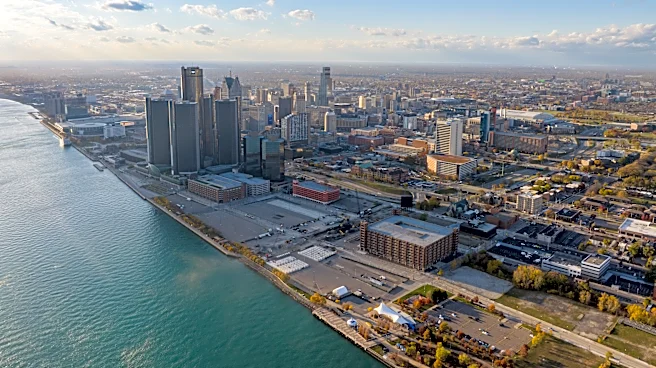
Detroiters are proud people. We reject headlines describing community benefit requests tied to the Renaissance Center redevelopment as "gifts" or "philanthropy." These requests are not about charity. They're about protecting renters from displacement as property values rise. They're about investing in young people who will make up Detroit's future workforce. They are about ensuring that some portion of the $2.2 billion expected to be spent in the heart of the city creates opportunities for Detroit's residents and businesses.
Those are not gifts. They are efforts to ensure Detroiters participate in the economic exchange taking place in their own city.
Detroit needs investment. Detroiters need a voice.
At the same time, I am not willing to dismiss the significance of Dan Gilbert's investment. My experience prevents me from ignoring the commitment required to invest $1.6 billion in a transformative project along our riverfront. Without intervention, the Renaissance Center could easily become a symbol of decline, much as Michigan Central Station did for decades.

There are not many investors willing to commit that level of capital to Detroit. Whatever one's views about billionaires, it is fair to recognize the scale of the commitment, and the opportunity it creates.
Too often, our public conversation is framed as though residents and developers must exist in opposition. The reality is more complicated. Detroit needs investment. Detroiters also deserve a voice in how investment impacts their neighborhoods and futures.
Coleman A. Young said it best
This tension is not new.
In 1976, Mayor Coleman A. Young created the Downtown Development Authority to spur development without placing the burden on Detroit taxpayers. Faced with declining property tax revenues, Young sought to grow the city's income tax base by encouraging major developments downtown. More buildings meant more jobs. More jobs meant more income tax revenue for city services. Developers got their buildings. Detroiters benefited from the added revenue.
To accomplish that goal, the city created a mechanism to capture growth and reinvest it. One of the first projects built on that vision was ‒ the Renaissance Center.
Nearly 50 years later, the same development tools that helped build the Renaissance Center are being used to reimagine it.
Ironically, many Detroiters who celebrate Young's legacy now criticize one of his most innovative initiatives. Yet this debate mirrors arguments that occurred when those policies were first introduced.
In the late 1970s, Young was confronted by a reporter from the Revolutionary Worker newspaper who accused him of being a tool of the corporate elite because of his support for these development incentives.
His response became legendary.
"Well, I can't revolution my a-- out of here."
The remark reflected a truth that still resonates today: Governing requires balancing ideals with practical realities.
Detroiters are a proud people
Detroit's challenge has never been choosing between investment and community. It has been figuring out how to achieve both.
That is the difficult work facing the city today. Residents are right to insist that redevelopment create opportunities for Detroiters. They are right to seek protections against displacement and pathways to economic participation. Investors are also justified in wanting a process that recognizes the risks and commitments required to undertake projects of this scale.
Success will not come from treating either side as the enemy.
It will come from acknowledging that Detroit's future depends on both meaningful investment and meaningful inclusion.
We are a proud people. We are also a complicated people.
And perhaps nowhere is that complexity more visible than in the debate over what the next chapter of the Renaissance Center should mean for Detroit and for the Detroiters who call it home.
Jamaine Dickens is the principal of Compass Strategies, a public affairs firm in Detroit. He is the former spokesperson for the city of Detroit, and former communications director for the Michigan Legislature. He is currently serving as the Chair of the Neighborhood Advisory Council for the Renaissance Center/East Riverfront project.
This article originally appeared on Detroit Free Press: Community benefits aren't charity in RenCen redevelopment | Opinion