








It's no secret that tariffs have taken a toll on the auto industry, but new data from JD Power Canada revealed exactly how auto tariffs are impacting the number of U.S.-made cars — not limited to the Detroit Three — sold in Canada, as duty-free vehicles made in Mexico and Japan are capturing a larger marketshare there.
For the first half of the year, all vehicles built in the United States — by the Detroit Three and other automakers with factories in the states — accounted for 28.4% of Canadian new-vehicle sales, down from 35.4% compared with the year-ago period, Robert Karwel, director of Original Equipment Manufacturers Solutions at JD Power Canada told the Detroit Free Press. That's mainly due to fewer U.S.-made cars being imported and available
for sale in Canada.
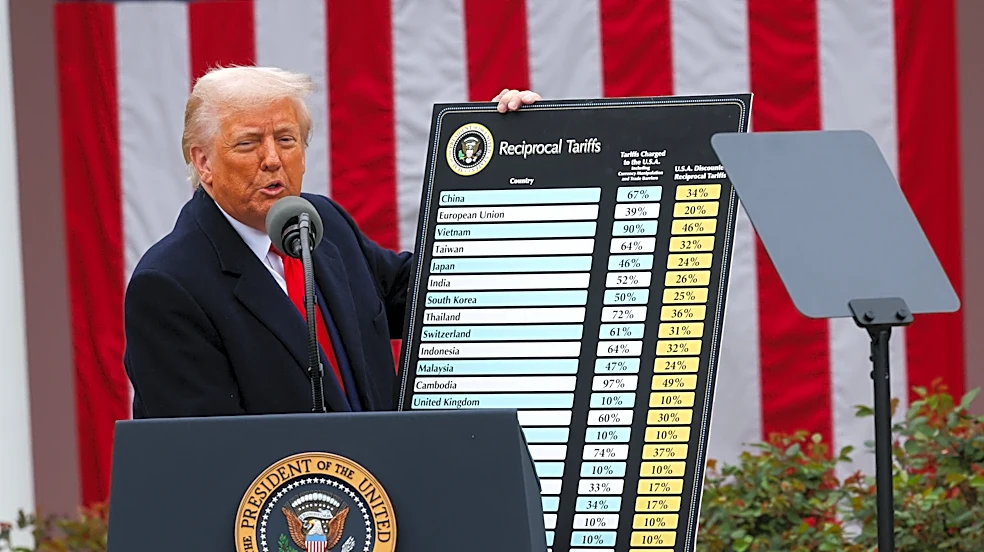
The likely culprit is autos tariffs. President Donald Trump enacted 25% tariffs on all imported vehicles and auto parts in April 2025, included in that was a tariff on vehicles made in Canada. Canada responded by matching the tariffs on U.S.-made vehicles coming into its country. A tariff is a tax paid by an importer when a good crosses a border.

The Detroit Three have largely avoided Canada's reciprocal tariffs because they meet requirements in the United States Mexico Canada Agreement (USMCA) that remains in place even as the auto industry looks to renegotiate it.
"The data does not tell us what is behind the shift (in Canada's new vehicle marketshare)," Karwel said. “It’s telling us the auto industry is making a multitude of decisions, and right now, based off the current factors of the industry and where vehicles are coming from that are imported into Canada, it has changed more this year compared with previous years.”
CarGurus’ Director of Economic and Market Intelligence Kevin Roberts told the Detroit Free Press that his preliminary analysis of cars tagged with a U.S. vehicle identification number (VIN) found that sales of U.S.-assembled cars are down 24% since March 2025, when the Liberation Day tariffs were announced, through the end of September. Roberts said, "Listing inventory also looks to have declined."
The problem that carmakers face is that tariffs raise their costs, but, they can't easily pass that increase on to consumers, said Philipp Kampshoff, senior partner and global leader of global consulting firm McKinsey & Co.'s Automotive Practice. That's because a recent global survey by McKinsey found that most car buyers have budgeted $46,000 for a new vehicle, yet the average transaction price for a new vehicle in the United States in September was $50,562, according to Kelley Blue Book.
“So that’s the backdrop that’s happening amid tariffs," Kampshoff said. "So if you’re an (automaker), that’s a tough place because you have the tariffs that increase the cost of the vehicle, but you can’t really pass that off to the consumer because they are focused on affordability. And, different (automakers) are impacted differently by tariffs depending on where you are.”
That's why if a carmaker can switch production to a factory located in a duty free area, then "that's what you do," Kampshoff said. But if a carmaker cannot shift production, then they must reduce exports of that model car because raising their prices makes them uncompetitive against those who've been able to mitigate tariffs.
Mexico-made could soon dominate Canada car sales
Canada charges 0% tariffs on vehicles built in Japan, Mexico, South Korea or Europe.
Karwel's data showed that vehicles built in Mexico captured 22.2% of the Canadian market in the first half of 2026, up from 18.3% a year earlier and up from just 13.7% five years ago. He said given the low-cost of labor in Mexico and free trade with Canada, it is possible Mexico-made cars will grow in marketshare in Canada going forward if U.S. tariffs remain in place.
Likewise, vehicles built in Japan and imported into Canada have increased since tariffs were implemented, he said. Those cars comprised 16.6% of Canadian auto sales in the first half compared with 13.7% in the year-ago period, Karwel said.
Imports from cars made in South Korea made up 15.6% of the market in the first half, up 1%, while imports from Europe were flat compared with the first half of 2025.
Andrew King, managing partner at Toronto-based DesRosiers Automotive Consultants Inc., told the Detroit Free Press that his firm has seen "substantial changes" in sourcing as the Canadian car companies change sourcing to avoid tariffs on U.S.-built products.

"For example, Tesla Canada is now sourcing the Model 3 from China and the Model Y from Germany instead of from the U.S.," King said. "Subaru Canada has changed the sourcing of the Outback from the U.S. to Japan. There have been a wide range of such moves from the companies that are not part of the duty remission program — essentially the five companies that build in Canada."
Canada’s countertariffs cost the U.S. auto industry $5.6 billion in auto exports to Canada between April 2025 and March 2026, according to July article in Automotive News, which cited the White House as its source. That $5.6 billion is a 22% decline from a year earlier as car companies shifted vehicle imports to Canada from Mexico, Japan, South Korea and Germany.
"The misguided policies of the U.S. administration have resulted in a decline in shipments of vehicles to what is by far their largest single export market," King said.
In fact, in 2024, the most recent data, Canada exported $44.4 billion in finished vehicles to the United States, while importing $35.6 billion, according to the Government of Canada. The auto industry also accounts for more than 125,000 direct and 425,000 indirect jobs in Canada. Canada is the largest international market for the U.S. automotive industry, with more than 40% of the vehicles sold in Canada in 2024 being assembled in the United States, the Canadian government said. It added that 13% of car imports to the United States are made in Canada, with about half of the value coming from U.S. parts.
Detroit Three get a break
According to the Canada Border Services Agency, the Duties Relief Program allows qualified companies to import goods without paying tariffs as long as those goods are eventually exported. The companies can manufacture or use the commercial goods in a limited manner before export.

In the case of automakers, they must follow through on promised local investments and production goals to keep up their Canadian manufacturing footprint to receive the remissions benefits. Ford Motor Co., General Motors, Stellantis, Honda and Toyota are part of the group of eligible carmakers covered by the Canadian U.S. Surtax Remission Order for motor vehicles.
GM makes the light-duty and heavy-duty versions of the Chevrolet Silverado in Oshawa, Ontario, while Stellantis builds the Chrysler Pacifica minivan in Windsor, Ontario. Ford has spent two years retooling its Oakville Assembly plant in Ontario and built a new stamping plant for F-Series Super Duty truck production. Ford spokesman Said Deep said the company started slowly ramping up production of the truck at the plant in the past two months. Ford is targeting the end of the year to begin shipping production units of the Super Duty to Canada's dealers. Toyota assembles the Lexus RX and Honda makes the Honda Civic at plants in Ontario also.
Among those five companies, the sales of "U.S.-made in Canada" vehicles have held steady. Those vehicles comprised 45.2% of the total sales in the first half of 2026, down 3.1 percentage points from the year-ago period, Karwel said.
But Sam Fiorani, vice president of global vehicle forecasting at AutoForecast Solutions, said his data showed that in the first six months of the year, GM's sales in Canada were down 6%, but Stellantis sales were up 6% and Ford sales rose 6% compared with the same period a year ago.
"But there’s no real pattern to demonstrate the effect on U.S.-built vehicles, especially since it has picked up speed in recent months and these three automakers do not report sales more often than quarterly," Fiorani said in an email to the Detroit Free Press. "While the Jeep Wrangler is down, the Gladiator (both built in Ohio) is up. For GM, most of its lineup was down with the Mexican-built Terrain, Korean-made Trax and Trailblazer, and U.S.-made Bolt seeing sales gains."
Still, it was the automakers that do not have a factory in Canada who imported U.S.-made vehicles that faced the full impact of tariffs. Those are the ones, such as what King referred to, who had to face the tough decisions of either paying 25% duties or cut the volume of cars imported from the United States. Karwel said sales of U.S.-made vehicles sold in Canada for that group plummeted to comprising about 5% of the market, compared with 18% a year earlier.
The impact to car buyers
But this could all change come Jan. 1, 2027. That's the date Trump set in an August 24 Truth Social post for raising tariffs on Canadian-made vehicles, auto parts and steel to 50%.
"Build in the U.S. and there are ZERO TARIFFS," Trump wrote in the post. "Canada will be treated like a State no longer! On Trade, and in other ways, also, they are among the worst Nations in the World to deal with. They feel entitled, and yet, WE DON'T NEED CANADA, THEY NEED US!"
But industry experts say it is a two-way relationship and if the threatened 50% tariffs come to fruition, the impact on car buyers and U.S. automakers will be acute because the competitive nature of the auto industry does not leave much room for price increases.
"When tariffs raise the cost of a particular vehicle, downward pressure from rival products and the economic situation of the buyers keeps prices in check, but those costs need to go somewhere," Fiorani said. "Increasing the final price of the vehicle eases competitive pressure and allows all manufacturers to increase their pricing, adding profits to some while reducing demand for others. Substantial changes in costs, after the buyers pay their share of the increase, hits the manufacturer’s bottom line or causes the manufacturer to stop selling the model when it becomes too costly."
Fiorani said Canadian-built models like the Honda Civic and Lexus RX do not meet the 75% threshold for USMCA compliance, which could open them to tariffs from the United States.
Also, the Chrysler Pacifica has about 90% North American content and falls under the rules of the free trade agreement, but does leave 10% of the vehicle open to the Trump administration’s tariff plans. That means the cost of the vehicle could rise by $1,500 to $2,000, he said.
Jamie L. LaReau is the senior autos writer at USA TODAY Co. who covers Ford Motor Co. for the Detroit Free Press. Contact Jamie at jlareau@freepress.com. Follow her on Twitter @jlareauan. To sign up for our autos newsletter. Become a subscriber.
This article originally appeared on Detroit Free Press: Why sales of vehicles made in the U.S. have hit a new low in Canada