




HALE — There were thick slices of bacon ready to fry, fresh local eggs stacked by the dozen, mounds of shredded potatoes piled by the hot griddle and loaves of bread waiting to be toasted.
The only thing missing was the people to eat it all.
It was the weekly Sunday morning breakfast at American Legion Post #422 in Hale, a small town in the northeastern Lower Peninsula, just west of Lake Huron. For as long as anyone can remember, this was the only game in town for Sunday breakfast, and what a deal it was: eggs, sausage or bacon, fried potatoes and buttered toast piled high on a plate for a mere $9. Biscuits and sausage gravy went for only $4. A full order of pancakes cost just $6.
Volunteers stood ready to serve. The public was invited. And as a bonus,
the money would go to a respected charitable organization and the veterans it serves.
The seats at the foldout tables filling the large hall used to be full of locals who were its regulars and tourists who stumbled on this hidden local gem. Sometimes, in good weather, there’d even be a small line outside before the doors opened.
But Post No. 422 has no budget to advertise to those who don’t already know, other than a small, wooden sign they place out front every Sunday to catch the eyes of passersby. And this spring, the long-standing restaurant in town changed owners, expanded its hours and brought its vast breakfast menu to Sunday mornings for the first time.
Suddenly, the tables at the American Legion weren’t so full anymore. Now, they were lucky to break even on these meals — and that was only after several of the volunteers bought themselves breakfasts to eat.
It brought about hard discussions of whether to keep these breakfasts going. And it sparked broader conversations about how to get people in here in general, to keep this post from dying like so many other service clubs in America have done in recent years.
Nine o’clock arrived. The cashier waited alone by the till. The cook sat with his wife. The server in the kitchen made sausage gravy for the biscuits. All of them waited for someone to walk in the door.
“Seems like there’s plenty of volunteers when it comes to it,” said Mark Findley, the 53-year-old cook, who works off the menu but will make pretty much whatever you want, however you want it. “We just need more customers.”
***
They were waiting the night before, too.
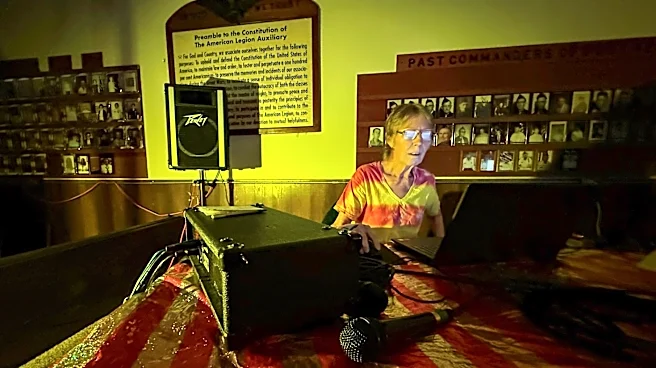
A green spotlight cast a surreal party glow on the darkened room. American flags were strung from the ceiling and draped on the stage where Julie Neville sat, ready to begin Saturday night karaoke. But as the sun sank low, only a few people had so far arrived.
“We drove by, and we were on our way to West Branch, and we saw the sign for karaoke tonight,” said Mike David, 78, who took a seat with his wife, sister-in-law and grandson at a table by the stage, waiting for the music to start. “We don't get it going soon, I probably ain't gonna be here much longer.”
“We’re just waiting for a few more people to show up,” Neville told him.
Neville joined the Legion six years ago. Although she isn’t a vet, she’s always had an affection for those who served.
“When I was living downstate, I did a lot of work for Vietnam veterans,” said the 66-year-old, who serves as the post’s auxiliary treasurer. “I cleaned for them. I did sewing and mending for them. I hemmed their pants. There was four or five different guys from around town that were, like, widowed or bachelors. I knew them since I was a kid. And they just needed stuff done.”

Like all the volunteers here, she was trying her best to help this place. “I wanted to be a part of this and try to do what I could do to help bring things back together, get stuff going again,” she said.
She hosts karaoke despite chronic health conditions. She creates flyers for every event held here and posts them all over social media. This spring, as membership numbers continued to slip and visits by the public dwindled, she hopped on Facebook — the town crier of the modern small town — and posted a plea to the region.
“As a nonprofit organization, we survive on public support,” she wrote. Even though membership is restricted to veterans, their relatives are allowed to join and the public is always welcome at events. “We have lost a majority of our longstanding older members and regular volunteers. Sadly, many of them have passed away. We can’t support our veterans without your participation. Many of us are older and have health issues, but we are doing what we can. If you have a heart for our military, please consider joining us …”
As with many service organizations throughout the country, Post No. 422 is struggling. Clubs like these — the Lions, the Eagles, the Elks, the Moose, the Kiwanis and the Rotary Club, among them — were once the backbone of small-town and suburban life; places where vets and their families could grab a drink after work, perform charity work, network with other professionals, bond with their neighbors or just commiserate with others who’d been through the same things.
For many, these organizations still provide connection in small towns where company can be hard to come by.
But the culture changed. Lifestyles became busier and young families weren’t drawn to what many saw as dimly lit buildings half full of aging vets.
“The younger men that have been through Afghanistan and Desert Storm, they have a different feeling and a different opinion about the services," Neville said. "I knew one that said, ‘I'll never go to one of them places, I don't want to be reminded of being in the military.’ ”
“A lot of the newer guys, the young guys, it's hard to get involved in something else besides what their kids are doing,” said longtime member Chuck Carroll, 82.

With membership growing older and dying off, hundreds of these social organizations have closed throughout the country in the past couple of decades. That has meant no more fundraisers for kids’ sports. No more college scholarships. No more holiday gatherings for lonely vets.
“Well, new members are always hard to get because most of us here are older guys,” said Stu Smith, 80, the post’s finance secretary, enjoying a Saturday night beverage with fellow members. “I mean, young ones, they want to rock and roll, you know, just like when we were young.”
Post No. 422 has so far held up better than most service clubs, with more young members joining lately and more volunteers offering their time. A new group of officers was just sworn in, a couple of them relatively young. And they’ve been trying a slew of ideas to bring people through the door.
They started NASCAR Sundays for people who don’t have cable or satellite at home, but want to see a race. Soon they’ll have NFL games on Sundays in the fall for those who can’t afford all the streaming services needed these days to watch. They have Bunco and darts on Monday nights. They just started something called "Motor Nights" on Tuesdays, when people can bring any vehicle with wheels to the parking lot for a tailgate with smoked ribs and chicken, a DJ, horseshoes, cornhole and a bonfire. Fridays brings euchre. Saturdays has the only karaoke in town.
Plus, there’s still the annual Thanksgiving dinner for those who needed it, breakfast with Santa, trunk or treat at Halloween, Easter egg hunts, monthly blood drives and funeral dinners for veterans and their families.
And they still have the Sunday morning breakfast.
The hall sits away from downtown’s main intersection, next to an old party store, on a quiet stretch of two-lane Main Street. For years, the only advertising for the breakfast was its sign out front, which often drew travelers who saw it in passing.
Hale is an unincorporated town in Iosco County. It has a ZIP code but no official boundaries, being a part of Plainfield Township. It has a lone grocery store, a hardware store, a souvenir shop with a bear kept out back, an antique store with a bakery inside, an Eagles post with a popular Friday night fish fry and lots of land to hunt and fish. The town’s lone bar burned to the ground in the spring.
That leaves Post No. 422 as the only watering hole. And while state liquor license rules stipulate that only members can buy drinks from the bar, anyone who visits quickly finds a new friend willing to sign them in and grab a cold one for them.

That’s how David got the shot and beer that sat on his table as he stood and took the microphone. Despite a slow start to the night, people began coming in, ordering drinks and putting their names on the list to sing. Neville clicked the laptop, music belted out of the speakers and David sang a song by his favorite musician in a deep, resonant voice.
It was a warm summer evening in northern Michigan, and few things that night were more small-town America than a man singing Elvis Presley beneath Stars-and-Stripes streamers in an American Legion Hall on a Saturday night. The crowd had grown to a good size, and they applauded the traveling singer. Everyone was having a good time, including the DJ and all the other volunteers who, like Neville, work here for free.
“I've met wonderful people here,” she said. “I just enjoy the company, the camaraderie, doing things together, and knowing that, ultimately, we're not just sitting in some bar somewhere. We’re helping people.”
***
But the future of the Sunday morning breakfast remained in doubt. The meal isn’t the biggest thing they do here at the American Legion, nor is it the most important. But it symbolizes an old way of doing things that’s faded away thanks to changing times.
“This year has been really slow,” Carroll said, sitting by the cash box and a stack of blank breakfast orders waiting to be filled out by diners. “We had actually talked about shutting it down this week. But we decided that no, not just yet. But things are on the cusp.”
There are still mornings when dozens of people come in, often on weekends when tourists are passing through. And then there are days like these.
Adjutant Kevin Ellis, who, at 57, is one of the post’s newer, younger members, ate a breakfast of potatoes smothered in sausage gravy. He was among those asking whether this event made sense anymore.
“People are like, ‘Oh, it used to be like this.’ Well, people used to go to drive-in movie theaters, too,” he said. “People used to, but it’s got to pay for itself. I mean, right now it breaks even; we're not losing money. But it’s a different world than it was, especially pre-COVID; it’s a completely different world. People changed their patterns, and nostalgia only goes so far. So, as an officer, I was looking out for, like, does it make sense, or should we do something different?”
The volunteers talked and waited. Some bought themselves breakfasts. They never knew week to week whether tourists would see the sign out front and come in hungry. But they had a few regulars they could still rely on.
“We have one guy that comes in," Carroll said, "he sits down with a cup of coffee first, and he drinks three or four cups of coffee, and then he gets two breakfasts, and oh, there he’s coming in right now.”
Mark Kwaiser walked in quietly, poured himself a cup of coffee, then sat down at a table by himself.
“I always came here because this was the only thing in town,” Kwaiser, 65, said. He recently moved to Hale after spending a career working rock concerts downstate.
“But see, you can come here, drink coffee, listen and talk, you learn things. You take your time. Like, if you go to a restaurant, they're like, ‘Can we take your order?’ I'm like, 'No, I'd like to drink some coffee first,’ you know? And they're like, two minutes later, ‘Can I take your order?’ ”

He poured himself another coffee and sipped it slowly. “But the reason I come here, the main thing, it reminds me of my mom and mom’s breakfast. It gives you something to look forward to.”
An hour after the doors opened, people began trickling in and ordering breakfasts, sitting down in twos and threes at placemats advertising small businesses in town.
Here was the post’s new commander, Michael Adams, a Coast Guard veteran who drew a new group of veterans as officers with his election.
“They deserve this place,” the 61-year-old said. “They deserve to talk about their stories, and they laugh and have a good time. A lot of them, their wives died. So they got no one else except for this place. We're their family. We're all family here. But we got work to do to try and bring people in.”
And here came Smith, the new finance officer, for his breakfast. He was here last night supporting his club and he was back again, doing the same.
“We're gradually getting better,” Smith said, as he waited for his order. “We were in bad shape here when the new administration took over. But we're doing better. I see us going forward right now instead of backwards.”
It takes 12 visitors to break even on these Sunday breakfasts. And on this day, Smith was No. 13. They'd broken even once again.

For those who wanted to keep it going, it offered hope that people could still be drawn to something as old-fashioned as a community breakfast in a small-town hall. Traditions like this are fading everywhere. But here, for now at least, this one was still carrying on.
“We had a meeting Wednesday, and the talk was to stop doing this,” said Gary Steffes, 67. “But we’ve been doing this a long time. I said, ‘Let's just not do away with it.’ So, we're going to do it a little longer, see what we did, how we did, and then maybe change it up. But let’s just not give up on it.”
The American Legion Post No. 422 is located at 429 West Main St., Hale. Breakfast is Sundays, 9 a.m.-noon. Call 989-728-5055.
John Carlisle writes about Michigan. His stories can be found at freep.com/carlisle. Contact him: jcarlisle@freepress.com. Follow him on Twitter @_johncarlisle, Facebook at johncarlisle.freep or on Instagram at johncarlislefreep.
This article originally appeared on Detroit Free Press: Hidden breakfast spot Up North might serve its last meal