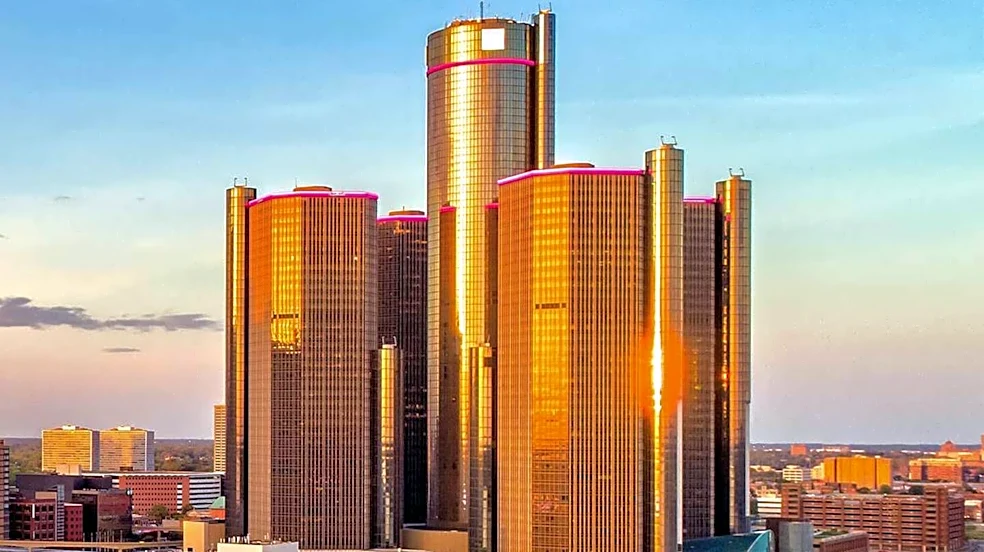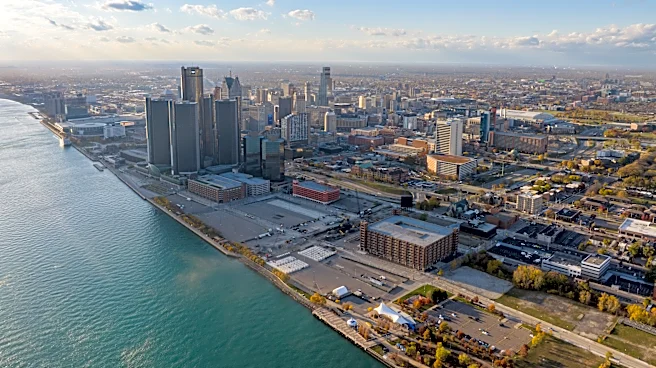


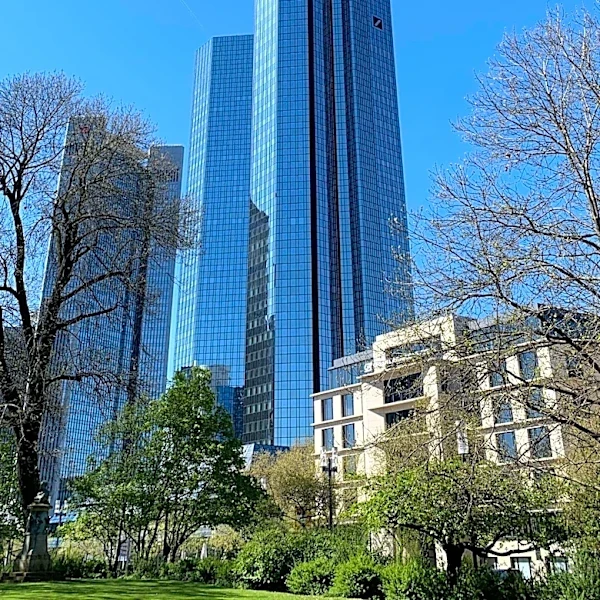






Bedrock and General Motors' $2.2 billion plan for redeveloping Detroit's Renaissance Center and its nearby riverfront has been pitched as transformational for the city.
Fittingly, the plan's financial feasibility hinges on the state's "Transformational Brownfield" incentives program, a program less than a decade old that was created to support building large-scale developments on blighted or obsolete sites
.Bedrock and GM are racing to get the RenCen plan through the program's approval process before the end of the year, citing concerns that Michigan's next governor in January perhaps might change the process, resulting in lengthy and expensive delays for the project.

If ultimately approved, the Renaissance Center's Transformational Brownfield
would be just the fourth Transformational Brownfield in Detroit since the Michigan legislature authorized the program in 2017, following lobbying at the time from Bedrock.
So far, none of those earlier Transformational Brownfield developments are completely finished.
Although the first one, which broke ground back in December 2017, has so far restored a beloved historic building and added a new skyscraper to downtown's skyline, only three of its four segments are completed or nearly completed.
The other two developments, which date to 2023 and 2024, respectively, are behind schedule and likely won't finish before the 2030s.
Below are details on those previously-approved Transformational Brownfields in Detroit.
For background, the Transformational Brownfield program is essentially a supersized version of a traditional brownfield tax capture, with more streams of tax revenues getting captured over a period of up to 30 years. Rather than the tax revenues going into local and state coffers, they get redirected to the projects' developers.
While traditional brownfields capture just local property taxes, Transformational Brownfields generally capture those taxes plus various state-level taxes, such as the state income taxes paid by residents who live in a project's new apartments or who work in a business that is situated within a new project. Even the income taxes paid by construction workers who build the projects can be captured.
(Uniquely, the Transformational Brownfield that Bedrock and GM have requested for the Renaissance Center would NOT siphon any local property taxes, but rather capture up to $300 million in just state-level taxes between 2032 and 2051.)
Bedrock's original
Dan Gilbert's real estate firm, Bedrock, was also the developer of the first Transformational Brownfield development. There were four distinct downtown projects in that deal:
- Expansion to the One Campus Martius office building.
- Restoration of the empty Book Tower as a hotel, apartments and restaurants.
- Construction of the Hudson's Detroit 45-story skyscraper and neighboring 12-story office block building.
- Development of the Cadillac Square area near Campus Martius, originally called the"Monroe Blocks," with office towers and residential high-rises.

The $95 million One Campus Martius project was completed in late 2020 and added about 360,000 square-feet of "Class A" office space to the back of the 16-story building, plus over 27,00 square-feet of event space with room for nearly 1,000 guests.
The 100-year-old Book Tower reopened in 2023 to wide acclaim with new destination restaurants and cocktail bars, a 117-room extended stay ROOST Detroit hotel and 229 upscale apartments.
And last year, the office and retail building of Hudson's Detroit opened, which now contains GM's global headquarters. The trophy skyscraper is now nearly finished and on pace to open next year as a luxury 227-room EDITION Hotel with 96 EDITION-branded condos on the upper floors. Many of the condos are priced to sellfor over $1 million.

But one segment of the development that is still a ways from finishing is the original "Monroe Blocks." Bedrock dramatically redesigned that project following the COVID-19 pandemic and resulting drop in demand for downtown office space.
The project's big office towers were axed and its name was changed to "The Development at Cadillac Square." Under the revised plan, a video dome attraction known as COSM Detroit opened this past September and construction is scheduled to start in the third quarter of 2027 on a neighboring market hall with offer food, a beer garden and a small music venue.
Bedrock is also reconsidering plans to built an all-new 250-unit apartment building on the site and instead is looking to possibly convert the nearby and long-vacant Cadillac Tower, a 1927 office building, into apartments.
The firm also is considering permanently bringing back the once-popular Monroe Street Midway. The midway was an outdoor games and family fun attraction that operated from 2021 until 2023 near where COSM is now.
District Detroit
The city's second Transformational Brownfield is called District Detroit. The development is comprised of 10 distinct projects in and around downtown and is being developed by the Ilitch organization's Olympia Development of Michigan and its New York-based partner, The Related Companies.
Detroit City Council approved the development in March 2023, and under its original timeline, all 10 projects were to be underway by now. So far, however, work has started on just one.

The sole under-construction project is a 313-unit residence building for a future University of Michigan graduate school. Known as Founders Hall, the building is to open in 2028 and house students and faculty of the future U-M Center for Innovation. The innovation center was not part of the District Detroit brownfield.
In a statement for this story, Olympia Development said that predevelopment work is happening on two more projects in District Detroit: redevelopment of the Fort Wayne/American hotel, 408 Temple St. near the Masonic Temple, as an apartment building, and a new hotel planned for next door to Little Caesars Arena.
"While project timelines have shifted with changing market conditions, rising costs, tenant demand and other economic factors, our commitment remains unchanged," the statement said. "Importantly, (Transformational Brownfield) incentives are tied to completed development, ensuring that incentives are earned only as projects are delivered."
Future of Health
The Future of Health is a six-project development for the city's New Center area that city council approved in February 2024.
While Henry Ford Hospital's new expansion and 20-story patient tower was part of the overall development, it wasn't part of its Transformational Brownfield incentive. The brownfield is supporting only the development's three planned mixed-income apartment buildings (totaling 662 units), a planned parking deck and a new Henry Ford Health + Michigan State University research center at 6175 Third St.

So far, construction is underway on just one of the five brownfield-eligible projects: the research center, which is on pace for a summer 2027 opening.
The Detroit Pistons organization, which is developing the three apartment buildings, recently moved back its official construction timeline for those projects by two years.
So a new a six-story and 154-unit building at 725 Amsterdam St., which was to get underway last year, is now slated to start in the second quarter of next year.

And a new six-story, 105-unit building at 675 Amsterdam is to begin construction in the second quarter of 2029, or the same time period that Henry Ford Health's current One Ford Place office headquarters is to be converted into 403 apartments.
Contact JC Reindl: 313-378-5460 or jcreindl@freepress.com. Follow him on X @jcreindl
This article originally appeared on Detroit Free Press: What happened to Detroit's 'Transformational' projects before RenCen