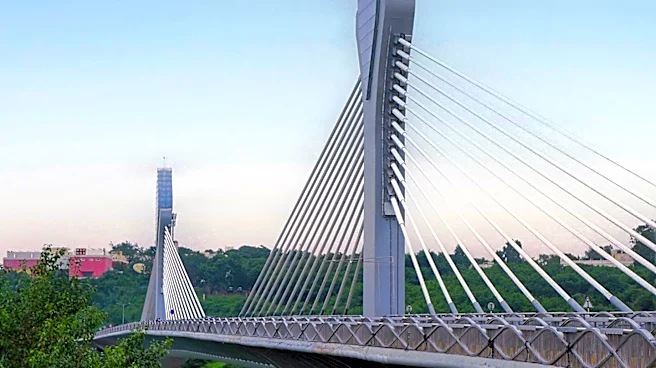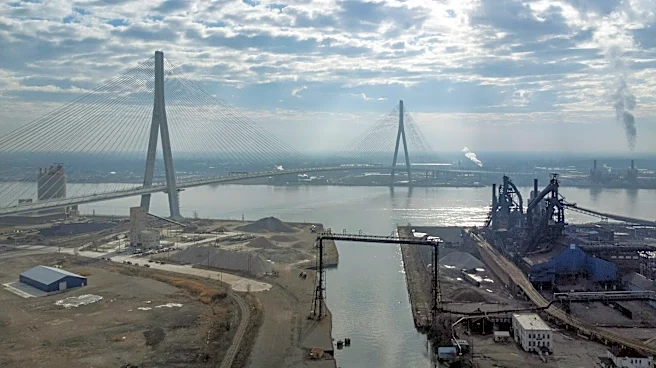





A look through time at how the Gordie Howe International Bridge came to be:
2001-2004: A cross-border study
In 2001, Transport Canada, the U.S. Federal Highway Administration, the Ontario Ministry of Transportation and the Michigan Department of Transportation formed the Canada-United States-Ontario-Michigan Border Transportation Partnership to look at needed infrastructure improvements in the Detroit-Windsor trade corridor. When the study was done in 2004, it included recommendations including that for a new or expanded span.
2005-2008: More studies lead to proposed bridge site
Governments on both sides of the border began working on environmental assessments in 2005, the first step in determining a potential site for the new bridge, known at the time as the Detroit River International Crossing (or DRIC), near Zug Island, and its
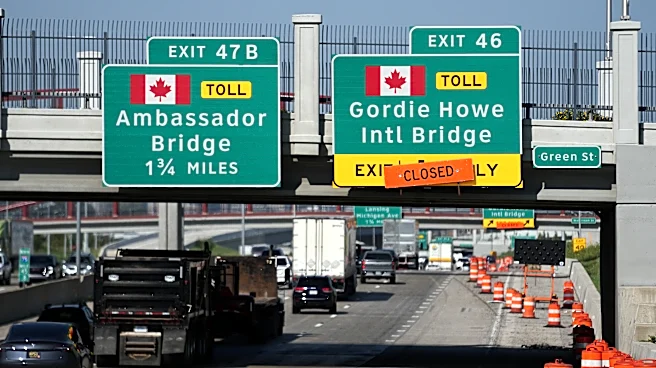
ports of entry in Canada and Michigan. But with Manuel (Matty) Moroun, the private owner of the rival, existing Ambassador Bridge discussing building a second span despite planners largely rejecting such a plan, the joint U.S.-Canadian group looking at a publicly owned bridge, and the threat of political and legal disputes, there was little hope of moving forward. The Free Press' John Gallagher wrote in February 2008, "The depth of disagreement and promise of litigation make it unlikely either bridge will be built."
2009-2010: Infighting and delays
The Moroun family steps up its many-pronged litigation against the new bridge proposal and heavily lobbies members of Congress and, more significantly, the state Legislature, to block any approval and funding. In April 2010, Canada, its leaders having said they are officially committed to a new bridge being built, formally offers to put up $550 million to cover cash-strapped, recession-era Michigan's portion of the project. Republican senators in Lansing put a hold on any funding or approval but almost immediately upon his election in November 2010, Canadian officials start lobbying businessman and new Republican Gov. Rick Snyder for his support − which he gives.
2011-2012: A deal is reached
Snyder revives the new bridge effort, noting that Canada's promised funds could be used to leverage billions more in federal road repair money. But it's far from smooth sailing for what by then is known as the New International Trade Crossing (NITC), as Republicans still balk at approvals and suggestions that taxpayers could be on the hook for construction costs. After months of hearings, a state Senate committee declines to vote on an authority to oversee the NITC in October 2011, handing a defeat to Snyder. But there are indications he may try to go around the Legislature altogether, even as the Morouns mount a statewide referendum to require state voters to approve any new bridge or tunnel to Canada and convince the state Legislature to approve a budget prohibiting the state Transportation Department from spending any money on the project. But on June 15, 2012, Snyder and Canadian Prime Minister Stephen Harper hold events on both sides of the Detroit River and sign a joint-construction agreement saying Canada will cover the funding for the new bridge as well as any necessary interchanges, getting around the legislative prohibition. The bridge referendum, meanwhile, fails 61%-39% in November.
2013-2014: More lawsuits, and a presidential permit
A new lawsuit filed by the Ambassador Bridge owner in federal court in Washington in early 2013 maintains that, as that bridge was created by an act of Congress in 1921, he has an exclusive franchise to operate the span free of competition. But in April 2013, President Barack Obama's White House signs off on a presidential permit, an indispensable approval needed for any international crossing. Moroun ultimately fails in his effort to have the permit quashed; Canada moves ahead even without U.S. federal commitments to buy land for a customs plaza. In April 2014, Matthew Moroun, Matty's son, tells a federal judge if the new bridge isn't stopped, it could put his family's span out of business. In June 2014, the Coast Guard issued the final permit needed for the new bridge. That summer, the Windsor-Detroit Bridge Authority (WDBA), which will oversee the construction, begins operations.
2015-2018: A bridge for Mr. Hockey and beyond
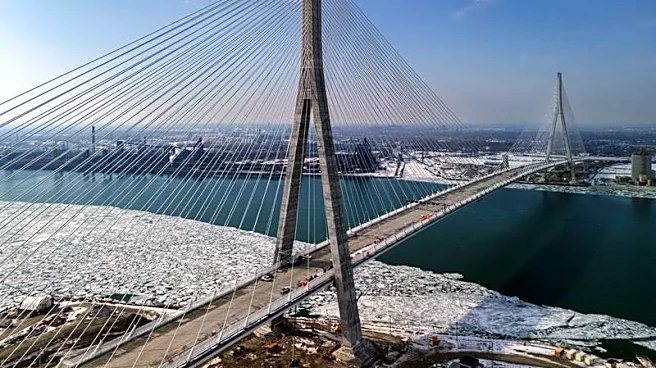
After being bandied about for years, in May 2015, Canadian and Michigan officials announced that, indeed, the new bridge would be named for Canadian-born, legendary Red Wings All-Star Gordie Howe, ending the era of DRIC and NITC at last. By the end of 2015, a federal judge had also rejected most of the Morouns' challenges to the new bridge, even as they lobbied federal officials and continued to make large political donations. Property acquisition and prep work at the sites on both sides of the border get underway and the WDBA in 2016 puts out requests for proposals, selecting in 2018 a consortium of companies calling itself Bridging North America to build a cable-stayed design. At the time, the Windsor Star puts the estimated cost over $4.4 billion (U.S.). Construction officially begins in October 2018 and is expected to be completed in 2024.
2019-Now: Completion
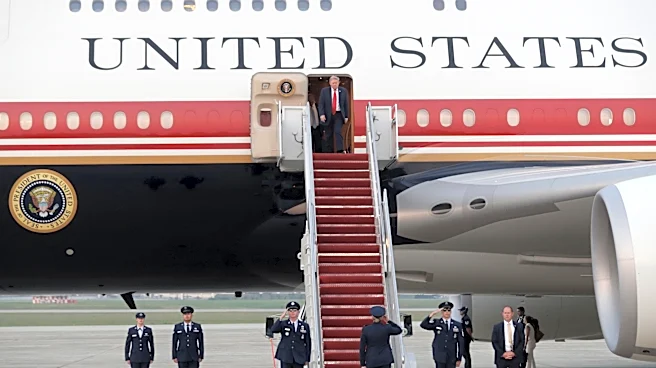
The Moroun family continued to battle against the new bridge, up to and after Matty's death in 2000, soliciting help from Republican President Donald Trump in both of his non-consecutive terms as chief executive and as construction work continued apace. In 2022, work on the towers was largely completed and the road deck began. While the cost didn't fluctuate too much − it's believed to be about $4.7 billion − the timeline for its completion shifted more than a year. That allowed Matthew Moroun time to again lobby Trump, and give his Make America Great Committee $1 million; Trump followed by saying in February 2026 he wouldn't let the bridge open without unspecified trade concessions from Canada. But the president has said little if anything publicly about it since and in recent weeks it became clear that the bridge was ready to open and traffic to begin crossing. The bridge is expected to open to vehicle traffic July 27.
Contact Todd Spangler: tspangler@freepress.com. Follow him on X @tsspangler.
This article originally appeared on Detroit Free Press: A new bridge at last: How the Gordie Howe got done