





Lizzie Post offered a few examples when I asked her recently what she doesn’t like to see when she’s behind the wheel.
She doesn’t like other drivers weaving in and out of traffic just to reach a stop light at the same time she does.
She doesn’t like waiting for a pedestrian to cross the street and a driver behind her is honking his horn, trying to get her to move. Even though that other driver can’t see the pedestrian, you still “have to be strong knowing you’re doing the right thing,” Post said.
Tailgating is another frustration. When someone does it to her while she's driving and she’s uncomfortable, Post said she prefers to pull over so the other driver can pass. She also has a trick that might keep her from getting upset.
“I try to pretend
that all those people are just pregnant people in labor,” she said.

If Post’s name sounds familiar, that's probably not surprising. Her great-great grandmother was Emily Post, a name synonymous with proper manners, and she's helping to keep that legacy going as copresident of the Emily Post Institute in Vermont. I reached out to Lizzie Post, not to talk just about manners but about driving etiquette, a topic we should all spend a little more time considering when we’re behind the wheel.
Driving etiquette, according to Post, isn’t just about being polite, it’s about safety.
“I say safety really is the name of the game for driving etiquette,” she said.
Without driving etiquette and a safety-first focus, you’re potentially putting yourself and others at risk. If you get mad at another driver and try to cut them off or refuse to let someone merge when it’s appropriate, it’s not just inconsiderate, it’s unsafe, as these kinds of actions tend to lead to negative reactions, Post said.
And, she said, safety actually supersedes etiquette.
That includes those moments when you think you’re being polite but not actually following the rules of the road or the best advice of traffic experts.
One example of trying to be nice but not really helping anyone, from Post’s perspective, involves merging.
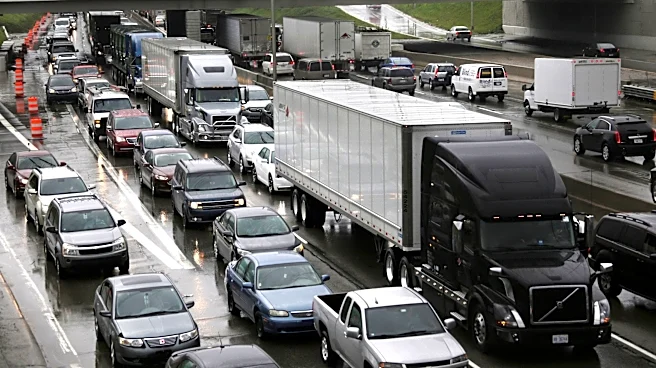
She told me a story about an early episode of a podcast, when the advice she’d incorrectly given, had been to merge early when two lanes on a highway are reduced to one. She quickly learned from the outpouring of responses and articles sent her way that actually it’s best to handle that situation with something called a zipper merge.
Drive to the point where the lanes are reduced and then alternate vehicles merging into a single lane.
The Detroit Free Press’ Mark Phelan tackled the subject in 2018, describing why the zipper merge is best in a construction zone:
“The ‘zipper merge,’ in which vehicles run in parallel until one lane physically narrows, is better for traffic flow than when vehicles form a single line early.”
Driving etiquette isn’t some new concept.
In fact, Lizzie Post described a pamphlet that Emily Post created on the subject in the 1940s.
The Henry Ford, on its website, includes a page referencing that pamphlet, Emily Post’s 1949 “Motor Manners, the Bluebooklet of Traffic Etiquette,” which “provided guidelines for the courteous and safe driver as well as respectful passengers.”
Lizzie Post noted that driving etiquette hasn’t really changed much over the years − think safety first, don’t swear out your window and go easy on the horn.
Speaking of the horn, a couple of quick beeps can get someone’s attention when you’re behind a driver at a light that’s turned green and he or she isn't moving, Post said. It alerts the person without using the emotional attachment of anger.
“When you are laying on the horn, you are conveying that you are really ticked off at the person in front of you,” she said, noting that it can instill road rage and antagonistic behavior.
That shouldn’t stop you from being more forceful with the horn in serious situations, like when another driver is drifting into your lane, seemingly unaware of what he or she is doing.
“You’ve got to make sure they’re paying attention,” she said.
Driving etiquette, after all, doesn't mean letting dangerously distracted driving slide.
The Emily Post Institute has a section on its website dedicated to "Important Manners for Driving.”
The key message is that good manners equal safety, and “in many cases, actions that keep you safe are also courteous.”
Here are six safety reminders, courtesy of the site:
- Always wear your seatbelt and insist that your passengers do
- Never drink and drive
- Driving a car requires your full attention
- Signal your intentions
- Drive at the speed limit
- Keep some distance between you and the car ahead of you
“Driving Don’ts” are also covered. Here are a few things to avoid:
- Blocking the passing lane for more than a reasonable amount of time
- Speeding up when you’re being passed
- Driving in the breakdown lane to pass a long line of stopped traffic
- Daydreaming at a stoplight after it turns green
- Not using turn signals
- “Blocking the box,” or becoming stuck in the middle of an intersection
There are other areas covered, too, involving parking, gas pumps and not rubbernecking, but they all have a common connection.
It’s an idea about being decent and acknowledging that we aren’t the only people who matter.
Some of the specific topics that get addressed are what you might find in a driver’s handbook. The State of Michigan’s “What Every Driver Must Know” also has this advice:
“Be courteous to others.”
It’s a good reminder any day of the week.
Before we wrap up, a little business. If you haven't sent me (elawrence@freepress.com) your selection for best car and what makes it so (you pick the criteria), don't delay. Keep it short but include your name and where you call home.
Enjoy the day, and take it easy out there.
Eric D. Lawrence is the senior car culture reporter at the Detroit Free Press, and he also writes about recreational vehicles, boats and bikes. Send your tips to elawrence@freepress.com. Become a subscriber. Submit a letter to the editor at freep.com/letters.
This article originally appeared on Detroit Free Press: Is it rude to lay on your horn when you're behind the wheel?