








Flock cameras are popping up across the country and citizens concerned with a growing surveillance presence are creating websites to help keep their neighbors informed.
Open-source websites like DeFlock and Eyes On Flock allow online users to track where Flock, and other automated license plate readers, are installed throughout the United States and how information gathered is being used by organizations that install them.
DeFlock operates an interactive map that depicts installed cameras, while Eyes On Flock allows users to see what organizations are searching Flock's database to pull license plate information — and why. Another website, Have I Been Flocked?, allows online users to enter license plate numbers to see if they have been captured
by any automated license plate readers.
Flock cameras have sparked a divide over whether they help deter crime or if the surveillance goes too far in infringing on citizens' privacy.
The ACLU called them"creepy cameras" on its website and notes that fewer than 1% of vehicles scanned are involved in any crime.
"It doesn't matter which company has its creepy cameras in your neighborhood; they all have the same problems: a lack of transparency, oversight, and regulation into how they collect, store, and use our data, and how to hold public and private actors accountable if they abuse it," the ACLU says. "A nationwide video surveillance network is contrary to the guarantees of the Constitution."
Automatic license plate readers (ALPRs) are used by law enforcement to capture license plates from passing vehicles. The devices have been used for more than 20 years and are distributed across the nation, according to the U.S. Department of Homeland Security.
The largest vendor that makes the cameras is Flock Safety, founded in 2017. Other vendors include Genetec and Motorola Solutions.
On Aug. 13, Flock Safety announced changes to address privacy concerns and released a 12-minute explainer video, saying, its new data retention period was reduced to seven days from 30 days; and the company introduced a feature so "cities choose which type of offenses are permissible for other agencies to access their cameras;" among other changes. The company also said it plans to release its contract on its website next week for additional transparency.
As of June 25, Flock Safety reported more than 120,000 cameras across 49 states, according to USA TODAY. DeFlock reported 129,524 cameras from all vendors as of Aug. 13.
In Michigan's Upper and Lower peninsulas, there are plate readers in about 54 of 83 counties, according to Deflock's interactive map, as of Aug. 13. Declock's map shows there are about 4,000 cameras across Michigan.
There are high concentrations mainly in the Lower Peninsula, grouped across metro Detroit, Flint, Saginaw, Kalamazoo, Battle Creek, Lansing, Jackson, Grand Rapids, Muskegon, Holland and Traverse City.
Here's more on the automatic license plate readers and how to see where they are in Michigan:
What are automatic license plate readers? What do they capture?

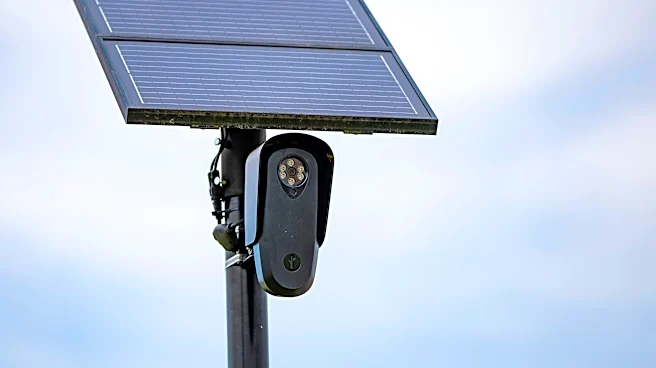
Automatic license plate readers, often referred to as flock cameras, are usually placed high on poles near streets to capture a variety of vehicle information in real time, including: make and model, color, license plate, a time stamp, direction of travel, speed, or other identifiable information such as bumper stickers, roof racks, scratches or dents in the vehicle.
The net of information collected appears to vary from vendor to vendor, according to the 16 cameras listed on the U.S. Department of Homeland Security's 2025 survey report on ALPRs.
The information gathered is fed into a nationwide searchable network for law enforcement to use and share.
"ALPR systems help law enforcement generate leads in investigations, verify the truthfulness of suspects, use witness descriptions and partial tags to identify vehicles of interest, and help collect vehicle data at crime scenes," according to the report.
According to Flock Safety, more than 10,000 missing people have been found as a result of the cameras.
Cameras also are used for toll collection, parking management, property management, and neighborhood watch and other community safety programs, according to the 2025 report.
Why are the Flock cameras controversial?
Automatic license plate readers have been deemed a violation of privacy and an opportunity for those using them to abuse their power, according to privacy groups.
Critics say the cameras breach the Fourth Amendment of the U.S. Constitution which states, "The right of the people to be secure in their persons, houses, papers, and effects, against unreasonable searches and seizures, shall not be violated, and no Warrants shall issue, but upon probable cause, supported by Oath or affirmation, and particularly describing the place to be searched, and the persons or things to be seized."
Civil rights and privacy groups say police are using the cameras for unlawful or unwarranted searches.
"Police in Texas, Florida, and thousands of departments nationwide can track Massachusetts drivers in real-time — without a warrant, probable cause, or even reasonable suspicion of wrongdoing," the Massachusetts ACLU warned. "Documents obtained by the ACLU of Massachusetts reveal that police across the state are collecting detailed information about the locations of Massachusetts drivers and sharing that information with a network of over 7,000 agencies and organizations all over the country — including in states that have passed laws banning abortion and gender-affirming health care for minors, and laws requiring police to conduct civil immigration enforcement operations. "
In addition, people are afraid of misuse or accuracy.
The Tallahassee Democrat reported on Aug. 12, that "In 2025, a Texas law enforcement officer conducted a nationwide search of more than 83,000 Flock cameras for a woman who’d had an abortion. The Electronic Frontier Foundation found in a public records search that ALPR data was used to verify student residency requirements, investigate noise complaints, do background checks, and surveil protesters, immigrants, and more."
In addition, "dozens of law enforcement officers have been arrested or resigned under accusations of reportedly misusing the Flock system to surveil romantic interests, partners, exes, or even just attractive women who caught their eye, according to nonprofit public interest law firm Institute for Justice (IJ)," the Tallahassee Democrat reported.
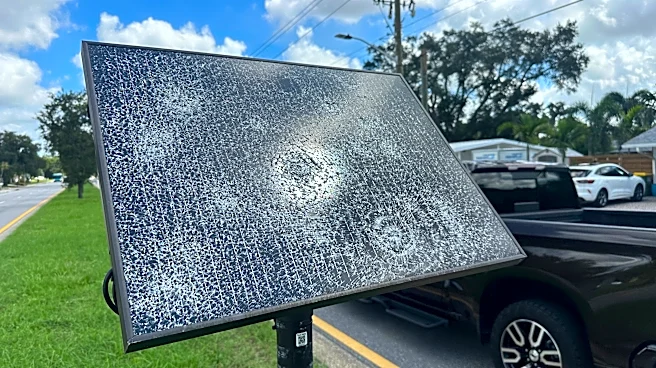
The uproar against the cameras has led to residents in Michigan and other states to physically interfere with them to prevent recording, which has led to arrests.
Where are Flock cameras in Michigan? Check out the map
The volunteer-led organization, DeFlock, works to identify and document automated license plate readers across the nation with the help of public submissions. The interactive maps shows where Flock Safety ALPRs are located with a blue dot.
Other websites that share ALPR data:
- FlockHopper also maintains an interactive map of Flock Safety ALPRs.
- Eyes on Flock shares data on how many vehicles have been tracked and other information.
- Have I Been Flocked let's you check your license plate to see if you have been tracked.
- Flock Camera Locations shares cameras across the nation.
- Flock Camera Safety Mapis "The most comprehensive crowdsourced map of Flock Safety cameras and ALPR systems."
- Deflock the USA provides similar information on cameras and locations.
What are the Flock 'transparency portals' I am hearing about?
In addition to these community-operated websites, entities that partner with Flock may create a Flock Transparency Portal, a public-facing search audit.
The portal, which automatically pulls information from the entity and Flock Safety, allows community members to see how many cameras the entity manages, how many vehicles have been detected over a 30-day period, what networks, or other entities, the data is being shared with (i.e. one police department with another) and how the entity is utilizing the cameras. Entities are not required to manage a transparency portal.
USA TODAY contributed.
Contact Sarah Moore @ smoore@lsj.com
This article originally appeared on Detroit Free Press: How many 'Flock cameras' are in Michigan? Unregulated ALPRs are all over