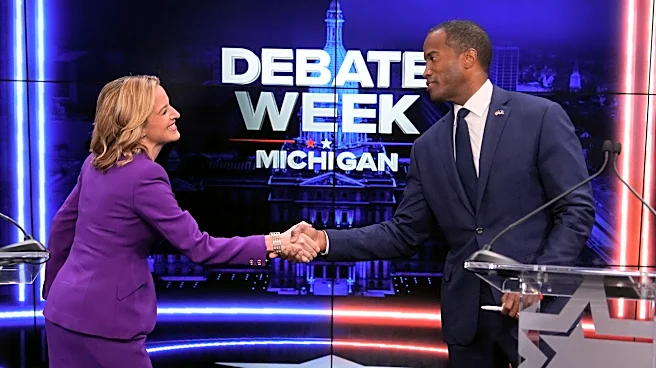



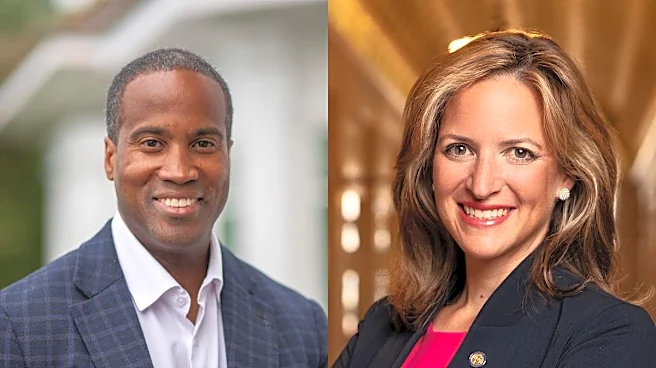
The first televised debate in the race between the candidates running to lead Michigan as its next governor saw sharp policy differences between Michigan Secretary of State Jocelyn Benson, the Democrats' pick for the next governor, and the Republican nominee, U.S. Rep. John James — as well as a few sharp elbows.
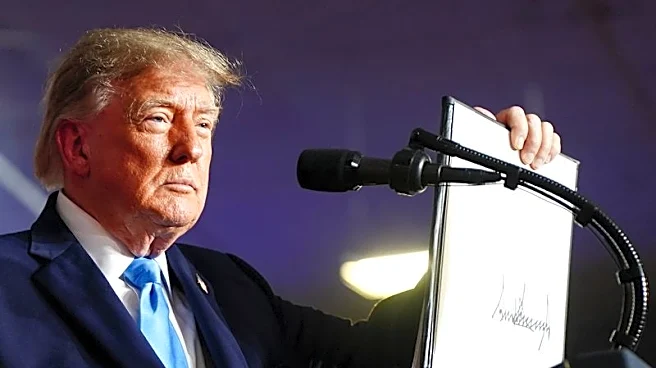
But neither candidate demonstrated much independence from the respective top party leaders who have endorsed them – Gov. Gretchen Whitmer for Benson and President Donald Trump for James.
The candidates largely stayed on message, repeating talking points on their key polices from the campaign trail on energy costs, affordable housing and health care, with no candidate clearly dominating the air time or more frequently lobbing criticisms
at their opponent.

Here's a look at some of the key takeaways from the Tuesday, Oct. 6 debate at the WOOD-TV studio in Grand Rapids:
Big policy divides
On education, energy and more, Benson and James outlined different approaches to Michigan's future.
To address Michigan's dismal reading scores and improve literacy, James said he wants to reinstate a law repealed by Gov. Gretchen Whitmer to hold back third graders who fail a reading proficiency test.
Benson did not share James' call. Instead she said: "I believe that teachers should be the ones making those calls, making those decisions far more than a politician or a governor should be."
During the debate, Benson said she wants to grow clean energy jobs in Michigan, describing such an investment as an important way to tackle climate change. James has opposed Michigan's clean energy law which targets 2040 as the year when 100% of the state’s energy will come from clean sources. He describes it as a clean energy mandate driving up energy bills while environmental advocates say it will rein in costs.
On taxes, James outlined his plan to phase out the state's income tax, which provides the largest source of revenue for the state, without providing specifics for how he would pay for it. Benson, meanwhile, said she wants to implement some tax cuts, such as a caregiver tax credit, and undertake a broad review of how the state generates revenue.
Benson and James trade barbs
Benson criticized James' support for the Iran war (which he now says he wants to see "end quickly") and the fuel price increases it has unleashed.
James said he wrestled with his past votes in support of the war, but he said Iran cannot have a nuclear weapon.
"I'm a combat veteran. I have been to war. She has not," said James, a U.S. Army combat veteran who fought in the Iraq War.
Benson responded by saying she is married to a U.S. Army Veteran who served in Afghanistan. "And by the way, military spouses serve also, congressman," she said.
Questions on data centers lead to the most heated back and forth of the first half of the debate, with Benson and James sparring on whether the other had profited from the proliferation of the facilities in Michigan and elsewhere.
Both candidates reiterated their commitment to some form of moratorium for data center development, although James expounded on his stance after the debate, telling reporters communities that want a data center should be allowed to do so without state policymakers interfering.
He criticized Benson's record and her husband's employment with a company behind a data center project in Michigan.
Benson's husband, Ryan Friedrichs, is a vice president of development at The Related Cos. The company is one of the developers behind a controversial data center project in Saline Township. Friedrichs has since recused himself from projects in Michigan.
But James said Benson's family has personally profited from the project, which commenced after developers sued township officials who tried to block it.
"This isn't some random donor. She's literally sleeping with this guy, and she wants to recuse herself from involvement," James said after the debate.
Benson, on stage, pushed back on James' assertions: "My family has not profited from data centers."
"He, not his spouse, he voted to cut (data center developer) taxes," she said, referring to James' vote to approve the One Big Beautiful Bill Act.
Candidates asked about disagreements with party leaders
Toward the end of the debate, both candidates were given an opportunity to tell voters on which issues they disagree from top party leaders.
Benson was asked by WOOD-TV political reporter Rick Albin, who moderated the debate, to identify a policy or decision where she believes Whitmer erred. Benson didn't name one.
"Well, you know, Gov. Whitmer's a policymaker. I'm an administrator," Benson said. She went on to talk about how she wants to make improvements at the Michigan Department of Health and Human Services and establish a new board to lower prescription drug costs, a proposal previously backed by Whitmer.
James was asked a similar question about his independence from Trump.
"I said that the war in Iran needs to be over yesterday," he said. His statement comes after previously voicing support for Trump's war and voting against ending the conflict.
Michigan voters have regularly replaced the outgoing governor with someone from the opposite party, a trend that poses a challenge for Benson. But James faces a tough national climate for Republicans under Trump's leadership, with rising fuel costs, an unpopular war with Iran and frustrations over inflation dragging down the president's approval numbers and threatening to drag down other Republicans with him.
Contact Clara Hendrickson: chendrickson@freepress.com or 313-296-5743.
You can reach Arpan Lobo at alobo@freepress.com
This article originally appeared on Detroit Free Press: Benson, James stick to campaign message in debate with no clear winner