
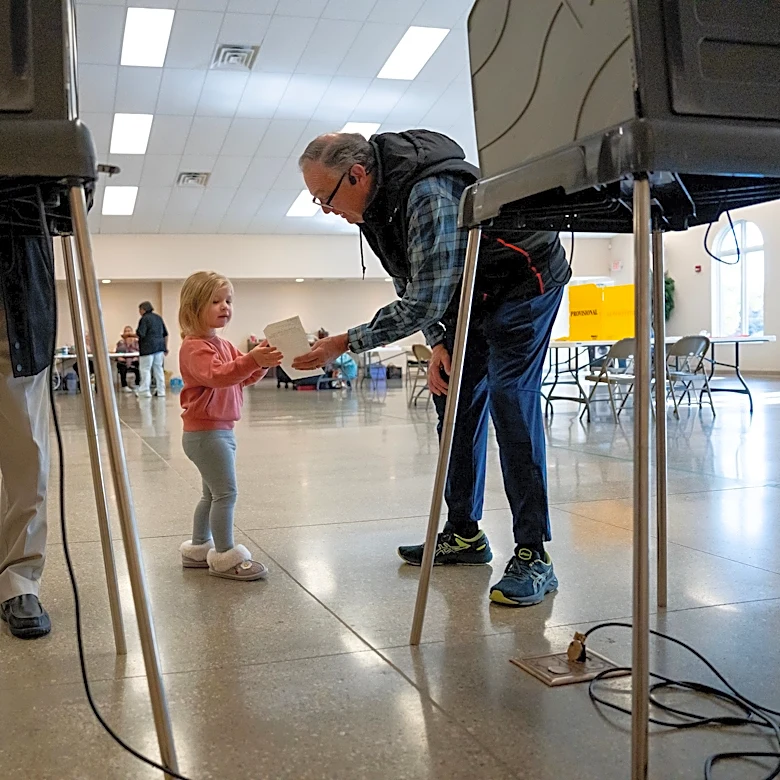



Voters in metro Detroit will decide Nov. 3 whether to provide financial support for a multitude of cultural institutions in the region.
The Detroit Zoo is seeking renewal of .10 mills for 10 years while the newly formedSoutheast Michigan Public Historical Museum Authority asks for approval to levy .2 mills for a decade.
In a year where voters are showing signs of tax fatigue, the two proposals are among the lowest millage requests on the ballot in metro Detroit and have the ability to garner millions in critical funding for animals, history and education, proponents say.
Here are some details on both:
Detroit Zoo on ballot for renewal in three counties
The zoo, which cares for more than 2,000 animals of more than 200 different species, is asking voters in Macomb, Oakland and Wayne counties to renew
the .10 millage that was first approved in 2008, and renewed again in 2016.
The millage would cost the owner of a $200,000 home about $10 per year, which would be used for critical support for animal care and educational programming.
“It’s important to point out the legacy and the zoo being such a longstanding institution for people to visit,” said Dr. Hayley Murphy, the Detroit Zoo executive director and CEO. “We pride ourselves on the community benefits and engagement we have and we want to be here for the next 100 years. We are always striving to do better for animals, people, and the natural environment.”
The zoo, which also oversees the Belle Isle Nature Center, has budgeted $50 million for operating costs in 2027. If approved in all three counties, the millage, levied from 2028-2037, would garner a total of $18,821,900 in its first year, with $8,831,012 coming from Oakland; $6,145,462 from Wayne; and $3,845,426 from Macomb.

Residents of each county get a $10 discount on annual memberships and the zoo offers free senior citizen days, discounted tickets for school field trips, and complimentary tickets distributed by various organizations that determine need.
More than 1.3 million people visit the zoo per year, resulting in an estimated economic impact to the region of $190 million with hotel stays, restaurant dining and more.
The zoo has established separate authorities in each of the counties, so a majority of voters in each county will decide the fate of its own millage.
This is not the case with the new museum millage on the ballot in Wayne and Oakland counties.
SE Michigan Public Historical Museum Authority proposal is all or nothing

The Southeast Michigan Public Historical Museum Authority was formed by Wayne and Oakland counties this past summer.
The joint authority has placed a .2 mill proposal on the ballot that, if approved by voters in both counties, would support the Charles H. Wright Museum of African American History, the Detroit Historical Museum, and the Dossin Great Lakes Museum, all located in the City of Detroit, as well as dozens of public historical museums located in both counties.
“I think museums and history have never been more important,” said Elana Rugh, the president and CEO of the Detroit Historical Society. “We are one of the most trusted institutions out there. We use facts and original source material so people can make up own minds. People who don’t pay attention to history are bound to repeat it.”
The 10-year millage would garner $17,733,800 in Oakland County in 2026 and $12,219,200 in Wayne County, for a total of $29,953,000 in its first year of levy. Of these funds, 15% would be dedicated to the smaller community historical museums in each county.

After distribution of those funds and a tax increment financing capture, The Wright, the second largest African American History museum in the country after the Smithsonian, would receive about 60% of the remaining share for programming that educates more than 100,000 visitors per year on important figures and events in Black history.
The Detroit Historical Society, which oversees the Detroit Historical Museum and the Dossin Great Lakes Museum and more than 300,000 artifacts, would be the beneficiary of the remaining 40%.
Both institutions are strapped for cash, said Neil Barclay, president and CEO of The Wright, which has a budget of about $12 million per year, while he said the Detroit Historical Society’s annual budget is less than $10 million.

He and Detroit Historical Society President and CEO Rugh were hired about six months apart for their positions in 2018 and recognized the museums were critically underfunded and in a situation that fundraisers could not fix.
The museums currently charge admission, but passage of the millage would allow for free admission, ongoing maintenance, updated technology and the ability to bring new exhibits, lectures, and other events to the museums, as well as extend outreach into schools and other facilities in both counties.
“This city is at the center of the things and people that make America great,” Barclay said, citing Aretha Franklin, Rosa Parks, John Conyers, the Industrial Revolution and more. “To not care or be archived, to not have that history available, would be a huge loss for not only southeast Michigan, but for the country.”
Because it is a joint museum authority and not created for individual counties, if the millage fails in either county, the entire proposal fails and the museums will not receive any money.

Barclay and Rugh hope the voters of both Oakland and Wayne will support the millage, which would cost the owner of a $300,000 home about $30 per year.
“It’s important we preserve the history of this region and that our young people understand and take pride in being from southeast Michigan and Detroit, a place where extraordinary people have done extraordinarily impactful things,” Barclay said.
Contact Reporter Susan Bromley at sbromley@hometownlife.com
This article originally appeared on Detroit Free Press: Detroit Zoo, historical museums seek voter support on millages