



If electric cars have failed, why are we so afraid of Chinese EVs?
All manner of finger-wagging obituaries have been written about what a flop EVs have been in America.
The Auto Wire wrote, “automakers have written off roughly $55 billion after badly misjudging electric vehicle demand. This is not a market hiccup. It is a reckoning. … Projects were rushed, factories were retooled, and lineups were rewritten based on assumptions that never held up in real showrooms.”
The Murdoch-owned New York Post practically chortled about General Motors’ "failed EV strategy."
Popular Mechanics headlined an article, “Remember When EVs Were the Future? Americans Don’t Really Want Them Anymore.”
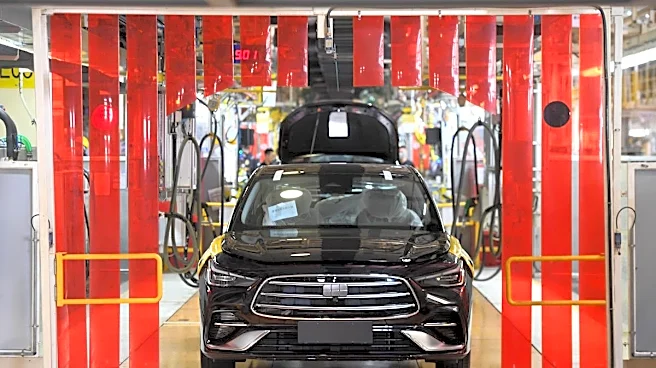
Soon, though, Chinese EVs, which by all accounts are the most advanced
in the world ‒ at dramatically lower sticker prices than EVs from U.S. automakers ‒ will be available at Canadian dealerships.
I guess it’s a good thing Americans don’t want these affordable autos with the latest technology, because politicians have decided you can’t have them.
America didn't lose interest in EVs, we lost momentum
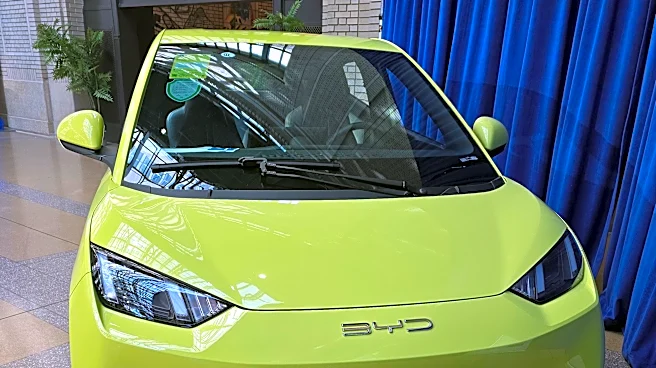
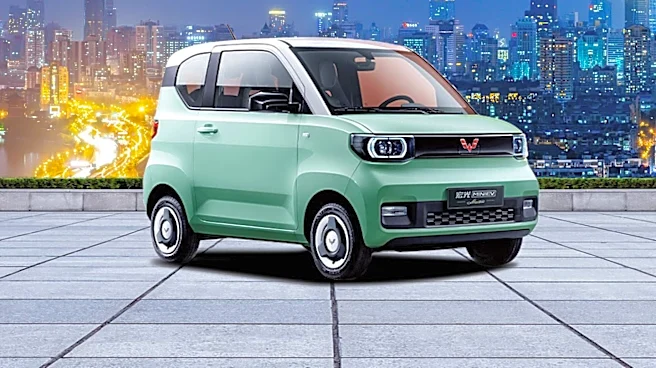
In a rare bipartisan outburst, U.S. Sens. Elissa Slotkin and Bernie Moreno ‒ she's a Michigan Democrat and former CIA analyst, he's an Ohio Republican car dealer ‒ have won committee approval for a bill that mandates “no Chinese vehicles or their connected components on American soil.” So if this bill passes, your theoretical Canadian cousin buys a BYD Seagull next year for a fraction of the price of an American EV, she won’t be allowed to drive it across the Gordie Howe International Bridge (or any other crossing).

All of this isn’t really about EVs, which are constantly improving and are remarkably fun to drive. It is about our jaundiced U.S. politics, and President Donald Trump’s ignorant war on EVs.
Slotkin is not part of that. She's an EV supporter with an unfortunate protectionist streak that panders to the UAW, and aligns her with Moreno in depriving Americans of the best electric vehicles.
Trump has done all he can to block Americans from having the latest automotive technology, campaigning against a mythical EV “mandate,” eliminating the federal tax credit to buy EVs, rolling back fuel economy standards, pulling back grants for infrastructure and, just last month, calling EV drivers “crazy.”
“Donald Trump is public enemy No. 1 to the auto industry,” said former Michigan Gov. James Blanchard, citing tariffs Trump has imposed on steel and aluminum in his trade war with Canada. Blanchard, who also served as ambassador to Canada under Bill Clinton and, as a congressman, sponsored the Chrysler bailout of 1979, said Trump is “playing to the UAW, but between tariffs and his opposition to EVs, he’s hurt the auto industry.”
China heavily subsidizes its carmakers, and American automakers have fallen far behind in EV technology. U.S. executives have marveled at the speed with which Chinese vehicles have advanced and the quality they have achieved, with these cars accounting for at least 60% of global EV sales last year.
National security has become a convenient shield
U.S. automakers have significant issues to address with EVs – and are working on them without government support. The Free Press in 2024 took a deep dive into the state of the industry and found that battery range, charging infrastructure and, critically, price, were slowing adoption. Trump’s politics hurt even when he was out of office: Bill Ford quipped at a Free Press Breakfast Club event in 2024 that he never would have expected vehicle propulsion systems to be politicized.
For sound reasons, then, the U.S. government had incentivized EV development and adoption. EVs combat climate change, which feels all the more urgent after this summer’s floods, fires and record heat. They lessen global dependence on fossil fuels, access to which continues to drive conflict and economic disruption worldwide. The U.S. has achieved energy independence, yet is flummoxed in the Middle East by an oil transport choke point.
Government support for EV development also would enable our auto industry, with its long and powerful tail through the U.S. economy, to compete as electric vehicles become dominant globally. Now, this is happening without us, to the long-term detriment of the industry, the country and the global climate.
Previous U.S. policy, including Joe Biden’s 100% tariffs on Chinese EVs, was meant to help the domestic industry catch up. Now, after Trump’s trade war led Canada to drop its 100% tariff in seeking new trading partners, we are trying to make it all go away with protectionism.
It won’t work. In the long run, it will cost American jobs as our global market share dwindles. It will stifle innovation and deprive Americans – known for loving our car culture – of the latest and best technology.
“The way I’d put it,” auto journalist Martin Padgett told The New York Times, “is that we pulled a U-turn while the rest of the world was pushing forward.”
If China's winning, banning the game won't help
The Slotkin-Moreno bill seems likely to pass. Besides the raw, ill-advised protectionism, much of the appeal of the bill is pinned on the idea that the Chinese government, as a partner in its auto industry, will gather all manner of data about Americans via EVs.
With due respect for Slotkin’s CIA bona fides, she’s a politician now who, like Trump, wants UAW support.
“The average citizen is not the problem,” said David Barzilai, chief executive of Karamba Security, an automotive cybersecurity company. Rather than banning Chinese vehicles, The New York Times reported, England, Poland and security-paranoid Israel allow their sale to consumers but bar them from military bases.
Seriously, what can China find out about ordinary Americans that Ford, General Motors, Kroger and Palantir don’t already know?
China, with great products and a growing majority of global EV sales, is winning this extremely lucrative game. We are on the sidelines watching.
Randy Essex is a retired journalist who covered and edited business and political news, including at the Free Press, across five decades. Submit a letter to the editor at freep.com/letters, and we may publish it online and in print.
This article originally appeared on Detroit Free Press: The EVs Americans can't buy are headed for Canada | Opinion