



GRAND RAPIDS — Only in America, where royalty is determined not by birth but by hard work and luck, can a cornfield become a memorial fit for a queen.
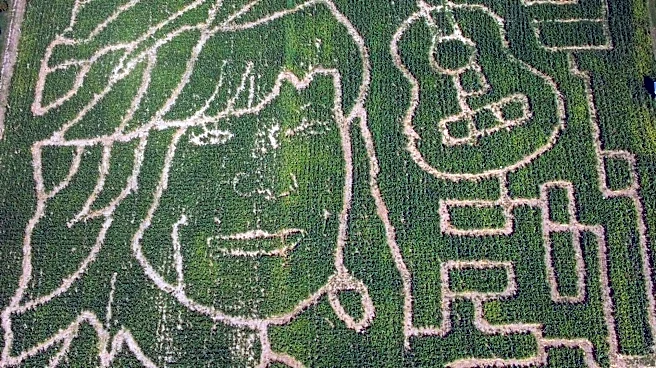
Here, 6½ acres are cut into a maze from the contours of Dolly Parton’s face.
People from all over West Michigan, and perhaps even the Midwest, are expected to flock to the maze, which opens on Tuesday, Sept. 1, and find their way through the Queen of Country’s big blonde locks, adorable dimples, musical notes, acoustical guitar and signature symbol, a fluttering butterfly.
The maze will give thousands of families a place to go to spend time together this fall through the first week of November, but also to mourn and feel a little closer to Parton, a luminary who left a legacy of music, homespun sense
and good deeds.
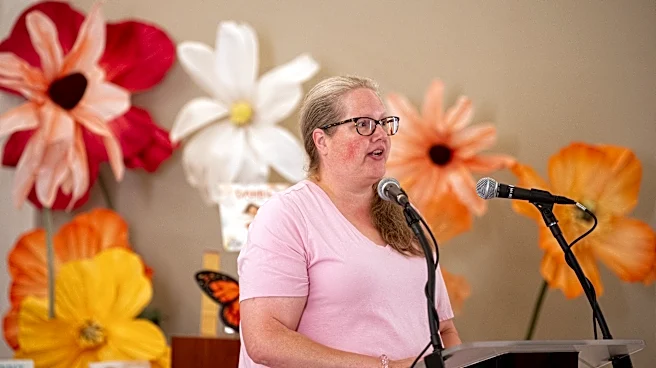
"Dolly Parton’s story and what she stood for really resonates with a lot of America," Allan Robinette, 34, told the Free Press. His family owns the farm, where the maze is located and is awestruck by the interest. "It doesn’t matter who you are, you feel what she’s done is downright inspirational."

An annual fall attraction at Robinette’s Apple Haus & Winery, the maze features a different design each year. The more than a century-old farm sells apples, peaches, cider, treats and wine. This year, the maze was intended to be an homage to Parton. But, since the 80-year-old’s death, it has turned into something more.
In the past few days, folks nationwide have not been able to stop talking about the songwriter, singer, actress, entrepreneur and philanthropist. And how could they not? Parton was, after all, what one obituary noted a "rags to rhinestones" story and one of the most beloved country music performers.
A big part of our lives
Everyone, including Robinette, seems to have a Dolly Parton story to tell.
When Parton died last week, Americans couldn’t help but take a moment to think about all the ways she had been part of their lives for decades — even if they had never met her or been a fan — as a part of their lives through her music and cultural influence.
Ford CEO Jim Farley, for instance, saw the news of her death flash across his phone while in a meeting with other auto company executives, the Free Press reported. The group took a moment to pause the conversation to reminisce about Parton.
Fans who have wanted to hear Parton’s voice again are listening to her hits: "Jolene," "9 to 5," "Islands in the Stream," "Coat of Many Colors" and "I Will Always Love You." The songs suddenly zoomed to the top of Spotify’s most downloaded music.
On Friday, Aug. 28, Ashley Barr, 33, of Grand Rapids, and her 7-year-old daughter, Charlotte, bought some treats at the farm store. Charlotte had to stand on her tiptoes to see over the counter. The maze had not yet opened, and the mom said they planned to come back to explore it when it did and her husband could go with them.
And celebrities from all over, and even actual royalty from across the Atlantic, have been weighing in with remembrances. The president ordered flags be flown at half-staff to honor Parton and noted that "there has never been anyone like her and never will."
So maybe it makes sense that in Grand Rapids, a corn maze — one of several nationwide this year that feature Parton’s likeness — is where people will go to remember their hero and, in their own ways, say good bye to her. News outlets across the state, and even a TV station on the other side of Lake Michigan, in Milwaukee, have been reporting on it.
'Dirt poor' but rich in talent
Born in Locust Ridge, Tennessee, Parton started out, as she'd later describe in interviews, as "dirt poor," using flour as makeup. She was fourth in a family of a dozen children and her father, who could not read or write, made ends meet by sharecropping and farming.
As a kid — Dolly who would later be known by some as the Iron Butterfly because she was both gentle and steely at the same time — would chase the colorful insects and try to catch them. And, like a butterfly, she also had a knack for attracting attention.
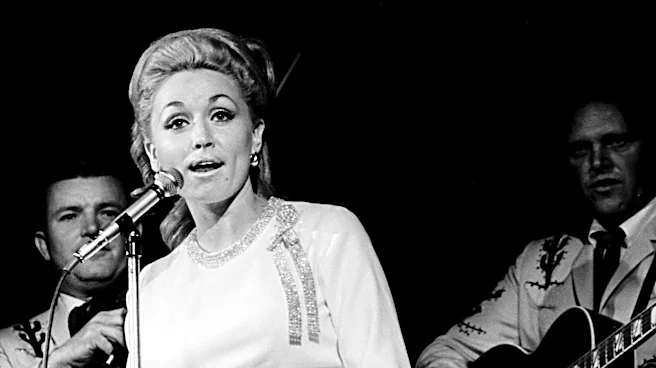
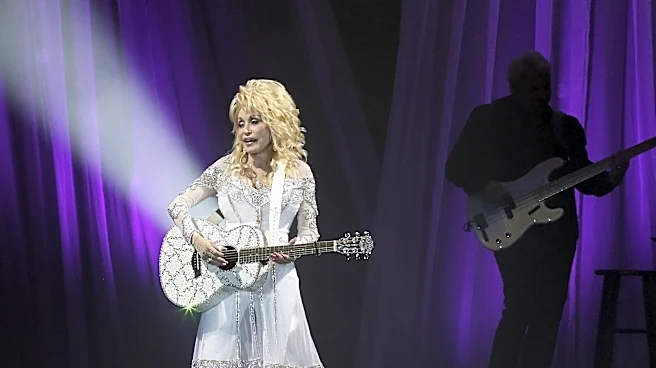
At 5 or 6, she wrote her first song and by 8, her uncle gave her a guitar. At 13, made her debut on stage at the Grand Ole Opry House in Nashville, introduced by music legend Johnny Cash. The day after she graduated high school, she moved to Nashville, where she later joined the Opry and eventually became one of its most famous members.
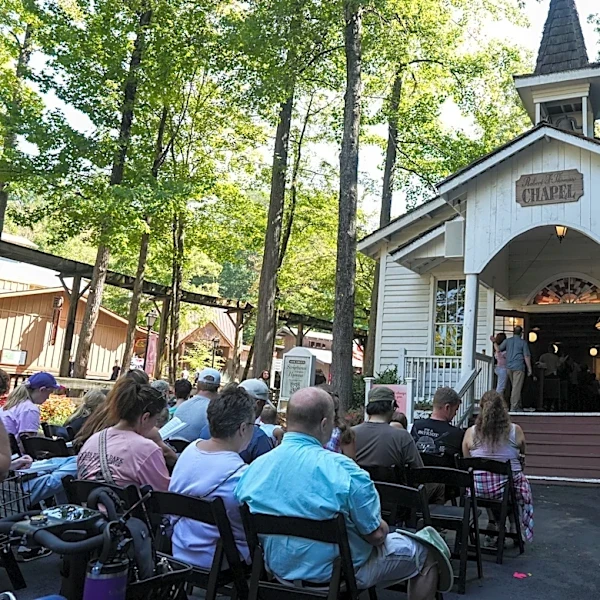
In 1986, Parton became half owner in an amusement park, Silver Dollar City Tennessee, and renamed named it Dollywood. It was near her childhood home, and when she re-opened she told the crowd she dreamed for years of bringing something back home so folks there "would know I'm as proud of you as as you've always been of me."
But even as she became a superstar, her fame ascending, many still saw her as down to earth, like a familiar friend. She was just Dolly to many — on the radio and TV for decades, as if she were singing to you in your car or talking to you, right there in your own house.
Dolly sang songs about her own life and said things that mattered to us. Her lyrics urged two-timing men to be faithful, encouraged working women to have courage, motivated young couples to fall in love and old ones to stay in love and inspired moms and dads to name their daughters Jolene, the most beautiful girl they'd ever seen.
A Corn Party at Dollywood
A fifth-generation West Michigan farmer, Robinette was named after one of his forebears who decided to come to America from England in the late 1600s and took up farming. And someone in the family has been doing it in America ever since.
Last year, the family decided to do a Dolly Parton corn maze in 2025, after attending an agricultural tourism conference — the Corn Party — at the Dollywood resort in Pigeon Forge. Until then, Robinette said he didn't know much about Parton aside from her songs.
The family had cut all sorts of other mazes over the years, with themes that included cartoon characters and patriotic and personal themes. In 2020, the family memorialized Robinette's grandparents, Jim and Bethel, who had just died. Folks told him they remembered his grandma gave their class tours of the orchards.

The personal tribute gave the family, Alan Robinette said, a good feeling.
Hearing Parton’s story in 2025 inspired the family to say, "we’ve got to highlight Dolly."
But that year, Parton’s husband, Carl Dean, died, and, in Parton's grief, the widow asked them to hang on a minute.
The couple met outside a laundromat when Parton was washing her clothes. She was 18. He saw her, the story goes, and asked her out. She said no. They eventually did date, and, when Parton was 20, they married. They never had children of their own, but Parton's man was inspiration for several of her songs, including "If You Hadn't Been There."
This year, Parton agreed to let the West Michigan farm and more than a dozen nationwide cut mazes in her likeness.
The aspiration of America
To Robinette — who said he saw Parton in person only once, from a distance at Dollywood — the maze, in a way, represents America. It is a place where folks can get lost; but also, with wits and luck, can find a path that leads them to their own versions of greatness.
And that's what farming has been for the Robinettes.
Family lore has it that the original Allan Robinette settled in Pennsylvania at about the same time as the state's founder, William Penn. They both might even have come over on the same ship, the Welcome. Later generations of Robinettes moved to Ohio, where they continued to farm.
And then in 1911, Barzilla Robinette visited Michigan and decided to buy another farm in Grand Rapids. Each generation since, Allan Robinette said, has tried to do better than the one before. That desire is, after all, what has made America a "city on a hill," a place to fulfill your highest aspirations, and, as you do, help others.
Since Parton’s death, Robinette said, fans have called the farm to ask if they can leave flowers.
The family is prepared if they end up with a pile of them, but they are urging people, instead, to donate what they might spend on a bouquet to the Imagination Library, one of Parton’s charities that, in more than 30 years, has gifted hundreds of millions of books to kids.
At a time when some wonder if the American Dream is dead, the maze offers hope it lives on.
Contact Frank Witsil: 313-222-5022 or fwitsil@freepress.com. Free Press photographer Mandi Wright contributed.
If you go
- Apple Haus & Winery: 3142 4 Mile Road NW, Grand Rapids
- Hours: 8 a.m.-5:30 p.m., Tuesdays through Saturdays
- Tickets: Sept. 1-4, $8.50; Sept. 8, $10.50
This article originally appeared on Detroit Free Press: How a West Michigan corn maze became a Dolly Parton memorial