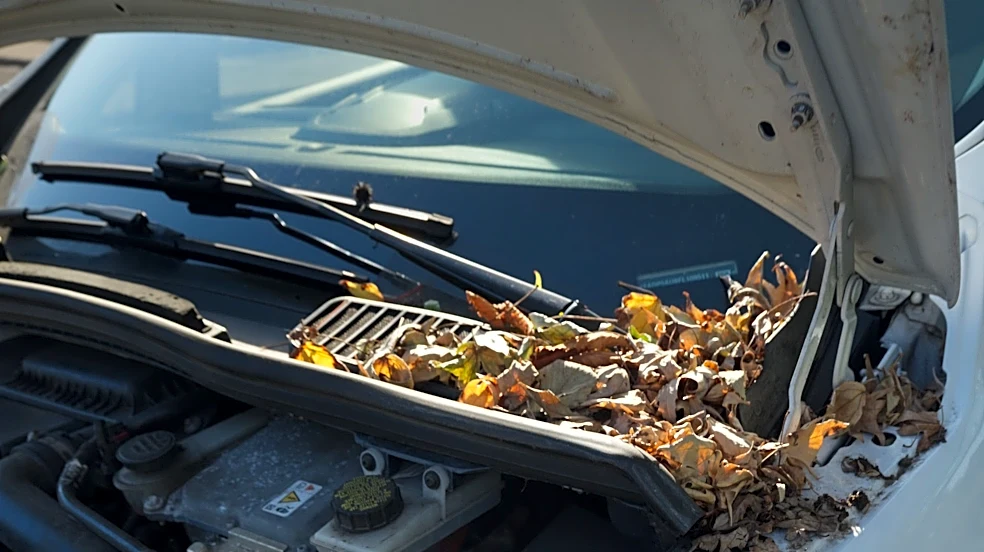







As fall descends on Michigan, colorful leaves and cooler air can be quite charming. A soggy pile of leafy detritus wedged beneath your windshield wipers, though? Not so much.
According to experts at AAA and Consumer Reports, fallen leaves can do more than just make your ride look autumnal – they can clog drains, damage paint, create funky smells and cause expensive damage to a vehicle.
"Leaves can clog drainage systems, damage paint, reduce visibility and even lead to costly repairs if they're allowed to build up on or around a vehicle," Adrienne Woodland, a spokesperson for AAA, said in an interview with the Detroit Free Press.
Common trouble spots for leaf build-up include sunroofs, windshields, doors and the cowl (the area between the windshield and hood),
which all have drainage channels intended to help carry water away from the engine. But leaves can collect in those spaces, break down and block the drains.
In an interview with the Free Press, John Ibbotson, the associate director of auto testing at Consumer Reports, said tending to leaf buildup properly can avoid costly maintenance down the road.
The cowl area specifically presents a pesky problem, he said.
"The cowl area underneath the wipers, that's where all the air enters your vehicle," Ibbotson said. Leaves can clog that intake, he said, and "as the leaves enter into that intake system, they could decay in there, cause smells. They can clog your filters and things like that."
Beyond an unsavory scent, the leaf buildup can contribute to corrosion and costly damage. Blocked drains can allow water to pool inside the car, potentially damaging carpets, electronics and other interior components.
"You can get pooling of water inside the car. You can possibly get, you know, smells coming in through the car, things like that," Ibbotson said. That pooling water can also come from sunroofs if drainage channels on the top of your car become clogged. Water can soak the headliner and drench the interior.
And if you're not dissuaded by dirty water pooling inside the car or odors running through your air vents, leaves can also damage paint.
"There's acids in some leaves, just like tree sap and stuff, and that can damage the paint," Ibbotson said.
So what's the best way to evict the leafy squatters?
"The best way to remove them is to use a wet-dry vac," Ibbotson said, noting that leaves pushed farther into the vehicle can actually make things worse.
Woodland, too, recommended clearing leaves from the hood, windshield, roof and wiper area, and keeping drainage channels at the base of the windshield free of debris.
Washing the vehicle can help remove sap and stains. Unusual odors, water inside the cabin or reduced heating and cooling performance are good reasons to have the car inspected.
There's also a less obvious, and less common hazard, Woodland said: Dry leaves trapped near hot engine components can pose a fire risk in rare cases.
According to both Woodland and Ibbotson, all it takes to avoid these hazards is a few minutes of quick, DIY maintenance.
Liam Rappleye covers Stellantis and the UAW for the Detroit Free Press. Contact him: LRappleye@freepress.com.
This article originally appeared on Detroit Free Press: Why you should clear fallen leaves off your car