

While it may seem early to think about winter, The Old Farmer's Almanac has released its official 2026 winter prediction for the U.S. with Michigan likely to see warmer, drier weather than a year ago.
On July 30, the longtime weather publication, updated its 2026-27 winter prediction, using early weather signals like El Niño, the sun's solar cycle, Atlantic and Pacific ocean patterns, and the polar vortex to forecast winter conditions.
"Those early signals include changing ocean temperatures, shifting winds high above Earth, and even natural cycles of the Sun that scientists continue to study for possible connections to long-term weather patterns," the Old Farmer's Almanac said.
El Niño is currently the key weather pattern determining what winter
will be like for North America, according to the Almanac. El Niño is underway which means Michigan could see a warmer and drier winter than usual.
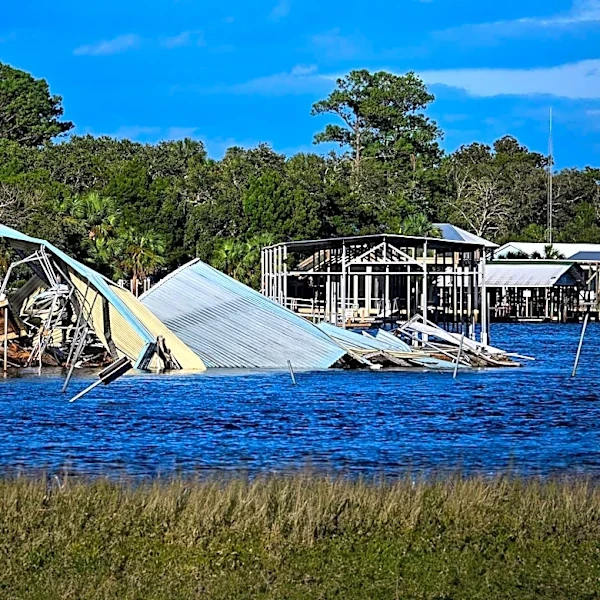
"El Niño can affect our weather significantly. The warmer waters cause the Pacific jet stream to move south of its neutral position. With this shift, areas in the northern U.S. and Canada are dryer and warmer than usual. But in the U.S. Gulf Coast and Southeast, these periods are wetter than usual and have increased flooding," the National Oceanic and Atmospheric Administration said.
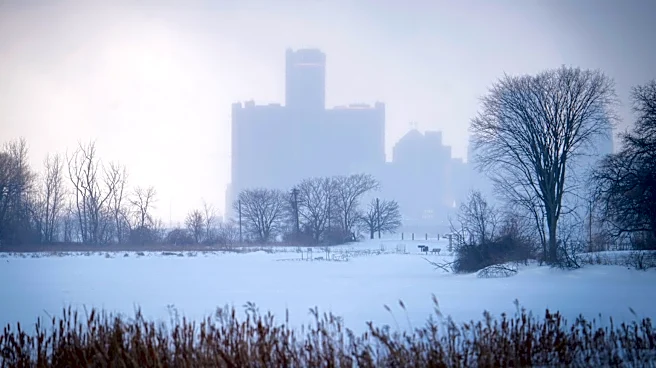
A warmer, drier winter would be a major change from 2025-26, which was deemed "extreme"for many parts of Michigan by the Midwestern Regional Climate Center
Here's more on El Niño and how the solar cycle, ocean patterns and polar vortex could impact Michigan's looming winter:
What does The Old Farmer's Almanac say about Michigan's winter? El Niño has returned
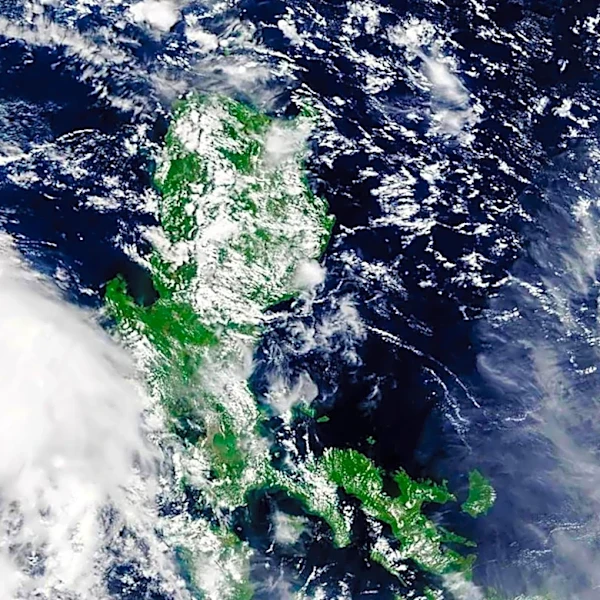
The Old Farmer's Almanac suggests Michigan may have a drier and warmer-than-usual winter because North America will see El Niño in action during the winter months.
"Think of the Pacific Ocean as one of Earth’s most powerful weather engines. When its waters warm in just the right places, the jet stream — the fast-moving river of air that steers storms — often shifts its path. That change can influence where rain, snow, and colder air are most likely to travel across North America," the Almanac said
How does the sun's solar cycle impact winter?
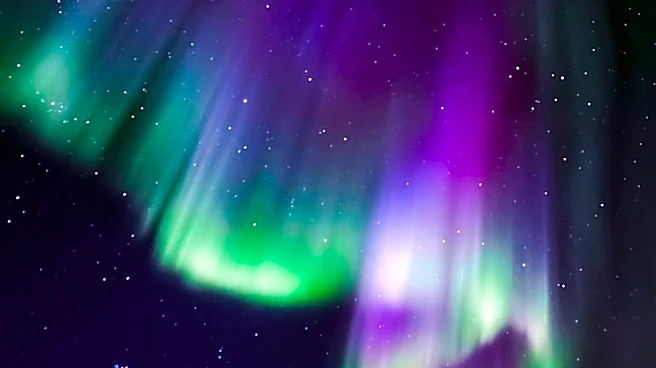
High levels of solar activity have been associated with warmer temperatures, which could contribute to a warmer winter. The sun is in its solar cycle 25 which passed its peak activity in 2024, but sunspot activity remains relatively elevated, according to the Almanac.
"Although the sun may look like a constant ball of light every day, its activity rises and falls in a repeating cycle of about 11 years. A period of low activity, or solar minimum, in 2019 marked the beginning of solar cycle 25. In 2024, it entered into solar maximum, which is the peak of activity in the cycle. It will end when the next solar minimum is declared, completing the (about) 11-year wave," NOAA said.
Solar Cycle 26 is expected to begin some time between January 2029 and December 2032, said the NASA Space Weather Prediction Center.
What does The Old Farmer's Almanac say about ocean patterns to forecast winter?
To predict how active winter storms will be, forecasters monitor ocean patterns: the Atlantic Multidecadal Oscillation, the Pacific Decadal Oscillation and Indian Ocean Dipole, according to The Old Farmer's Almanac.
"Together, these ocean patterns can influence how much moisture reaches winter storms and where those storms are most likely to develop. Sometimes they help fuel coastal systems. Other times they influence how active — or how quiet — a season becomes," the Almanac said.
The ocean patterns also help forecast temperatures and how moisture is distributed across North America.
How does the polar vortex help forecast winter conditions?
The large mass of frigid Arctic air trapped around the north pole known as the polar vortex is another weather phenomenon used to predict winter in North America.
"One clue forecasters watch is a band of high-altitude winds that circles the equator. Scientists call this pattern the Quasi-Biennial Oscillation (QBO). Changes in these winds can sometimes influence the behavior of the polar vortex later in the season," The Old Farmer's Almanac said.
Monitoring the polar vortex helps to determine when Michigan will have extreme low temperatures during winter.
"Every so often, that circulation weakens or shifts. When it does, colder Arctic air can spill farther south, bringing outbreaks of wintry weather to parts of the United States," the Almanac added.
Contact Sarah Moore @ smoore@lsj.com
This article originally appeared on Detroit Free Press: Will Michigan see another 'extreme' winter? What Farmer's Almanac says