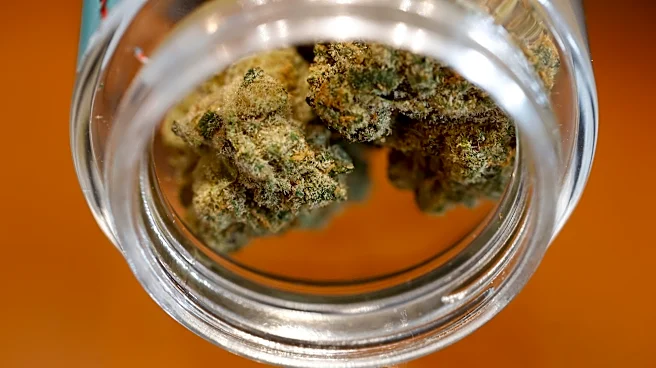







The Michigan Supreme Court has ruled that police cannot conduct a warrantless vehicle search based solely on evidence of a marijuana-related civil infraction.
In a 5-2 decision issued July 22, the court held that officers need probable cause to believe a criminal offense has occurred to search a vehicle under the automobile exception to the Fourth Amendment's warrant requirement.
The ruling came in People v. Wilkins, a case stemming from a January 2023 traffic stop in Kent County.
Writing for the majority, Justice Kimberly Ann Thomas said the search of Freddie Wilkins III's vehicle was unconstitutional because the trooper suspected only a civil marijuana violation, not a crime.
A civil infraction doesn't equal cause for a criminal search
"Probable cause to believe only that a defendant is responsible for
a civil infraction does not establish probable cause to conduct a warrantless search under the automobile exception," the court wrote.
The justices said evidence suggesting only a civil marijuana offense — including the odor of marijuana — does not by itself justify a warrantless vehicle search.
Police must have probable cause to believe a criminal amount is present.
According to a Michigan Supreme Court summary, State Police Trooper James Tomkins stopped Wilkins for speeding on Jan. 16, 2023. While approaching the vehicle, Tomkins smelled marijuana and discovered that Wilkins and his passenger were both younger than 21.
Under Michigan law, possession of 2.5 ounces or less of marijuana by someone younger than 21 is a civil infraction.
Based on that information, Tomkins searched the vehicle and found a handgun in a backpack in the passenger compartment, according to the Michigan Supreme Court's summary.
A trial court denied Wilkins' request to suppress the evidence. The Michigan Court of Appeals later upheld the search, finding that marijuana possessed by someone under 21 qualified as contraband and was sufficient to trigger the automobile exception.
Why the case was reversed
The Supreme Court disagreed.
"The warrantless search of defendant's car was unlawful under the automobile exception to the Fourth Amendment's warrant requirement because the trooper did not have probable cause to believe there was a criminal amount of marijuana in the vehicle," the court wrote.
The justices reversed the Court of Appeals' decision and sent the case back to the circuit court for further proceedings.
The ruling builds on the court's 2025 decision in People v. Armstrong, which overturned the long-standing rule that the smell of marijuana alone establishes probable cause to search a vehicle.
Justice Elizabeth Welch concurred with the majority but said she would have decided the case under the Michigan Constitution. Justices Brian Zahra and Richard Bernstein dissented, arguing that the search was lawful under the automobile exception.
Nour Rahal is a trending and breaking news reporter. Email her: nrahal@freepress.com. Follow her on Twitter @nrahal1.
This article originally appeared on Detroit Free Press: Michigan Supreme Court bars car searches for civil marijuana offenses