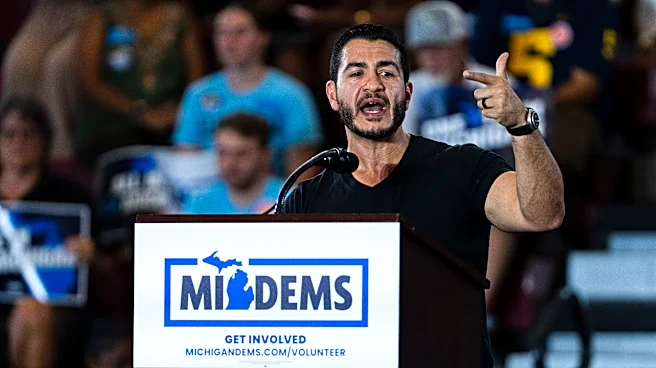

If you’re going to accuse Abdul El-Sayed of being antisemitic because of his strong criticism of Israeli Prime Minister Benjamin Netanyahu’s brutal war in Gaza, then you should be prepared to level the same
slur at Ehud Olmert.
Olmert served as prime minister of Israel from 2006 to 2009 as the leader of Likud, the rightwing nationalist party Netanyahu now heads. In May 2025, Olmert accused his successor’s government of war crimes and turning Gaza into “a humanitarian disaster area.”
“What we are doing in Gaza now is a war of devastation: indiscriminate, limitless, cruel and criminal killing of civilians,” Olmert wrote. “Yes, Israel is committing war crimes.”
That’s the sort of criticism only a Jewish Israeli is allowed to make.
I have learned personally that American Jews and Israeli Jews can be held to very different standards. Israeli leaders such as Olmert, along with many Israeli citizens, can criticize their government and accuse the sitting prime minister of committing war crimes. But when American Jews levy even mild criticism, they stand accused of betraying their faith.
And an Arab American who criticizes Israel is certain to face charges of antisemitism. Just ask El-Sayed.
An accusation with uneven standards
“Obviously he’s a war criminal,” El-Sayed said of Netanyahu, echoing Olmert. El-Sayed was the top vote-getter in the Aug. 3 Democratic primary for Michigan's open U.S. Senate seat. “He ought to be prosecuted to the full extent of the law.” When Netanyahu arrives in New York on Sept. 23 for the United Nations General Assembly, El-Sayed said, he should be arrested.
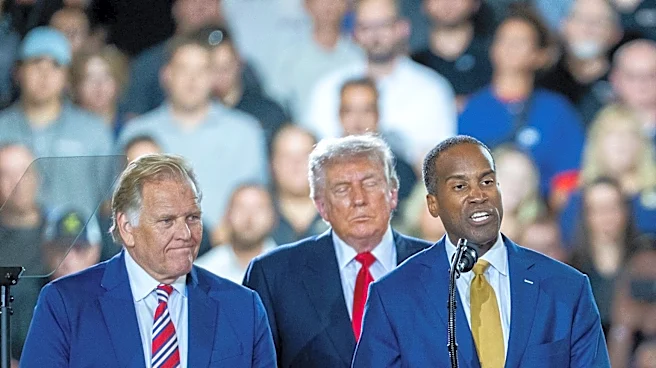
El-Sayed’s primary win prompted a fierce attack from President Donald Trump. “He doesn’t love Israel,” Trump said. “He doesn’t love Jewish people. He hates them. He hates them with the passion that burns in his heart.”

In metro Detroit, some Democratic Jewish voters have said they won’t vote for El-Sayed in November. Some have even said they plan to vote for his Republican opponent, Mike Rogers.
The question of who gets to criticize Israel, and for what, remains an open wound almost eight decades after its founding. Politicians like Trump rub salt in the wound, but it is genuinely raw for many American Jews, as I have personally experienced.
I've seen this fight up close
In February, I traveled to Vienna for the funeral of a close friend. David and I met in tenth grade at Oak Park High School, where we were editors of our school newspaper. When we grew up in the Detroit suburb, most of its 40,000 residents were Jewish. Many were survivors of Hitler’s concentration camps, a fate spared his parents and mine.
After the funeral, mourners gathered for lunch at a Vienna cafe. I sat next to Jacob, another Oak Park friend whose parents had survived three tortuous years at the Mauthausen concentration camp in Austria. Our talk turned to the Israeli-Palestinian conflict, raging more than two years after a surprise attack by Hamas militants in Gaza killed 1,200 Israelis, with another 251 taken hostage.
Under Netanyahu’s leadership, Israel has retaliated with devastating force that has left some 67,000 Gazans dead. Thousands of civilians have perished in Israeli air strikes on hospitals, schools, refugee camps and other nonmilitary targets. A U.N. commission found in June that 30% of the civilians who died were children.
I said Netanyahu had squandered the worldwide outpouring of support for Israel following the Oct. 7, 2023, Hamas attack by allowing far too many innocent Palestinians to die.
Without warning, Jacob started yelling at me.
“You are completely ignorant!” he shouted. “You are a shand [Yiddish for a disgrace] to our religion! You know nothing about Jewish history!”
I responded that I was all too aware of the long, tragic trail of Jewish persecution culminating in the Holocaust ‒ but said it doesn’t justify Israel committing war crimes against civilians.
Our exchange took me back 40 years, to the editorial offices of the Detroit Free Press. Fresh out of the Columbia University Graduate School of Journalism, I had landed a summer internship on the opinion pages. As the summer wound down, editor Joe Stroud gave a lowly intern a rare opportunity: He let me write an opinion column.
I wrote about Israel.
When I became a "self-hating Jew"
As a boy attending Beth Shalom Hebrew School in Oak Park, I wrote, I had been filled with pride watching scratchy black-and-white films about Israel’s founding. That pride led me a decade later to live on a kibbutz in the Carmel Mountains, where I marveled at young Jews from the kibbutz and Arab day laborers from nearby villages bantering in Hebrew and Arabic in the grapefruit groves overlooking the Mediterranean.
But in 1986, I continued, I was less proud of Israel than I had once been. Its brutal occupation of Gaza and the West Bank, I argued, betrayed core principles of Judaism and contradicted Jews’ own long history of oppression.

The Internet didn’t exist then, but when my column was published, the phones started ringing early that morning and didn’t stop all day. Jewish readers called me a “self-hating Jew” or variations of it. For every angry Jewish reader, I received a call from a grateful Arab reader. One even cried while thanking me for finally writing a “fair” column.
It stuns me that four decades later, the situation has not fundamentally changed.
Abdul El-Sayed didn't start this debate
El-Sayed’s Senate candidacy has rekindled this argument. His critics are entitled to challenge his rhetoric. But criticism of Israel, even harsh criticism, is not inherently antisemitic. And accusing Netanyahu of war crimes does not reveal hatred of Jews.
El-Sayed has defended himself, drawing a distinction between his feelings about Judaism and his criticism of the Israeli government.
“I love and revere Judaism and the Jewish people,” he said. “I believe they’re a light onto the world.” He recalled growing up in a community with a large Jewish population and attending seders, synagogue, bar and bat mitzvahs. “But they are not the same as AIPAC and Israel.”
The American Israel Public Affairs Committee, the Jewish state’s most powerful lobby, and associated PACs spent more than $50 million in a failed attempt to defeat El-Sayed in the Democratic primary.
Just last Saturday, U.S. Ambassador to Israel Mike Huckabee, an evangelical who has been a strong supporter of the Jewish state, called Israeli settlers who forcibly seize Palestinian lands “terrorists,” a stunning slur from a senior U.S. diplomat.
El-Sayed’s claim that he can love the Jewish people while being a fierce critic of the Israeli government extends far beyond his Senate campaign.
His election to the Senate would be a watershed that challenges whether the long history of Jewish oppression gives Israeli Jews the right to oppress others.
James Rosen is a former political reporter and Pentagon correspondent for McClatchy who has received awards from the National Press Club, Military Reporters and Editors, and the Society of Professional Journalists, which in 2021 named him top opinion columnist for his Detroit Free Press writing.
Submit a letter to the editor at freep.com/letters, and we may publish it in print or online.
This article originally appeared on Detroit Free Press: Calling Abdul El-Sayed 'antisemitic' avoids the real debate | Opinion