






On Michigan Avenue in West Dearborn, Seltz Soda Club crafts colorful dirty sodas — fizzy, nonalcoholic seltzer waters swirled with an assortment of syrups and creams. Dirty sodas, in their pastel gradients, are the unicorn of beverages, seemingly designed for the manicured hands of social media’s chicest influencers.
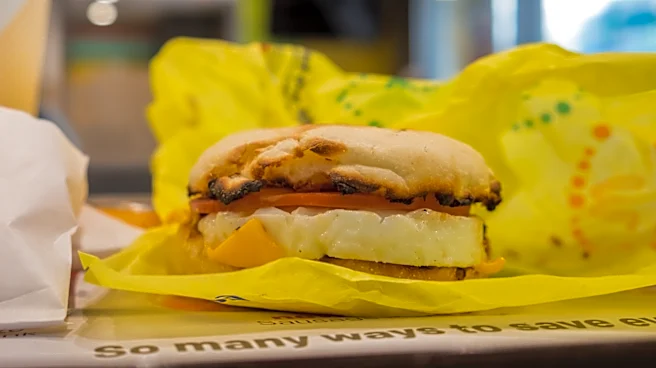
A block over, Corn on the Corner serves a menu dominated by one item — corn — proving the single-ingredient restaurant gimmick maintains its marketing cachet. Here, roasted kernels show up on burgers, fries and grilled cheese sandwiches — and content creators eat up every bite. The restaurant is walking distance to Egg Bar, another single-ingredient hot spot where steam-baked egg patties are served between slices of Japanese milk
bread, or on a bed of salad greens.
In the world of buzzy food and beverage trends and establishments built for virality, all roads lead to Dearborn.
The city’s Middle Eastern and North African population has shaped Dearborn’s culinary identity for more than a century. In recent years, however, a younger generation of entrepreneurs has broadened the scope, fusing Arabic culture and social media culture in fun, modern ways. Now, for every traditional Lebanese, Yemeni, Syrian or Turkish restaurant, there’s a fast-casual joint with an all-halal menu and Instagram appeal.
Dearborn has become the land of Caesar salad wraps that weigh in at more than a pound, cream sandwiches, fruit-shaped ice creams and Dubai chocolate bars coated in edible glitter.
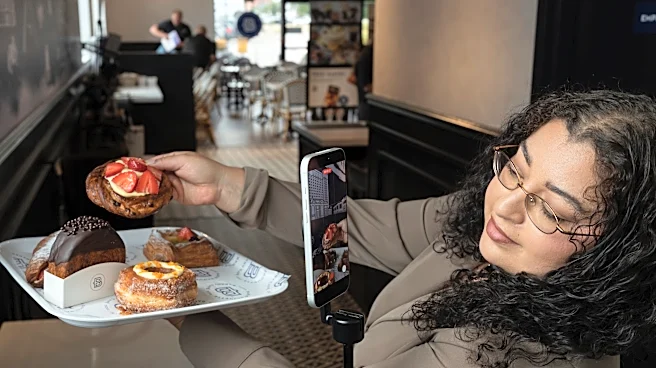
The foods that go viral are the ones that tap into the inner child of the collective consumer. They wow with color and quirk, grandiosity and glut. The bigger, the sweeter, the more outlandish the dish, the more appetizing the bait for the social media influencers who will jolt a restaurant into stardom. Dearborn has become an amusement park for food content creators, and the relationship between the two is symbiotic: Restaurants depend on influencers for promotion, creators rely on restaurants for content — and in many cases, compensation.
Why Dearborn is the land of viral food trends
As the founder of the digital marketing company Bolt Detroit, Hania Manouzi works with metro Detroit business owners to help maximize their impact online. Manouzi sees her Dearborn clients as especially entrepreneurial, with a willingness to test new, innovative approaches that might boost sales, or, for a restaurant business, bring diners into a space. Often, the tactic is to hop onto a viral food trend.
“It's a no-brainer to invest in the materials to get a viral product pushed out,” Manouzi said, noting that Dearborn entrepreneurs have a keen understanding that viral trends show a product or dish has proven successful elsewhere.

As business owners are increasingly online, social media algorithms begin to populate their personal feeds with global food trends. Manouzi finds it’s her Dearborn clients who keep up with the trends that cross their feeds, and seek out ways to become the first to implement them in metro Detroit.
“Every time I see a trend, my Dearborn clients have seen it two weeks sooner,” she said with a laugh. “As much as I throw in ideas, the majority of the time, they're already on top of it, which is kind of cool.”
Owners are dreaming up concepts to give today’s influencers the experience of feeling like kids in candy stores. In Dearborn Heights, adjacent to the city of Dearborn, Nuts Now is a literal candy store, serving buffets of sweets and snacks that are a part of a larger conversation in the social sphere. Self-described foodies file into the offshoot of the Allen Park flagship to document a first taste of popular Swedish candies. There are ice creams molded into sticks of butter, hamburgers or fried chicken drumsticks. Spoons crack the vibrant, sprinkle-topped coating of dot cakes, a trend that went viral earlier this summer, and scoops of ketchup wheels and Flamin’ Hot Cheetos slide into clear plastic bags.
The Canteen at Midtown, a food hall and food truck park in central Dearborn, gathers a fleet of businesses with their own social media presences and digitally engaged consumer bases under one roof.
“I recruited the cleanest trucks with the best following and the best reputation, and we formed The Canteen,” said owner Hassan Chami. “I chose reputable trucks that would bring in customers. They're coming into my business, but they're bringing their following with them — it’s the smart thing to do."
Chami witnessed the impact of working with socially savvy businesses when he founded Dearborn's Ramadan Suhoor Festival in 2018. By 2022, the Suhoor Festival drew crowds of more than 55,000 per day to stop at over 50 vendors selling photo-worthy ice cream nachos and bites of potatoes deep-fried into crispy corkscrews.

At The Canteen, Chami takes a similar approach, onboarding establishments with a knack for identifying creative dishes that excite customers. JJ's Custard Company Swirls infuses its frozen custard with nostalgic cereal flavors while So Cheesy delights with mozzarella bricks that achieve physics-defying cheese pulls.
“A lot of these guys were great entrepreneurs and heavy-hitters in the community,” Chami said. “I had to convince them that if we all come together, we're all going to make more money. We're going to feed off each other and we're going to grow and grow.” In just under two years, Chami said, The Canteen has served more than 100,000 customers.
Dearborn’s chokehold on the influencer network
Chami, who is of Lebanese descent, believes that Dearborn's Arab American influence plays a role in the city's embrace of social media.
"Arab Americans are entrepreneurs," he said. "We're willing to pay somebody to highlight our business for us.” Chami believes Dearborn’s Arab American restaurant owners value marketing and social media, and see paying an influencer fee as a worthy investment for a business’ success.
When he opened The Canteen, Chami hosted Media Night, a private event, not for traditional media — journalists, television anchors or radio personalities — but for influencers to get a first taste of the inaugural food trucks and restaurants that would anchor the space.
“Now what did that do for me? It blew up The Canteen,” he said. Posts about the new business sparked a curiosity among viewers who’d not yet heard about the opening and the influencers had exclusive insight. “We had influencers from all over metro Detroit taking pictures, talking about The Canteen, and to me, that was mega marketing.”
According to Manouzi, the reason social media marketing is a valuable tool for restaurant owners looking to grow their business is obvious: “Everyone is on social media, and it doesn't cost anything for business owners to be on it, too,” Manouzi said. Businesses on Instagram and TikTok have access to billions of users, the key is simply creating content that will reach them.
Partnering with influencers to create such content, Manouzi said, is a far more affordable expense than investments in conventional promotional material. “When you're looking at the traditional marketing that we used to do, like mail-outs, billboards and events, those things are so expensive and have so many moving parts,” she said. “Whereas social media content is essentially a medium for you to tell your story without spending too much money or having a huge barrier to entry to showcase what you do.”

Manouzi adds that the informality of social media is another draw for business owners pressed for time. Once a process to curate guest lists for elaborate events, now restaurateurs can fire off a quick direct message to an influencer between kitchen tasks. “It’s easy for business owners to feel empowered to do this kind of outreach,” she said.
Dearborn has seen content creators with robust followings. Clive Ibizugbe, who operates under the pseudonym Big Groove, ate his way through the city, sharing the journey in his slapstick style with more than 2 million followers. His sloppy “shark bite” into a stack of four chicken sandwiches at Paisano’s Pizza racked up more than 34,000 likes on Instagram. Exaggerated shimmies after a sip of a fruit drink at Shatila Bakery got more than 13,000 likes, and he dumped two small bottles of syrup onto a pile of chicken and waffles at The Chicken Coupe, garnering more than 8,000 likes.
“These influencers really do bring in a lot of business,” Chami said. “I give them credit. They deserve every dollar that we pay them.” Chami noted that the price for working with content creators varies from $250-$1,000 per post, and justified rates that are on the higher end of the spectrum. “They play a vital role in our business,” he said.
When the influencer places quality over virality
The field of social media marketing has come a long way since Abraham Obeid got into the business in 2017. A Dearborn native, Obeid initially created content for restaurants he loved and restaurant owners he had built relationships with. At the time, he said, the most he earned for his work was $200 a month.
During the pandemic, Obeid started his own Instagram account under the name Halal Food Junkie, where he would post from restaurants throughout metro Detroit, most often halal restaurants in Dearborn. Today, his account reaches 124,000 followers.

Obeid’s approach to covering the Dearborn restaurant scene goes beyond spots with trending offerings and a social media allure, a market Chami admits has its flaws.
“It's a double-edged sword because when this trend slows down, people on social media are looking for the next trend, so it's hard to build loyal customers,” Chami said, adding that everyday challenges in hospitality like short staffs can make fulfilling the demand that comes with virality overwhelming.
Instead, Obeid’s priority is to promote businesses with great food and halal offerings. More than 80% of those businesses, he said, are based in Dearborn.
“I just love my people,” he said. “I love my community.”
Rather than chasing virality and social media hits, Obeid advises restaurants to focus deeper on creating businesses that fulfill a need for the community around them. “Anytime you open a restaurant and you’re only thinking about money, you will never do any good,” he said.
“A restaurant that builds a culture and community will never lose.”

This altruistic philosophy, however, doesn't discourage Obeid from partnering with, or promoting trendy food businesses. In 2022, the influencer turned restaurateur when he became part owner of Nami Sushi, the popular sushi stand at The Canteen.
"I never thought in a million years that I would actually become part owner of something, but a lot of people come to me before they open for consulting," Obeid said. Rather than offering consultation services for Nami Sushi, he signed on to work with owner Mohamad Fadlallah in a more official capacity.
Today, Nami Sushi is known for its menu of food trends, from sushi push-pops to sushi burritos.
If you're curious about the sushi stall's tempura-fried shrimp tacos, Halal Food Junkie has the review. Seated in the driver's seat of his car, Obeid crunches on the taco, stuffed with avocado and jalapeños for his Instagram followers. The verdict:
"Winner, winner chicken dinner," he said.
Contact Detroit Free Press Dining and Restaurant Critic Lyndsay C. Green at: LCGreen@freepress.com. Follow @LadyLuff on Instagram and Twitter. Subscribe to the Eat Drink Freep newsletter for extras and insider scoops on Detroit-area dining.
This article originally appeared on Detroit Free Press: Dearborn, the land of viral food trends and social media influencers