



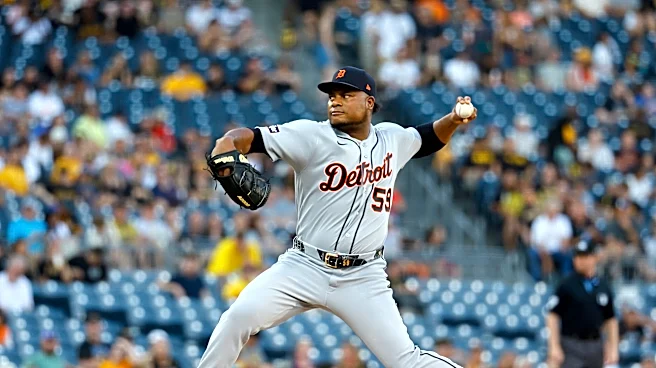

I gotta admit something.
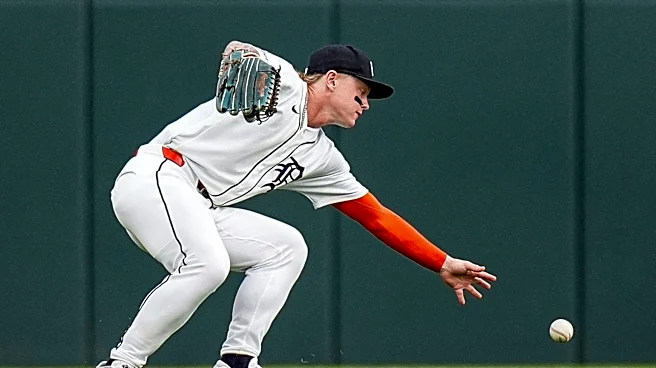
I was completely wrong about Hao-Yu Lee, the Detroit Tigers’ 23-year-old rookie infielder.
After he made his MLB debut earlier this season and scuffled for more than a month, I thought: No way. He is not gonna make it in the majors. He looks lost and confused and overmatched.
But the truth is, he was struggling. He was overmatched, hitting .205 in 83 at-bats over 32 games. That’s what happens to most rookies in the big leagues, at least the mere mortals not named Kevin McGonigle.

So, the Tigers sent Lee back to Triple-A Toledo, and my second mistake was thinking the story ended right there.
Because it didn’t end there.
No, that was just the beginning.
How did Lee become such a force?
Less than two weeks later, Lee returned to the big leagues and it’s like he’s a different player.
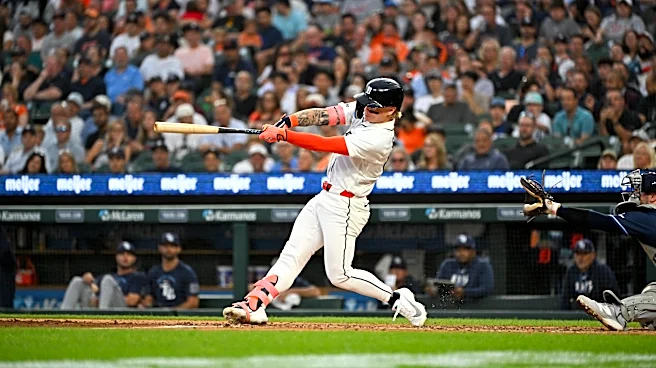
In his next 54 games entering Tuesday, Aug. 25, he hit .317 with an .843 OPS.
Translation: This dude is absolutely raking.
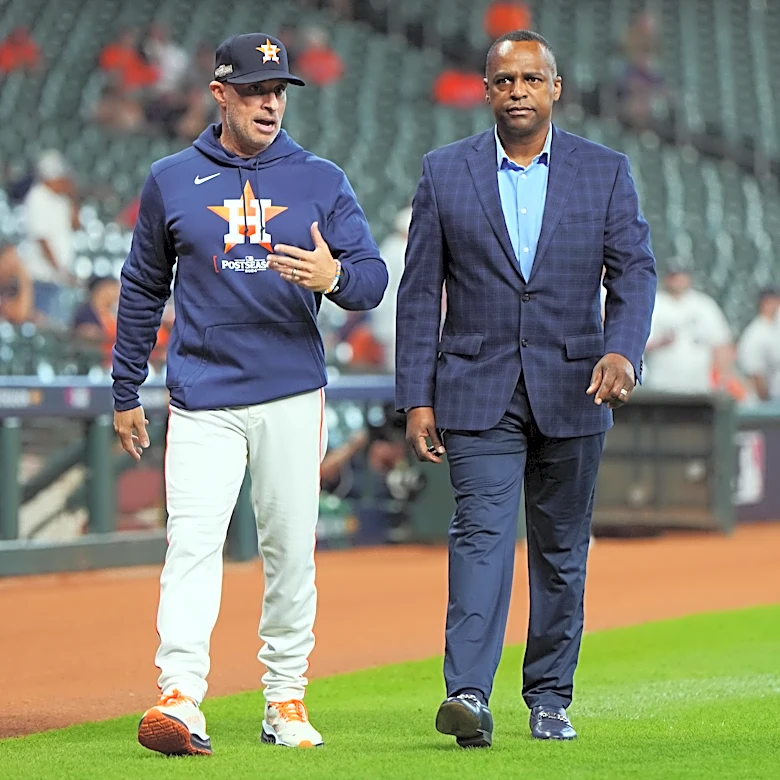
“He hits the ball hard and he makes really good decisions on what to swing at,” Tigers manager A.J. Hinch said. “When I say that, it doesn't mean he never chases, like every hitter chases. But I think as he has meticulously worked on zone control, then he's always hit the ball really hard.”
So, let’s dig into those numbers.
How is he doing it?
First of all, he’s getting on base way more.
First stint: a .241 on-base percentage
Second stint: .357.
But that’s a direct reflection of not striking out as much.
First stint: He struck out a whopping 24 times – 0.75 strikeouts per game – with just four walks.
Second stint: He has struck out 31 times – 0.57 per game – with 10 walks.
Lee has always been able to hit the ball hard. But now that he’s hitting the ball more and picking better pitches to attack, he’s showing far more power.
Translation: This isn’t rocket science, folks. When Lee makes contact, the ball has a tendency to fly.
First stint: two homers, three doubles, for a .578 OPS.
Second stint: five homers, nine doubles with a .843 OPS.
And he’s been more productive in driving in his teammates, going from nine RBIs in 32 games (a 46 RBI pace over 162 games) to 23 in 54 games (a 69 RBI pace over 162 games).
“I've learned how to slow down the game,” he said through Peter Lin, the Tigers translator. “I haven't reached my ceiling yet. Every aspect, I'm still developing.”

The good side of failure
So, what changed?
Lee has always been a quick learner. When a coach tells him something, he usually makes an adjustment almost immediately. But in his first stint with the Tigers, he struggled to do so, for the first time, and everything came hard.
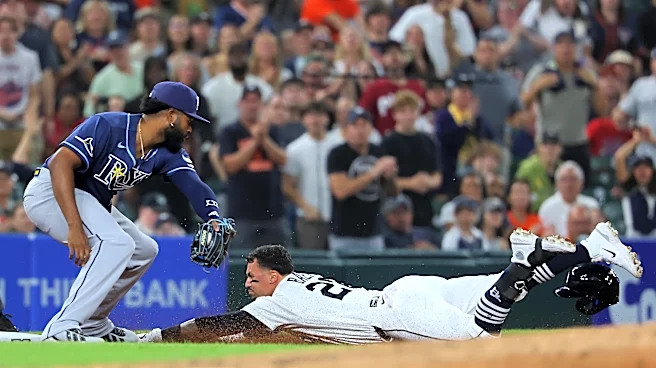
The quick, easy narrative on Lee is that he came up and he struggled. Then, he went down and found it. But that’s missing some nuance. Because maybe he'd already started to turn it around at the end of that first stint. Maybe things were already starting to click. His final game of the first stint came on June 1 at Tampa Bay; he went 2-for-5 with a solo homer.
Maybe that's when it started to flip.
“Failure is OK,” Hinch said. “It's the best way to learn, and we just have in the world today less tolerance for a slower ramp.”
Now, here is something that is important to remember: He’s not a finished product. He’s still learning. Still growing. And I’ll give you an example.
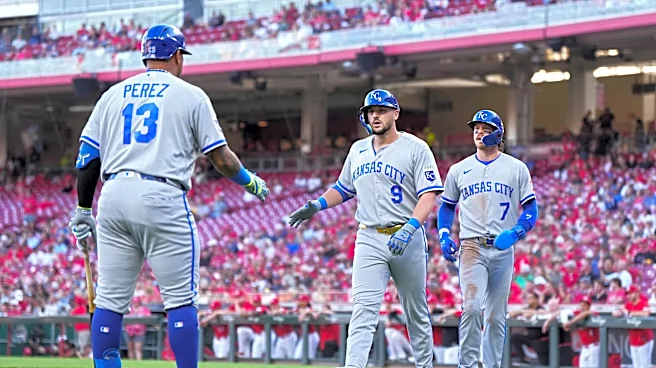
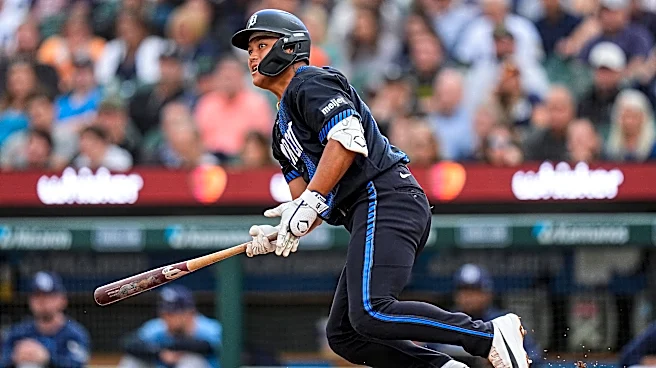
Lee is a natural opposite-field hitter. But he did something significant on Saturday against the Kansas City Royals. Lee was facing Michael Wacha in the second game of a three-game series. He jumped on a slider, yanking it way over the left-field fence, a homer that traveled 446 feet. It was a magnificent, if not jaw-dropping, pull-side homer.
And it showed his growth.
“Everyone knows I'm pretty good at opposite-field homers,” he said through translation. “Once I develop my pull-side, I'm gonna be much more advanced hitter, and that's what I'm working on.”
But here’s another way to look at it: That homer showed how much more potential he has.
“That pull-side power is in there,” Hinch said. “He's had to work to get to that a little bit. … So, he's learning a lot, and he's learning when to take his shots. He's a dangerous hitter.”
He's a far more dangerous hitter when he can go pull-side because it’s an answer to pitchers who want to jam him inside.
“As he's gotten into the big leagues and he sees himself getting crowded a little bit more, the adjustment is to take his shots to the pull side,” Hinch said. “He's showing that he has line-to-line power, which is a good sign and a good development.”
So, he continues to work behind the scenes, taking batting practice and working with the hitting coaches.
And before every game, he takes ground ball after ground ball, working on his techniques.
“He’s a dependable defender,” Hinch said.

Slowly, but surely, he’s getting better. And it’s a strong reminder that it’s foolish to make snap judgements on these young players.
“If you don't show something perfect right away, everybody wonders what's wrong,” Hinch said. “In reality, it's just the adjustment to a level that you've never been before. Lee is a sneaky young guy. We talk about Kevin [McGonigle] and we talk about Max [Clark] – oh, they're super young.”
But remember, Lee is just 23 years old.
“Just have patience with young players and allow them to navigate this unique level,” Hinch said. “I think belief comes from experience and doing some positive things. We try to get these young guys to not feel like they're getting optioned every time they do something poorly. We don't want them to play with fear.”
Thankfully, that’s never been a problem for Lee.
“He's never really played with fear, but he naturally questioned whether he belonged the first time,” Hinch said. “The second time, we've seen him be himself a little bit more, and I just think judging players too early is a crime. It’s just not punishable like normal crimes.”
So call me guilty.
It’s clear he belongs. It's clear he has some serious talent and he deserves time to let it grow.
Contact Jeff Seidel: jseidel@freepress.com. Follow him on X @seideljeff
This article originally appeared on Detroit Free Press: How Hao‑Yu Lee turned around rookie season for Detroit Tigers