

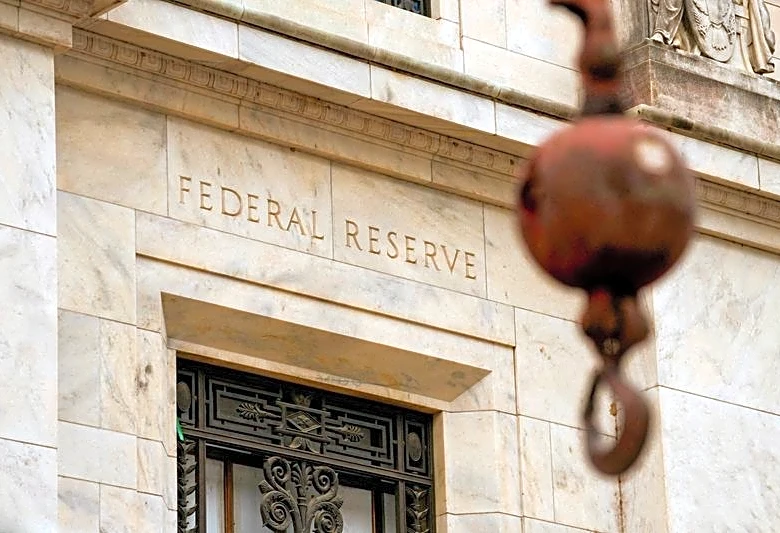
Borrowers watch out, we're witnessing the first interest rate hike in more than three years. It likely will not be the last as the Fed tries to derail dogged inflation.
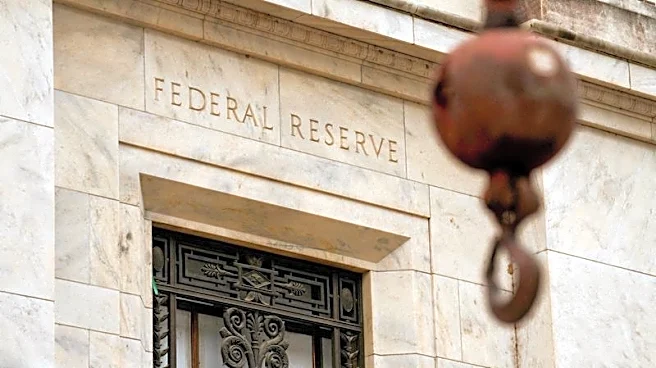
On Wednesday, Sept. 16, the Federal Reserve raised short term interest rates by a quarter of a percentage point. The vote was unanimous.
The federal funds rate — which directly influences a variety of rates including those on credit cards, private student loans, small business loans and home equity lines of credit — now finds itself in a target range of 3.75% to 4%.
That's up from the previous target range for the federal funds rate at 3.5% to 3.75%.
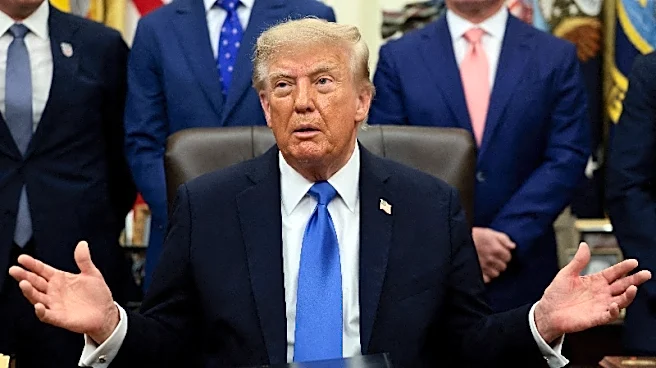
Much is being made, of course, by pundits about how the September rate hike goes directly against President Donald Trump's long expressed
wishes for a rate cut.
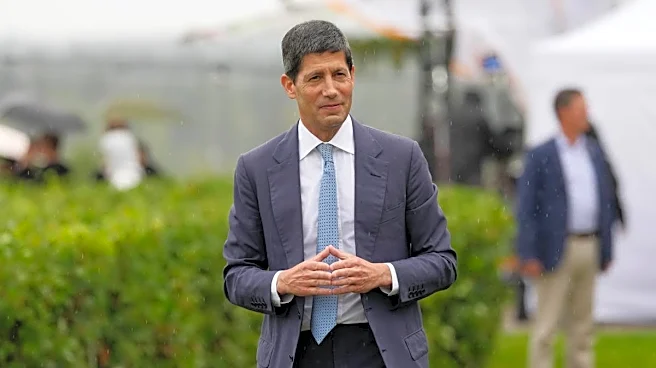
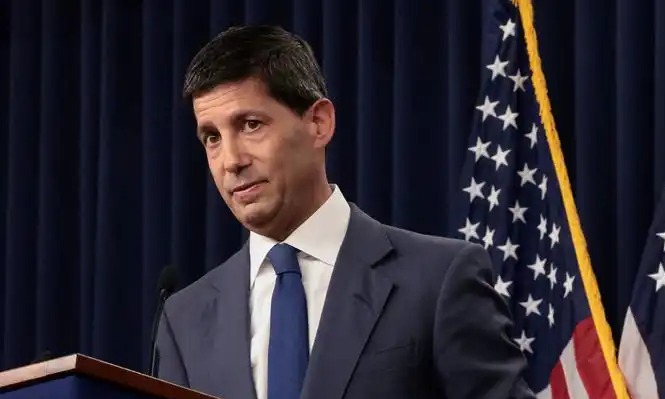
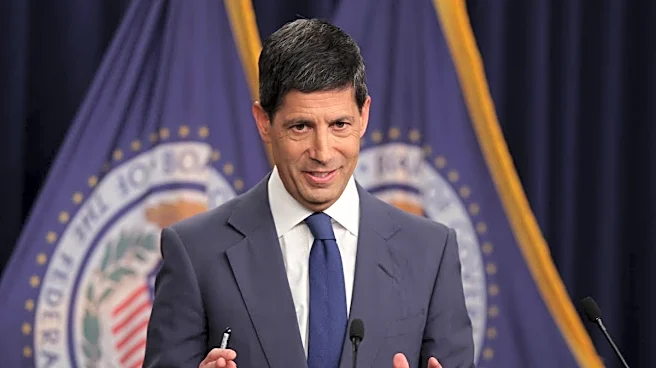
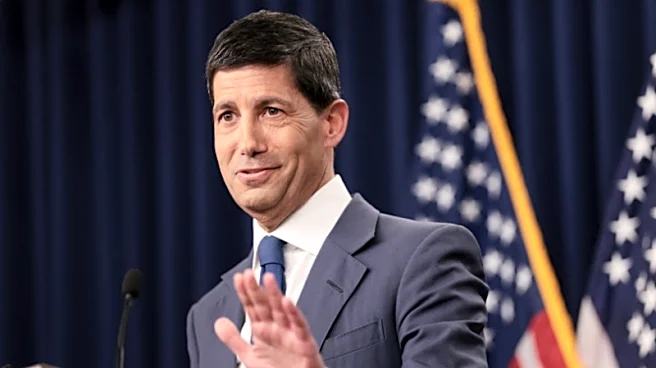
Trump famously clashed over rates with former Fed Chairman Jerome Powell. Then, Trump's man Kevin Warsh took office as Fed chair in late May. And now, Warsh moved in the opposite direction of where Trump wanted to go and led the Federal Open Market Committee in raising interest rates, not lowering them. An interesting twist to say the least.
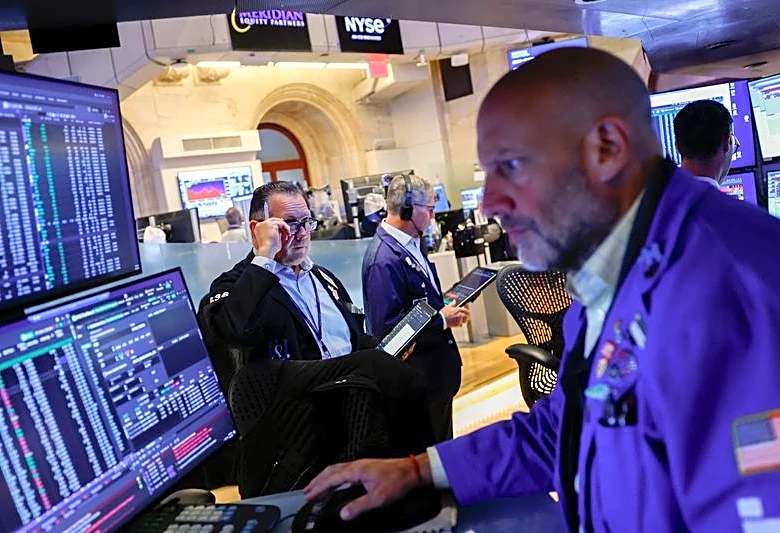
Oddly enough, it's a rate hike that Wall Street thinks is necessary to tackle inflation and keep up the appearance of central bank independence and credibility. Think of this rate hike as throwing a little red meat to the market.
Some expect what they call a "shallow tightening cycle" where the Fed could raise interest ratesby a quarter point here and there over time to avoid an economic fallout.
Nothing drastic expected ahead, some say.
Even so, consumers —who already are fighting high prices at the pump and in nearly every aisle of the grocery store — will not be thrilled to see their interest rates on credit card bills now go up even further.
We very likely may be entering a time when interest rates remain high and could continue to go higher. Unfortunately, the interest rates that consumers pay for credit cards, car loans and mortgages may not come down as quickly as many would hope, economists say.
"Consumers should therefore probably plan for a relatively high-rate environment to persist for at least a few years," University of Michigan economic forecaster Daniil Manaenkov told the Detroit Free Press.
Take a hard look at credit card debt
If you've leaned on your credit card to deal with higher prices at the pump or grocery store, now's the time to put the plastic on pause as much as possible. Pay down existing debt to avoid paying even more in interest as rates go up.
"Even modest rate increases can become significantly more costly when applied to larger balances or compounded by future hikes," said Michele Raneri, vice president and head of U.S. research and consulting at TransUnion.
Credit scores matter so much more when it's tougher to find a low rate — which is why you absolutely must pay bills on time, make sure to keep balances low on credit cards and not take on too much debt.
Raneri said these habits also can help protect your credit score so that you'd be better able to refinance existing debt into lower-cost loans or credit cards should interest rates moderate in the future.
Following the latest rate hike, Raneri noted that borrowers will see relatively small increases soon in their monthly credit card bills, if they don't pay off the balance in full each month. We're initially talking about a few dollars a month or less for many people with higher outstanding credit card balances.
Even so, she said, "the cumulative effect of higher borrowing costs can become more meaningful over time, particularly for consumers carrying larger balances or making only minimum payments."
The average credit card rate was 22.15%in the second quarter of 2026 for accounts that carry a balance and are assessed interest, according to the latest Federal Reserve statistics.
People with low credit scores face much higher rates. And retail store cards, such as Macy's, charge annual interest rates above 32%.
For existing customers, credit cards often have variable rates, which are often tied to the prime rate. The prime rate goes up in tandem with a Fed rate hike, and higher credit card rates follow shortly afterward.
Right now, we're not seeing widespread layoffs across the economy. A stable jobs market gives the Fed more wiggle room to raise rates without running into the big risk of shutting down economic growth.
Even so, consumers should not expect a quick turnaround here that leads to a drop in interest rates soon.

"A few years ago, when inflation was easing and borrowing costs were slowly coming down, you could reasonably expect to be able to refinance a mortgage of 6.25% to something lower in a few years," said Matt Colyar, an economist at Moody's Analytics.
"That’s where the trendlines were, even if we weren’t headed back to 3%."
Now, Colyar said, it is much harder to anticipate a similar trend for mortgages or other loans.
"Inflation has been above-target for five-plus years," he said. "And chaotic policymaking, geopolitical uncertainty, and an even fuller abandonment of fiscal restraint have made higher interest rates feel more structural."
His suggestion for consumers: "Don’t expect dramatic improvements in borrowing costs the way you could have reasonably expected to after the pandemic bout of inflation."
The Fed had been sitting tight
The Fed kept short-term interest rates steady for each of the first five meetings of 2026 in January, March, April, June and July.
The last time the Fed lowered interest rates was its round of three quarter-point cuts in 2025 — which took place last year in September, October and December.
The most recent Fed rate hike was back on July 27, 2023, when the Fed policy committee raised the benchmark rate by a quarter point to a target range of 5.25% to 5.5%.
We've had hints of an upcoming Fed rate hike for weeks now after rumblings in the bond market drove government bond yields to rise rapidly.

Fed Chair Warsh did not give a forecast, but he did give some hints in his Jackson Hole speech on Aug. 28, that a rate hike could be ahead.
"High inflation itself is very harmful to economic prosperity," Warsh stated in late August.
"If the Fed gets inflation wrong and judges the economy wrong, who gets the worst of it?" Warsh asked.
"Not the financial high-fliers. Hard-working Americans are the ones left to deal with inflation that is too high or jobs that suddenly appear less secure."
Why is inflation so stubborn?
Fed Governor Michael S. Barr said in a speech given Sept. 1 that enormous progress had been made "from inflation's peak of more than 7% in 2022 to a bit above 2% in 2024, but that progress stalled in 2025."
"A series of shocks — from tariffs and then the conflict in the Middle East, as well as from the rapid AI buildout —pushed us off course," Barr said.
He noted in that speech that if inflation did not appear not to be moderating sufficiently "then I think we should act decisively to raise rates" at the September meeting.
The Fed noted in its official statement on Wednesday, Sept. 16: "Inflation remains elevated."
"Economic activity is expanding at a solid pace. While uncertainty remains elevated owing, in part, to geopolitical developments, domestic spending has been resilient," according to the Fed statement.
Colyar, at Moody's Analytics, said inflation is elevated and it is painful. But Colyar and some other economists maintain that inflation is not entrenched or likely to remain in place long after some economic shocks reside.
"Shocks, in the form of the Iran war and its effect on energy and tariffs, have caused prices to rise," Colyar told the Detroit Free Press. "But these aren’t structural."
While the Fed doesn't have room to be complacent at this point, he said, inflation expectations are not rising dramatically.

"And we're not seeing prices for things unaffected by those shocks, such as services, increase. If inflation expectations pick up or services prices start rising, then we’re in a different place," Colyar said.
He noted that the infrastructure buildout for artificial intelligence — driving up prices of microchips, semiconductors, and hardware — is demand driven, rather than a supply shock. But on the positive side, he said, inflation relating to AI remains relatively concentrated.
The latest rate hike on Wednesday, Sept. 16, may offer some reassurance to the stock market and bond market that the Fed is taking inflation seriously. But experts say the Fed's latest action will not cool off inflation quickly.
"The signal that the new Fed chair is willing to buck the president’s wishes will have a modest calming effect on markets," Colyar said.
"But in terms of actually slowing inflation, a rate hike won’t get more oil through the Strait of Hormuz, nor will it lower the effective tariff rate," he said.
And he noted that a slightly higher federal funds rate is "not going to be enough to dent what has been an insatiable pace of AI investment."
"Growth would be a lot stronger without the chaos coming out of Washington, but things are still holding up OK," Colyar said.
Colyar and U-M's Manaenkov say the odds of a recession remain relatively low.
University of Michigan economic forecaster Manaenkov told the Detroit Free Press that the September rate hike is unlikely to be a one-time action, but rather the start of a policy realignment. Further hikes may follow.
"The Fed will continue to monitor how shocks from tariffs or higher energy prices propagate through the economy and how they affect both productive capacity and aggregate demand," said Manaenkov, the U.S. forecasting specialist for the U-M Research Seminar in Quantitative Economics.
Judging how much AI-related investment could fuel inflation in the months ahead could be even more of a wildcard.
"Unlike tariff- or energy-related price increases, AI-boom-related inflation is much more likely to persist as long as the AI boom continues," Manaenkov said.
"That is exactly the type of persistent inflation the Fed wants to avoid."
Manaenkov said the September rate hike likely indicates that the Federal Open Market Committee has concluded that a large portion of inflation above its 2% target is likely somewhat entrenched and needs to be tamed through monetary policy.
While the consumer price index is somewhat elevated, he said, the CPI has shown a slowly improving trend.
By contrast, the personal consumption expenditures index — the Fed's preferred measure of inflation — accelerated quite substantially earlier this year, Manaenkov said.
"More importantly, a meaningful portion of the run-up in PCE inflation can be attributed to the effects of the ongoing AI boom filtering into consumer prices via higher costs of computers, smartphones, tablets, cellphone contracts, storage cards" and more, he said.
Accurately predicting how many more times the Fed is will raise rates from here will be tougher than perhaps in the past. We're looking at too many moving parts and far too much that is unpredictable — how long the AI boom lasts, when the Iran War ends and oil prices move back down from above $100 a barrel, how tariffs and the ongoing trade war play out.
"The Fed can certainly drive down inflation by tightening aggressively, but that would likely tank the economy and raise the unemployment rate as well," Manaenkov said.
The Fed has changed its course. Before the Iran War began in Feb. 28, economists had expected a rate cut or two or event three in 2026. Those cuts are clearly off the table.
What to consider now: Don't bet on one and done when it comes to Fed rate hikes in 2026 and even possibly the start of 2027.
Contact personal finance columnist Susan Tompor: stompor@freepress.com. Follow her on X @tompor.
This article originally appeared on Detroit Free Press: What the Fed's first rate hike in three years means for consumers