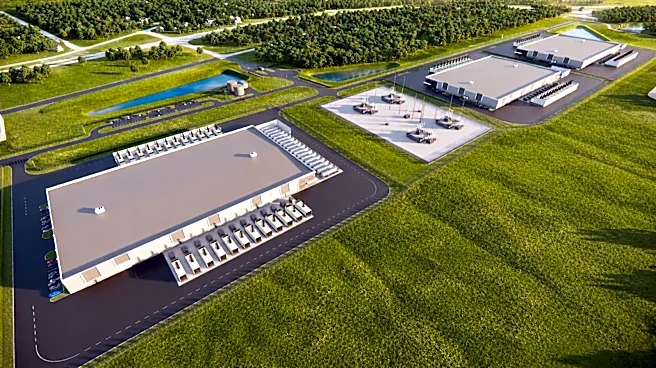






Nationwide, local governments are debating what to do about data centers – the massive operations that help fuel artificial intelligence and related products but use large amounts of electricity and water in the process.
On Sept. 15, the Marion County Commission took its first formal step into the fray.
The commission approved a 12-month moratorium on large (50 megawatts at peak load) commercial data centers.
The vote was 4-1, with Commissioner Kathy Bryant in dissent. She wanted a 12-month moratorium on data centers of all sizes, not just a pause on megacenters.
The commission has scheduled a workshop on data centers at 2 p.m. Sept. 21 in commission chambers at the McPherson Governmental Complex, 501 SE 25th Ave., Ocala.
In backup material for the
commission meeting, county staff said a 12-month moratorium (it did not include any size restrictions) was needed so staff could better prepare itself – and properly update the county's regulatory structure – to address potential requests to establish a data center in Marion.
"Existing ordinances and development standards do not adequately address the unique infrastructure demands, impacts to neighboring property owners, and operational characteristics of newer data centers," staff wrote. "Additionally, potential cumulative impacts of data centers on the county's water and wastewater systems, groundwater resources, and electrical grid are not yet fully understood."
"Staff is requesting authorization for a temporary moratorium on the processing of development orders and/or development permits for these data centers to evaluate land use compatibility and impacts on critical public facilities through a collaborative effort with county departments and external agencies responsible for the provision of these services," the staff material continues.
"Prior to the end date of the moratorium, staff intends to bring any necessary amendments to the Comprehensive Plan and/or revisions to the Land Development Regulations to the" county commission.
Bryant emphasized these points as she unsuccessfully lobbied for the broader moratorium.
"There are so many unanswered questions," Bryant said during the meeting. "Staff doesn't know how to craft what we need to ask for if we have an application come forward. And they, in their own words, that's what they (staff) have said.
"There's no rush for us to move forward on this. No end of the world anywhere," Bryant continued. "Do you really want to be at the dais, as we have been so many times before, negotiating on things that we really don't have the answers to, or having staff have to just go through... and then, if you miss something, you can't go back and fix it."
Staff noted that state law doesn't prohibit local governments from regulating data centers of any size.
Commissioner Matt McClain argued for limiting the temporary moratorium to big data centers.
"When I think about the ones that are the problems I'm thinking about the big, large, hyperscale ones, the ones that are bigger than 50 megawatts," he said during the meeting. Anything smaller, McClain said, can be handled by staff.
"We can figure that out through the special use process," McClain said later in the meeting, referencing a property owner's ability to seek a special use permit from county government.
There was discussion during the meeting of possibly delaying the moratorium vote until after the Sept. 21 workshop. At the workshop, the commission will hear from the public, talk among themselves and eventually give staff direction on how to handle any applications that do come in. Among the area of concern for the commission: noise, grid capacity, buffers and protection of water and springs.
But in the end, the commission majority thought it was better to move forward right away.
Just before the vote, County Administrator Mounir Bouyounes asked why the commission would even need to enact a moratorium if it only applies to data centers of 50 megawatts or bigger.
"We have nobody pressing or meeting with us about a hyperscale data center," he said. "Why do you want to adopt a moratorium with those conditions?"
"I want to make sure that we don't get any applications from the big hyperscalers because those are the ones that I am concerned about," McClain said.
But Bryant said a proposed data center that uses 49 megawatts, for example, would be 100,000 to 200,000 square feet in size and use an enormous amount of energy.
jross@usatodayco.com
This article originally appeared on Ocala Star-Banner: Marion County enacts 12-month pause on large data centers. What's next?