


The trial of a man accused of contributing to a drug overdose death ended Aug. 26 with jurors unable to reach a unanimous verdict.
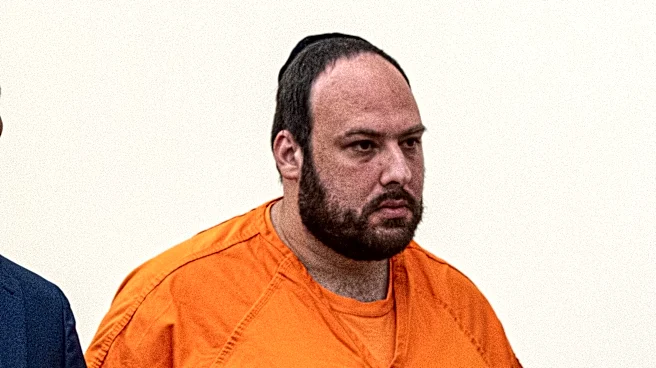
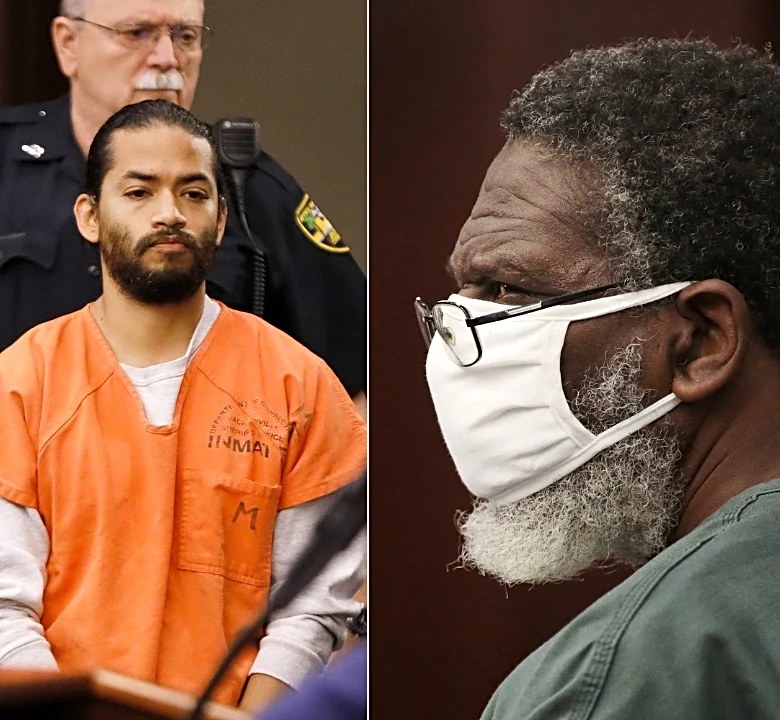
Eligio Cintron Perez, 27, is charged with death caused by the unlawful distribution of fentanyl. Deliberating for four hours, jurors had the option of finding him guilty as charged; guilty of a lesser offense, manslaughter; or finding him not guilty.
In the end, they deadlocked and were sent home.
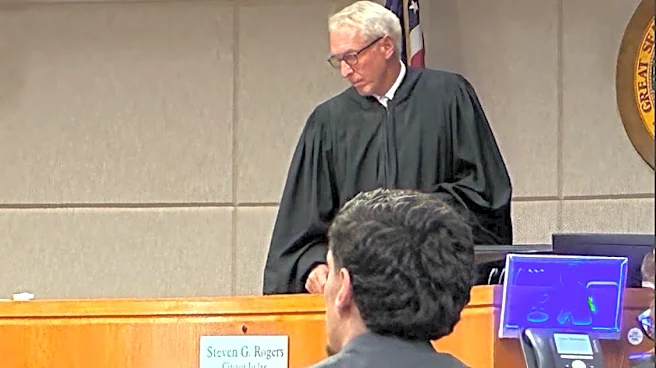
Now the case must be retried within 90 days. Circuit Judge Steve Rogers set a pre-trial conference of Nov. 18. He told Cintron Perez that, since he's in custody, his case will have priority.
Cintron Perez is accused of providing fentanyl to 22-year-old Simon Finley Dotson of Ocklawaha, who died of an overdose in early 2023.

Assistant State Attorney Amy Berndt prosecuted the case. Defense attorney John Klein and defense paralegal Melody Hoover were the legal representatives for Cintron Perez.
Closing arguments
Each side had 90 minutes to make their closing arguments on Aug. 26. The prosecution is allowed an argument and then a rebuttal after the defense since the state has the burden of proof.
Prosecutor Berndt told the jury that fentanyl kills too many people, shatters too many lives, and leaves a trail of devastation. Cintron Perez, she said, sold pills he knew contained fentanyl to Dotson. She said the drugs caused the man's death, and Cintron Perez did not care.

Using slides shown on three large TV screens inside the courtroom, the prosecutor showed text messages exchanged between Cintron Perez and Dotson about purchasing Oxycodone, which was the drug of choice for the victim. In the messages, Dotson was anxious to get the pills and kept messaging Cintron Perez.
Berndt reminded the jury that Cintron Perez admitted to authorities, during an interview, that he had been corresponding with Dotson. He also said he arranged the drug deal, took Dotson to the location where the pills were located, and served as distributor.
In trial testimony, the doctor who performed the autopsy said Dotson was otherwise healthy and fentanyl was the cause of death.
According to the state, Dotson was given seven pills. He gave one to Cintron Perez and kept one. Law enforcement later recovered the other five.
Berndt said law enforcement couldn't obtain fingerprints or DNA from the plastic bag that held the five remaining pills.
Defense attorney Klein argued that the case against Cintron Perez was an example of confirmation bias. He said the victim's phone also held drug-related messages from another person. But law enforcement keyed on Perez and ignored the other person.

The case, he said, was built around Cintron Perez. The defense lawyer said it's hard to imagine that one pill killed Dotson when no test confirmed the purity of the pills found in the man's room.
He said it was well known that Dotson had a drug problem, and he received two pills a few days before his death. The lawyer said nothing happened as a result of those pills.
He acknowledged that while Dotson's death was tragic and from all accounts he was a good man, that doesn't make his client responsible for the victim's death.
If Cintron Perez is convicted, will law enforcement officials search for the person who supplied the drugs? The answer, he said, is no, and that's a joke at Cintron Perez's expense.
The court was told that Cintron Perez declined to tell law enforcement anything about the dealer.
The five remaining pills seized by authorities were not sent to a lab until August 2024, more than a year after Dotson's April 2023 death, the defense lawyer noted. He asked why, especially since Dotson's death was caused by fentanyl toxicity.

Klein said there's too much reasonable doubt, and therefore Cintron Perez should be found not guilty.
In her rebuttal, prosecutor Berndt said an expert testified that half of a pill containing fentanyl could be deadly.
She doesn't know what was in the two pills that the defense referenced. But the one Dotson took from Cintron Perez caused Dotson's death.
She said the only person talking about the drug buying and selling was Cintron Perez. He was the person who set up the deal.
Berndt said the five recovered pills were in evidence at the sheriff's office and that never changed. The pills were sent to the lab for testing and they were shown to contain fentanyl. She said Cintron Perez was guilty of providing the pills to Dotson.
The jury
After the judge finished reading the jury instructions, he dismissed the two alternate jurors. That left 10 women and two men to decide the case.
If convicted of the more serious charge, the defendant would be sentenced to life in prison. With the lesser charge, manslaughter, his maximum sentence would be 15 years behind bars.
Jurors were not allowed to carry their cellphones with them to the back to deliberate. Their phones were collected by a bailiff and held for safe keeping. Evidence presented during the trial also went to the back with the jurors.
The panel went to the back at 10:48 a.m. to talk about the case. At 11:56 a.m., jurors told a bailiff they wanted to watch Cintron Perez's interview with a sheriff's detective and a drug agent.
At the conclusion of the video, jurors returned to the back.
By 2:08 p.m., jurors wanted to know what happens if they're unable to reach a verdict. Entering the courtroom two minutes later, the judge read their note and then read them an instruction. He told them they can go back and talk among themselves. If they can't reach a decision, then he'll declare a mistrial.
Jurors went back at 2:12 p.m. By 2:48 p.m. jurors sent another note to the court saying they could not reach a unanimous decision.
Contact Austin L. Miller at austin.miller@starbanner.com
This article originally appeared on Ocala Star-Banner: Jury deadlocks in trial of man accused in fentanyl death | Exclusive