







A new statewide poll offers a snapshot of how Missourians feel about political leaders, the state of the economy, education, data centers and vaccine requirements.
Saint Louis University and YouGov surveyed 900 likely Missouri voters from Aug. 13 to Aug. 24. The margin of error — or how much the results might vary if every single Missouri voter was surveyed — for this survey's results is 4.09%. The survey began in 2020, and takes place twice a year.
Here's what the newest survey has to say about Missourians' views on politics, data centers and ballot issues. The full results of this and past years' polls can be found at www.slu.edu/poll.
Approval ratings of federal leaders have declined
For the first time since the survey began, President Donald Trump's approval rating in Missouri has dipped below
50%: 48% of those surveyed said they approve of how he's doing his job, while 52% disapprove. In Feb. 2026, 53% approved, and the previous year, 56% approved.
"Donald Trump's approval rating — for the first time in the history of our poll, which only goes back to 2020, so we don't have all of his first term — it's underwater for the first time," said Steve Rogers, poll director and political scientist at SLU.
U.S. Sens. Josh Hawley and Eric Schmitt have also seen their approval ratings decline, to 47% and 44%, respectively. This is the lowest approval rating Hawley has seen since the 2023 polls. The only time Schmitt had a lower approval rating was in August 2023.
After a brief uptick in approval, the United States Congress has once again seen its approval ratings fall this year. Congress had an all-time high in February 2025 with 41% approval, but that has steadily decreased to 33% in February 2026 and 25% in August 2026, despite Republicans holding the majority in both houses. The United States Supreme Court has also seen a steady decline in approval: Going from 51% in February 2025 to 45% in August 2026.
Voters also have poor view of state leaders
Gov. Mike Kehoe's approval has seen a steep decline in the past 6 months, dropping from 50% approval in February 2026 to 40% in August 2026.
The Missouri State Legislature has seen a similar dip in approval, going from 51% in February 2026 to 42% in August 2026.
Additionally, a question asking who voters would choose for State Auditor of Missouri fell within the margin of error, a rare occurrence in a mostly red state like Missouri.
"Fitzpatrick is challenged, unlike most of his statewide colleagues, so he has to basically deal with the presidential midterm slump. This may have helped him in 2022, when he was elected, because everybody was upset with Biden, so Republicans did better," Rogers said. "But now, in 2026, everybody is upset with Republicans and (Fitzpatrick) basically has to deal with headwinds."
Opposition to data centers continues to grow
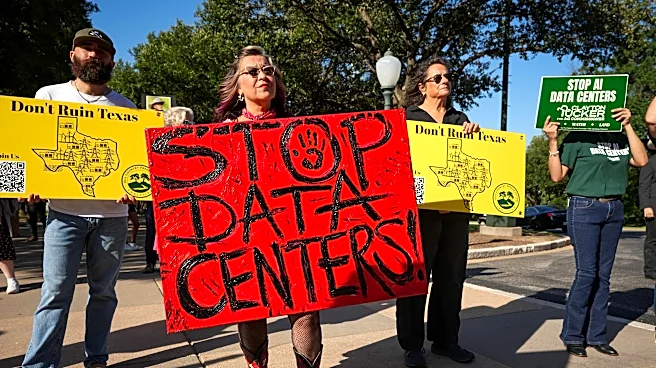
Data centers, facilities that house computer servers to store and transmit data, continue to be a hot-button issue for Missouri. Respondents seem to feel most strongly about data centers in their own communities.
"Opposition to data centers increased by about 17%, so 68% of voters now oppose data centers in their local community," Rogers said. In February, 51% of voters opposed data centers in their local community.
This poll included two questions about data centers, asked in two different ways. One group of 449 respondents were first asked whether they would support or oppose a data center in their local community and then whether they would support or oppose a new data center in Missouri; the other group was asked about the state and then about the local community.
Ballot issues see mixed support
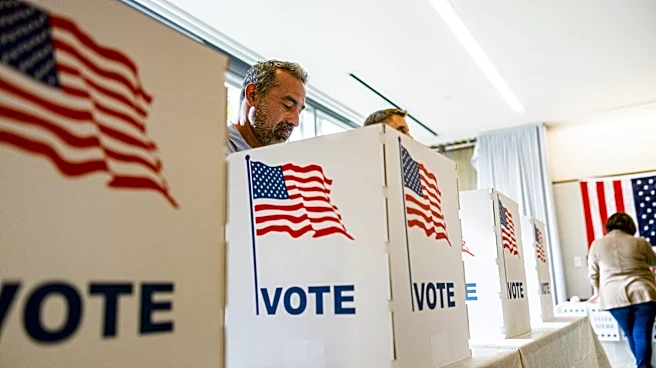
Respondents were also polled on ballot issues that will likely be on the Nov. 3 ballot, including Amendment 3, Amendment 6 and Proposition A.
Support for Amendment 3, which asks to reverse voters' 2024 decision to end Missouri's abortion ban, dipped from 50% approval in February to 43% in August. In August, 44% opposed the amendment, which puts the results within the margin of error.
Amendment 6 would restrict lawmakers' ability to alter state laws and constitutional amendments proposed by initiative and approved by voters, requiring any changes to receive 80% support in the legislature and a statewide vote to ratify the change. Rogers noted that while there's "overwhelming support" for the amendment at 48%, about a third of people are not sure about it.
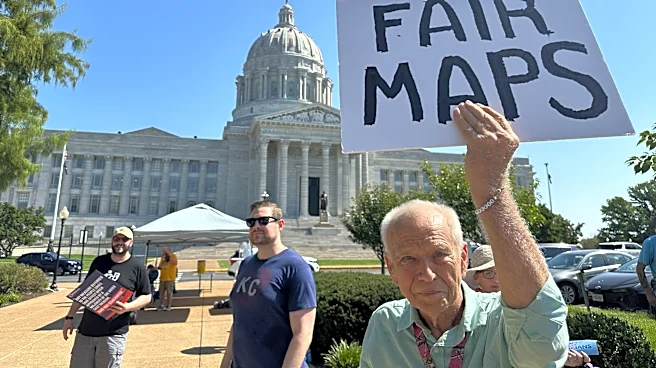
However, Proposition A may have caused the most confusion, Rogers said. The survey asked people about the referendum on Missouri's gerrymandered congressional map in February and again in August, but a change in the poll language resulted in some people flipping their responses.
The February poll asked whether voters approved of the legislature's actions, while the August poll used the ballot language. There were about 300 people who took both polls.
"(In the August poll) a third went 'not sure,' but people who were pro-map became anti-map, and people who were anti-map became pro-map ..." Rogers said. "The takeaway I have from that is that people are just confused. Most people kind of know, but there's a healthy, healthy portion that are just confused. I think the campaigns really need to emphasize what the heck a yes vote is and what the heck a no vote is."
Susan Szuch writes about health as well as local food and drink for the Springfield News-Leader. If you have feedback or story ideas, you can reach her at sszuch@usatodayco.com.
This article originally appeared on Springfield News-Leader: Federal, state leaders see lower approval ratings in new Missouri poll