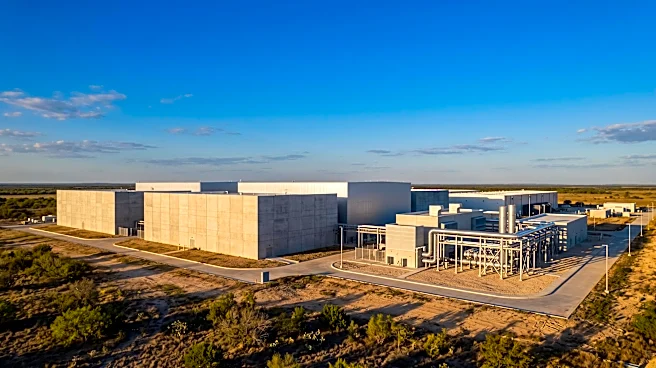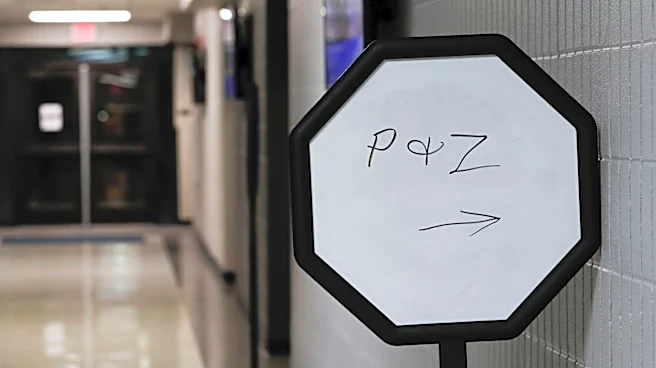




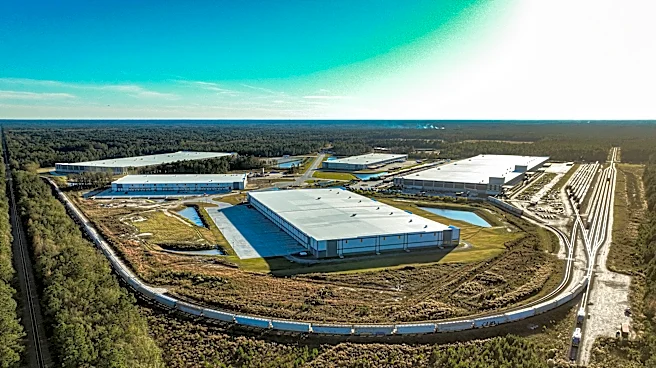

The pause on data center development is likely to officially continue in Springfield, though the city is taking initial steps to define the term in city codes. At the Oct. 15 meeting, the Springfield Planning & Zoning Commission will consider a text amendment that would explicitly note what data centers look like in the city's zoning regulations.
City Manager David Cameron noted at a recent Springfield City Council workshop that the proposal in front of P&Z will not be approving any developments or making a decision as to whether the city should or should not ban data centers altogether. Instead, it will create a definition to begin work on any further regulations.
The commission will also make a recommendation regarding the extension of the administrative
delay on data center developments for another 120 days until Feb. 24, 2027. According to city documents, city staff anticipate presenting council with data center regulation options in January.
Definition includes 3 categories
The proposed code amendment would define a data center as "a building, or a room or portion of a building, used to house Information Technology Equipment for the storage, management, processing, or transmission of digitaldata, including server farms, artificial intelligence training or processing, image processing, cloud computing, email services, cryptocurrency or other digital-asset mining, and similar uses."
It would establish three different classes of data centers: an accessory data center, a micro data center and a large-load data center. An accessory would be inside the principal building, taking up no more than 20% of the gross floor area, serving only the owner or tenant and using less than 1 megawatt of power. A micro data center would be no larger than 10,000 square feet in size and use less than 5 MW. A large-load center would be anything beyond either of those measures.
The 5MW threshold matches what City Utilities is using to define large-load customers. The utility has put together a large load taskforce to review any applications for new large load customers and ensure the costs of any upgrades to infrastructure necessary to accommodate a development like a data center would be covered by that business. The city's code amendment also includes a definition of Maximum Power Demand as the highest electric demand that a data center is design to draw at any moment at build-out of all phases.
City documents further note that to prevent a large facility from being divvyed up to fit a smaller class, data centers on the same lot or premises, on abutting or adjacent lots, or under common ownership or control and sharing infrastructure are treated as one data center. That means their floor area and power demand would be combined to determine the proper classification. Additionally, the definition notes that a data center includes backup generators, energy storage systems, cooling and electrical equipment and any substation that primarily serves it. This additional detail prevents equipment that serves a data center from being designated as a different separate use, such as a utility, which is currently defined in the code.
The staff report further states the city's Forward SGF Comprehensive Plan does not address data centers and none of the placetypes in the plan anticipate such a use. The definition, the report notes, is a first step before the city can evaluate how data centers relate to the placetypes. Currently, the text amendment presented does not set any regulations regarding where data centers may be located and what standards would apply to them.
Both the definition and moratorium extension will have to go to the council for a public hearing and an official vote before becoming final. That is expected to happen Oct. 26 and Nov. 16, respectively.
Lawsuit against city still pending
The change comes as Springfield's moratorium has been challenged in a lawsuit by data center developer Trent Overhue, through an LLC he manages. The definition of a data center was at the heart of a pre-development dispute between Overhue and the city. Overhue has argued that zoning at the property at 2900 S. National Ave. currently already allows "data processing services" which he interprets as permitting a basement-level data center. City staff have disagreed with this interpretation, noting that in the context the zoning was written, with data processing a subsection of the Administrative and Professional Offices use, the scale of development Overhue has envisioned would not be allowed.
Through the lawsuit, Overhue currently seeks a temporary restraining order to allow his proposal to be further reviewed for development. The city has objected to a restraining order being issued, arguing the measure is only meant to alleviate immediate and irreparable injury, which they claim Overhue has not demonstrated.
"Moreover, the issuance of a temporary restraining order would upend rather than preserve the status quo," wrote Chris Hoeman, the city's assistant city attorney, in his objections filed in court. "That administrative delay was itself enacted in order to maintain the status quo within the City while a matter of extreme public interest was studied."
During the administrative pause, the city has hosted three public engagement sessions. Most people at those events expressed general opposition to data center development as a whole.
The same Oct. 15 meeting agenda for P&Z will include the withdrawal of a rezoning application for 2900 S. National Ave. The rezoning for the property to allow a veterinary clinic was postponed and then withdrawn per the applicant's request. The item still appears on the agenda so the commission can formally withdraw it from consideration.
Want to go?
P&Z will meet Thursday, Oct. 15 at 6:30 p.m. at the Springfield Regional Police & Fire Training Center, at 2620 W. Battlefield Road. The meetings are also livestreamed on www.cityview.springfieldmo.gov/livestream and the city's Facebook page. The full agenda for every meeting can be found on the city's website.
Marta Mieze covers local government at the News-Leader. Have feedback, tips or story ideas? Contact her at mmieze@news-leader.com.
This article originally appeared on Springfield News-Leader: Springfield's proposed data center definition sets 3 classifications