




President Trump recently reaffirmed that the United States should lead the world in artificial intelligence. That's the right goal.
The question now is what it will take to get there.
Most conversations about artificial intelligence focus on software, semiconductors, or the next technological breakthrough. The more I've examined this issue, the more convinced I've become that we're overlooking something much more basic.
Electricity.
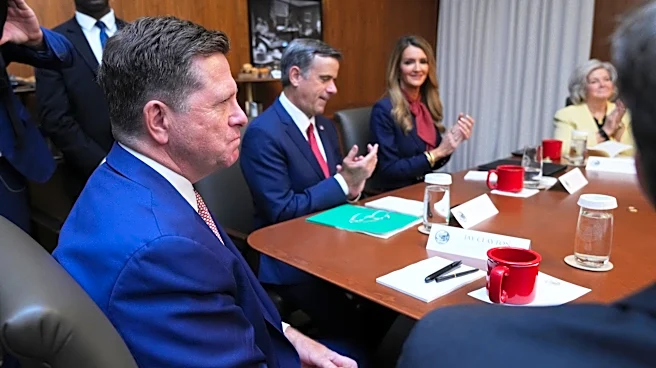
As chairman of the House Oversight Subcommittee on Economic Growth, Energy Policy, and Regulatory Affairs, I've spent much of this year examining America's economic competition with China. Whether the discussion is artificial intelligence, advanced manufacturing, critical minerals, or data centers, the same issue keeps
surfacing.
Reliable electricity is becoming one of America's greatest competitive advantages.
That's good news for Missouri.
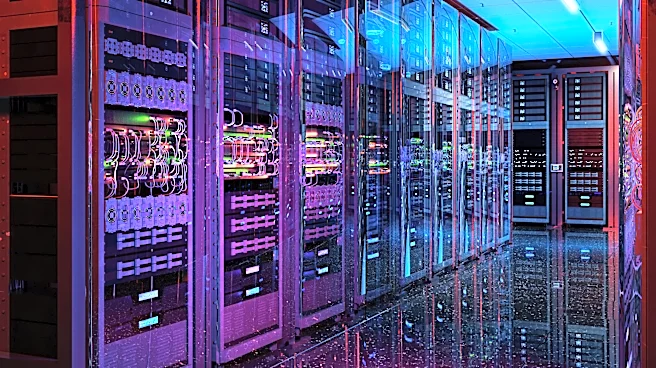
According to Lawrence Berkeley National Laboratory, data centers could consume between 9.5% and 15.3% of total U.S. electricity demand by 2030. Utilities don't wait for that demand to arrive before they start building. They plan years in advance, making long-term investments in generation and transmission before the first server is ever installed.
The Chinese Communist Party has reached the same conclusion.
It is investing heavily in the industries that support artificial intelligence — from critical minerals and manufacturing to energy production. During a recent congressional discussion on America's economic competition with China, we also examined reports that China-linked organizations are working to slow American energy and data center development. They understand that the country capable of reliably powering tomorrow's economy will have a significant competitive advantage.
Congress has already started moving in the right direction. The Working Families Tax Cut Act rolled back many of the policies that distorted energy investment and strengthened support for reliable domestic energy production.
But Washington shouldn't assume it has all the answers.
Missouri has been demonstrating what works for decades.
Our state didn't build its electric system around artificial intelligence. We built it around reliability, affordability, and long-term planning. Those decisions weren't made because anyone was predicting today's technology boom. They were made because they're sound policy.
It turns out they're also exactly what the artificial intelligence economy demands.
Missouri recently strengthened that approach through Missouri Senate Bill 4, legislation that encourages investment in new electric generation while protecting existing customers. It reflects a simple principle: growth should pay for growth. When major new industrial customers require significant new infrastructure, those costs shouldn't simply be shifted onto Missouri families and small businesses.
Missouri has also benefited from keeping long-term planning, electric generation, and customer accountability under the same state regulatory framework. That gives utilities the confidence to make investments years before they're needed while ensuring those decisions remain accountable to Missouri consumers.
In Missouri, we've shown that the path to America's energy dominance isn't restructuring the energy industry. It's preserving the proven framework that has delivered reliable, affordable electricity for generations. Strong oversight gives utilities the confidence to make long-term investments, while ensuring they remain accountable to the customers and communities they serve. The result is simple: power is there when it's needed, and the public interest comes first.
The results speak for themselves.
Recent analysis found Missouri ranked 12th lowest in the nation for retail electricity price increases over the past five years. That's not an accident. It's the product of stable policies that encourage disciplined, long-term investment instead of constantly changing the rules.
The broader national picture reinforces the point. A Charles River Associates analysis found that much of the increase in electricity prices has been concentrated in California and the Northeast because of state-specific policy choices and wholesale market structures — not because of a nationwide trend. The same analysis also concluded that, with limited regional exceptions, data centers have not been the primary driver of recent retail electricity price increases.

As states compete for the next generation of investment, those findings matter.
Companies deciding where to build data centers aren't simply looking for available land. They're looking for dependable electricity, regulatory certainty, and confidence that the infrastructure they need will be there 10 years from now.
Missouri is well positioned because we've stayed focused on those fundamentals.
As Congress continues strengthening America's position in the artificial intelligence economy, we should make it easier to build the infrastructure our country needs. We should also recognize that states don't need to abandon policies that have worked.
On energy, Washington should spend less time reinventing what works and more time learning from states that have already figured out some of the answers.
Artificial intelligence will reshape the American economy.
Missouri has spent decades building the kind of energy framework that the economy will require.
We should keep building on it.
Congressman Eric Burlison serves Missouri’s Seventh District in the U.S. House of Representatives.
This article originally appeared on Springfield News-Leader: Missouri's reliable power is the key to winning the AI race | Opinion