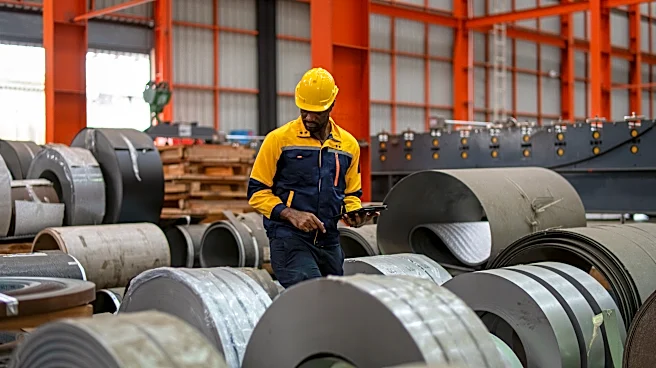

Missouri's auto parts and metal manufacturing sectors are among those facing the greatest pressure from President Donald Trump's tariffs, according to a new report.
Put simply, a tariff is a tax on goods
imported from another country. While tariffs can boost demand for domestic manufacturers by making foreign products more expensive, many U.S. companies are also deeply integrated into global supply chains and can face higher costs as a result.
To measure the effects of recent trade policies, the Trade Partnership Worldwide for the National Taxpayers Union Foundation ranked all 50 states, the District of Columbia and Puerto Rico according to the impact of tariffs imposed by presidential action in addition to regular statutory tariffs.
Here's what to know about Missouri.
How much does Missouri pay in tariffs?
Executive tariffs have cost Missouri an estimated $3.2 billion since January 2025 — the 24th-highest total in the country, according to the foundation. That is equivalent to $1,260 per Missouri household.
Roughly 75% of those costs were tied to raw materials, parts and equipment that Missouri businesses use in manufacturing.
Some of the hardest-hit imports include:
- Steel, aluminum & other metals: $295 million
- Auto parts: $286 million
- Metal products: $249 million
- Chemicals: $197 million
Those costs reflect a sharp increase in tariffs compared with just a few years ago. Steel, aluminum and other metals, for example, had an average tariff of 29.3% from July 2025 to June 2026. That tariff rate is nearly 8 times higher than the 2024 rate of 3.8%.
States with the highest tariff costs
California and Texas had the highest executive tariff costs, with cars and trucks among the imports most affected in both states.
- California: $63 billion
- Texas: $37 billion
- Michigan: $23 billion
- Georgia: $20 billion
- Illinois: $17 billion
- New York: $15 billion
- New Jersey: $14 billion
- Florida: $12 billion
- Ohio: $11 billion
- Tennessee: $11 billion
States with the lowest tariff costs
By contrast, the District of Columbia had the lowest estimated tariff burden at $58 million, with food and beverage imports accounting for some of the highest costs.
- Washington, D.C.: $58 million
- Wyoming: $107 million
- Montana: $107 million
- Alaska: $115 million
- Vermont: $212 million
- Hawaii: $251 million
- South Dakota: $255 million
- Maine: $275 million
- North Dakota: $283 million
- New Mexico: $344 million
This article originally appeared on Springfield News-Leader: How much are tariffs costing Missouri? See where the state ranks