






Despite a lack of major statewide races, the November election in Missouri is expected to be anything but quiet. A number of hotly contested ballot initiatives and downballot races — plus a contentious congressional race — figure to keep things interesting in the Show-Me State.
The central question political observers are asking in advance of November is whether the overwhelming failure of two Republican-backed constitutional amendments in the August primary will lead to changes in the balance of power in Missouri.
Long considered a swing state prior to the 2008 presidential election, Republicans now reign supreme in Missouri. The GOP has held supermajorities in the state Senate since 2010 and the state House since 2012. A Democrat hasn’t held the governor’s
office in a decade.
Those supermajorities afford Republicans near-total control of the agenda in Jefferson City, allowing them to override gubernatorial vetoes and pass legislation without the help of Democrats.
Republican control of the legislature is safe for now, but Democrats are optimistic that they can put an end to the supermajorities in one or both of the House and Senate. Hopes are high for Democrats, especially after Missouri voters delivered a resounding defeat to two Republican-backed amendments, which would have traded the state income tax for expanded sales tax, as well as made it harder for citizen-backed initiatives to advance to the ballot. Both were among the most unpopular ballot measures in state history.
By capitalizing off this surging momentum and stringing together wins in a few key districts, Missouri Democrats hope to gain greater influence over policy in the next legislative session.
Hundreds of candidates are in the running for elected positions around Missouri, ranging in scope from local offices to statewide positions. Here are five key topics to watch:
Abortion is on the ballot, again
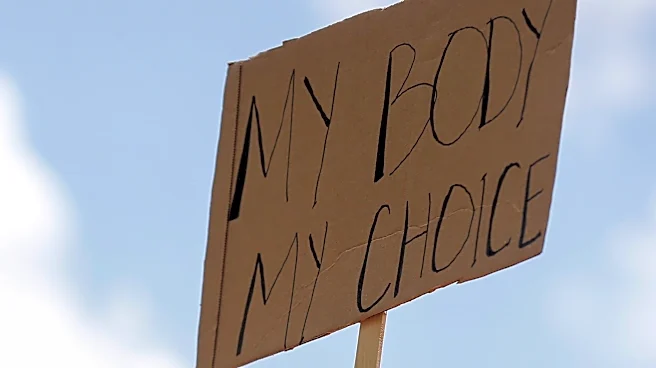
Easily the most-discussed statewide measure on November’s ballot is Amendment 3, which will ask Missourians to once again decide the legality of abortion.
Abortion has been legal in Missouri since 2024, when 51.6% of voters approved an amendment that enshrined the right to abortion in the state constitution.
That amendment, also known as Amendment 3, counteracted years of efforts by Missouri Republicans to impose heavy restrictions on abortion procedures. Prior to 2024, Missouri had some of the nation’s most restrictive abortion laws, which were imposed almost immediately after Roe v. Wade was overturned in 2022.

If approved this year, Amendment 3 would almost entirely repeal Missouri’s abortion protections and largely reinstate the post-Roe restrictions.
By late August, millions of dollars in funding already has poured in to the principal group working to defeat the amendment, known as Stop the Ban Missouri. Stop the Ban attracted significant funding from outside Missouri, including $2 million from the American Civil Liberties Union Foundation and $1.5 million from former New York City Mayor Mike Bloomberg.
Her Health, Her Future PAC, which is the leading anti-abortion group crusading for the amendment’s approval, reported about $1 million in total funding as of its latest campaign finance report.
Key ballot measures up in the air
It’s already been a busy year for ballot measures in Missouri, but there very well could be a couple more added to November’s ballot. It all hinges on a Supreme Court ruling that is expected to arrive in the first week of September.
Here’s to know ahead of the court's decision:
A potential Amendment 6, which would make it significantly harder for the legislature to roll back citizen-approved laws, has been denied a place on the ballot by Secretary of State Denny Hoskins, who argues the proposal violates the Missouri Constitution. Hoskins also rejected a referendum effort that would put Missouri's new congressional map to a public vote — and suspend the use of the new district boundaries in the meantime — on constitutional grounds.

A lower court judge upheld Hoskins’ decisions, but both measures have one final chance to get on the ballot: a Missouri Supreme Court ruling.
Cases involving both Amendment 6 and the referendum on the congressional map will be argued Wednesday, Sept. 2. The court’s decision will come fast, as the state’s deadline for adding measures to the ballot is less than a week later, on Sept. 8.
Will gerrymandering pay off for GOP?
One of the most anticipated congressional races in the country will play out in the Show-Me State, as voters in the newly redrawn 5th District will determine the success of Republican efforts to gerrymander a seat away from Democratic control.
Before the Republican legislature adopted a new congressional map in a special session last fall, the district contained much of the urban and suburban core of Kansas City. That session, called by Missouri Gov. Mike Kehoe at the behest of President Donald Trump, was intended to minimize incumbent Democratic Rep. Emanuel Cleaver’s odds of re-election.
Under the redrawn map, the 5th District stretches from Kansas City to Osage County, east of Jefferson City, in a move that places a dozen deep-red counties in the same district as a heavily Democratic urban center. Critics of the map have said this redistricting threatens to silence Kansas City’s political voice in Congress at the expense of securing another Republican seat in Missouri’s congressional delegation.
Cleaver is not throwing in the towel, pledging to fight for what would be his 12th term in Congress. He is the Democratic nominee, facing off against Rick Brattin, a state senator who emerged from a crowded primary field to claim the Republican nod.
A Methodist minister and a former mayor of Kansas City, Cleaver has made a name for himself in Congress over the past two decades as an advocate for affordable housing and federal investment in underserved communities.
Brattin is well-known in Jefferson City as one of the most ideologically conservative and combative members in the state capitol. He has consistently advocated throughout his Senate tenure for legislation that expands gun rights, restricts abortion and reduces government spending.
Outside of the 5th, none of Missouri’s seven other congressional districts — all currently held by Republicans — are expected to be particularly competitive.
Is GOP supermajority in the state Senate safe?
Continued Republican control of the state Senate is all but guaranteed, but that does little to dispel the intrigue around two key races playing out this fall.
Republicans currently hold 24 seats in the 34-person chamber; control of 23 seats is the minimum requirement to maintain the supermajority. If Democrats can successfully flip two seats, the Senate will be without a supermajority for the first time since 2010.
One toss-up Senate race comes in the 30th District, which contains the city of Springfield. Outgoing Republican Sen. Lincoln Hough is term-limited, leaving in his wake a wide-open race to represent a city that has leaned increasingly toward Democrats in recent elections.

State Rep. Betsy Fogle is the Democratic nominee for the seat. She’s currently in her sixth year representing a Springfield district that includes Missouri State University, which she is leaving behind for a chance at the upper house.
Fogle has made a name for herself in Jefferson City as the ranking minority member on the House Budget Committee, effectively making her the leading Democratic figure on appropriations.

Fogle faces off against Republican State Rep. Melanie Stinnett, another three-term representative from Springfield. Stinnett’s background is in speech language pathology, and much of her legislative focus has centered around the healthcare industry.
A similar situation is playing out a few hours away in the Kansas City suburbs of Lee’s Summit and Blue Springs, where voters in the 8th District will choose a new senator. Current Sen. Mike Cierpiot, a Republican, is term-limited.
Hoping to continue the line of Republican representation in the district is State Rep. Jon Patterson of Lee’s Summit, who has served as Missouri's Speaker of the House since January 2025.
As one of the most powerful elected officials in Jefferson City, name recognition is certainly an advantage for Patterson. Where Patterson could run into trouble is in his connection to Amendment 5, the tax measure more than 83% of Missouri voters rejected in August: Patterson sponsored the tax legislation and helped usher it through the legislature last spring.
On the Democratic side, State Rep. Keri Ingle is confident she can successfully tie Patterson to the unpopular amendment and win the seat.
Ingle’s background is in social work, and she has focused on related issues with her legislative proposals, which have included bills dealing with the child-welfare system, mental health and workers’ rights.
Don’t forget about the House
Several competitive contests are taking shape in the Missouri House, as well, with the GOP supermajority on the line. Democrats will need to net control of at least three more seats to end the supermajority and there are enough vulnerable districts to make it feasible.
As on the Senate side, the most intriguing races are in the St. Louis and Kansas City suburbs and in the mid-sized city of Springfield.
House District 12, based around some northern Kansas City suburbs in Platte County, is set to be vacated by incumbent Republican Rep. Mike Jones, who is running for state Senate. The district leaned toward Kamala Harris in the 2024 presidential election and Jones only defeated the Democratic incumbent by a fraction of a percent.
With no incumbent in play, Democratic nominee Tracey Steele will face off against Republican Jerry Hickey in what figures to be a wide-open race.
The most vulnerable incumbent looks to be Republican Rep. Bill Allen, in suburban Kansas City’s 17th District. The district could flip either way, as neither party has a strong grasp on power — Donald Trump won the district by just 0.4% in 2024.
Allen faces a challenge from retired educator Susan Hoisington on the Democratic side.
On the other side of the state, in west St. Louis County’s affluent 100th District, incumbent Republican Rep. Philip Oehlerking faces a stiff challenge from Democratic nominee Mary Ann Perkins. Kamala Harris won a majority of votes in the district in 2024, but Oehlerking narrowly won his House seat on the same night.

Republicans are not the only incumbents at risk of losing their seats, though. Perhaps the most vulnerable is Rep. Jeremy Dean, of the 132nd District in Springfield.
Dean narrowly won his seat in 2024 and had a tumultuous run through the House in his first term. He drew criticism from members of both parties over an inappropriate message he sent to a Republican colleague, resulting in an ethics investigation and being stripped of his committee assignments.

Dean will face off against Republican nominee Russ Gosselin for representation of the district, which covers much of central and northern Springfield.
This article originally appeared on Springfield News-Leader: Your guide to key races, topics on the November ballot in Missouri