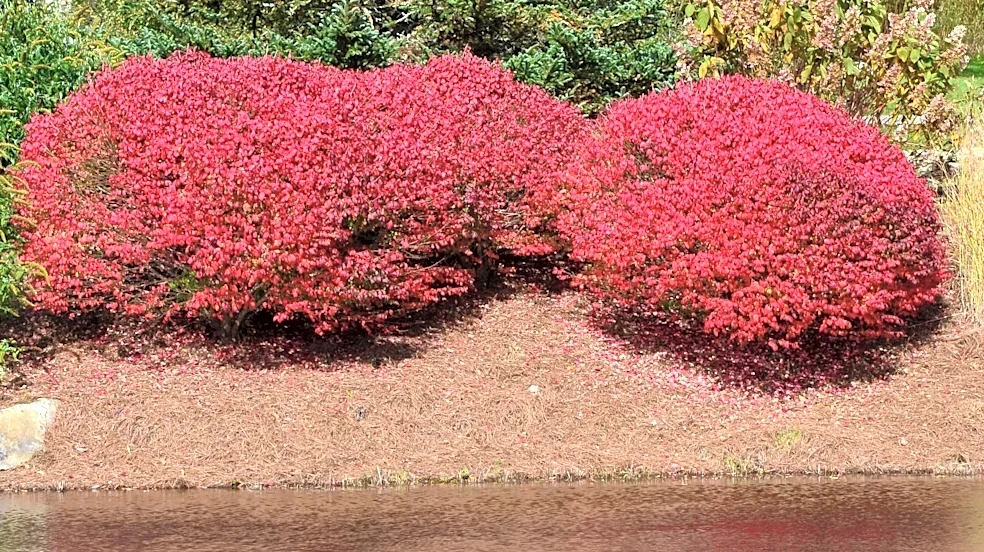










Burning bush is so pretty in the fall, but I am told these are invasive and should not be planted. Is this true? What can I plant instead?
Yes, burning bush (Euonymus alatus), which is from Asia, is invasive in at least 20 states, including Missouri, which has escaped cultivation and crowding out native plants in many areas. In fact, future sales of this shrub recently have been banned in Missouri with the passage of Senate Bill 105, allowing phase-out sales of current stock until Jan. 1, 2029. The shrub really offers little in the way of landscaping interest with no showy spring flowers and is green most of the year, offering the beautiful red leaves for only a couple of weeks in the fall. There are many native alternatives which offer the red color in the fall but also support wildlife in many ways. The natives are also a good choice for landscaping. Some native alternatives include
Arrowwood viburnum, Rusty or Southern Nannyberry viburnum, sweetspire, Eastern Wahoo, strawberry bush, black chokeberry, and native honeysuckle. All of these have much to offer, spring blooms, lovely red color in the fall, and provide food and other benefits for various types of wildlife.
Why has burning bush become such a problem? Birds eat the berries and spread the seeds far and wide into natural areas and proceed to crowd out native plant populations, while providing little to nothing for the ecosystem. Some will say that they’ve never seen this spread in their area, but the problem is more widely spread than many realize. This invasive shrub forms dense thickets when left unchecked in the woods but does not provide anything in return. The shrub has very low nutritional value; fruit provides little fat content to feed the birds, and leaves support almost no native insects.
What is chaos gardening? What are the pros and cons of this method?
Chaos gardening is a low maintenance gardening method that involves mixing several different types of seeds (flowers, vegetables, herbs) together and sowing randomly over the soil with no definite plans, no rows, and no strict rules at all. On the upside, this is a low maintenance method which boosts biodiversity and copies a more natural environment. It is cost-efficient because it can use up a variety of seeds, but you can expect lower crop yields and lower germination rates with the scattering of the seeds. There will also be an increased risk of pest damage and plant diseases. The area will also be much harder to maintain. Low maintenance gardening does not mean no maintenance; some regular work will be required to keep weeds from taking over. Lastly, the untamed look may not be acceptable to some neighbors or align with community rules and standards. I have not tried this method with a wide variety of seeds but have done a similar mixing and sowing with flower seeds which was interesting. If this method seems doable, you could try a small area first.
This article originally appeared on Springfield News-Leader: Why you should reconsider planting burning bush in your yard