






A developer involved in several data center projects in the region has filed another defamation lawsuit. This time, it is against a Webster County Commission candidate and filed after a new state law seeking to protect free speech from frivolous lawsuit claims has taken effect.
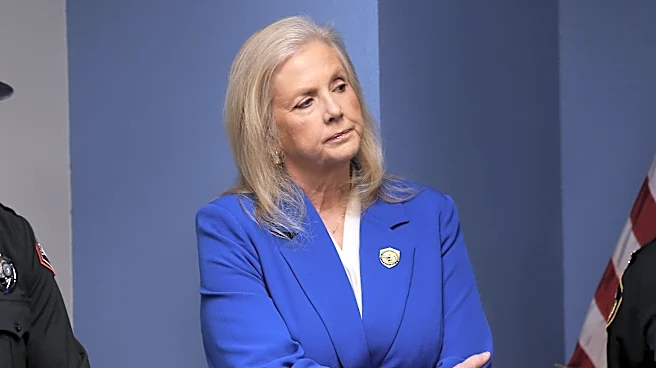
Trent Overhue and NSI, A.1, LLC, which he manages, filed a lawsuit claiming Facebook posts by Gail Peak-Brown, a woman running for presiding commissioner in Webster County, has harmed his and his business's reputation. Peak-Brown has been vocal about opposing data centers and has posted several videos on her campaign Facebook page recording the data center site just outside Marshfield with which Overhue is associated.
The petition filed in court includes descriptions of
Peak-Brown's posts and comments on Facebook regarding noise from the data center, possible Flock camera use on the property, and concerns about discharge affecting a nearby public swimming pool. The lawsuit says the noise included in the posts was recorded during generator system testing, not regular operations; asserts that the facility does not use Flock cameras; and says the closed-loop cooling system used there means water is not discharged. The petition alleges Peak-Brown was aware of these technical specifications because she attended a Marshfield Board of Aldermen meeting where they were discussed.
Neither Peak-Brown nor Overhue's attorney, Chad Mann, could be reached for comment by publication deadline.
This lawsuit was filed in Webster County Circuit Court on Oct. 5. It follows a defamation lawsuit against Katherine Wiltse, another vocal critic of data centers, in Wright County that was filed in August. With a new state law going into effect between the two filings, how the cases unfold in court could differ significantly.
Defamation lawsuits on the rise; new anti-SLAPP law adds protections
Missouri's Uniform Public Expression Protection Act went into effect on Aug. 28. The new law gives judges broader power to dismiss SLAPP lawsuits, short for "strategic lawsuits against public participation," that are filed based on communications in government proceedings, speech about issues under consideration by government bodies and a person's exercise of First Amendment rights "on matter of public concern."
Jared Schroeder is the Lee Hills Chair in Free-Press Studies at the Missouri School of Journalism. His work has included speaking with journalists facing defamation lawsuits around the globe and tracking legislation across the country that hopes to provide additional protections.
SLAPP lawsuits, Schroeder said, are a way the legal system is weaponized to undermine the spirit of the First Amendment.
"It's accepting that it'd be incredibly difficult to win a defamation lawsuit based on the stringent requirements that we've established in our court precedent, but simply using the lawsuit to cause economic harm, emotional harm," he said. "And so, it causes a chilling effect, and people don't share ideas and so it kind of circumvents the legal system and by doing so, it undermines the First Amendment. It undermines the spirit of why we have free speech — so that we can have information, so we can talk to each other, so we can make decisions as a community about what's going on."
Typical characteristics Schroeder shared of SLAPP lawsuits include seeking an "unreasonably" large amount of money, unclear claims about what actually is defamatory, and a power imbalance between the person filing the lawsuit and the one being sued. While the lawsuit against Peak-Brown does not list a monetary amount in damages sought, the lawsuit filed against Wiltse sought damages in excess of $1 million. A legitimate defamation case, Schroeder noted, will include false factual statements made with malice, not simply by mistake, that have truly damaged a person or business. Opinion does not apply to defamation.
Schroeder said the template of the law adopted in Missouri is seen as the "gold standard" of anti-SLAPP laws. A majority of states now have some form of anti-SLAPP law in place, 17 of which are under the UPEPA model. While Missouri had an anti-SLAPP law on the books prior to this new law, Schroeder said it was generally seen as weak in its protections.
Under the new law, the defendant can file a motion claiming the lawsuit falls under the anti-SLAPP law and should be dismissed. Schroeder said this triggers a legal process where a hearing must take place within 60 days of the filing, and the judge must rule on the matter within 60 days of the hearing. He said this makes the process more expedient and provides a way for attorney's fees and other expenses to be recovered if the judge dismisses the case as SLAPP. Because the law is so new, he said it remains to be seen how Missouri judges interpret and apply the law. If a lawsuit is found not to fit the SLAPP framework, it goes back to the regular court process.
"It's not like this law took away the ability of Missourians to protect their reputation from harm," Schroeder said. "It simply is meant to protect free speech in the state by making to where frivolous, malicious lawsuits end quickly."
Anti-SLAPP protections are becoming increasingly necessary, Schroeder said, as defamation lawsuits become more common than ever. This is largely due to the fact that there are simply more publishers, with social media providing a platform for anyone to share information that can spread more quickly than through traditional media channels, and more things are being published every day. That also means many new "publishers" don't have the newsroom structure or journalism education that traditional news forms have to protect them from defamation risk.
Schroeder also noted that with the advancements of the internet and social media, information no longer stays within one geographic area and becomes more permanent than it did when people relied solely on newspapers and TV broadcasts. This can play into the reputational damage factor within a defamation lawsuit. Anti-SLAPP laws like Missouri's are a way to crack down on the nationwide trend of those with the financial means using the legal system to punish free speech.
"When the governor signed the new anti-SLAPP law in this state, Missourians had more free speech than they did the day before," Schroeder said.
Marta Mieze covers local government at the News-Leader. Have feedback, tips or story ideas? Contact her at mmieze@news-leader.com.
This article originally appeared on Springfield News-Leader: New MO law protecting free speech could affect recent defamation claim