





A school discipline decision affects a child. A grade can affect a scholarship. A public contract affects taxpayers. A utility decision affects families trying to keep the lights on in July.
That is why Springfield should care about a simple rule of public trust: When public institutions make consequential decisions, they should be able to show their work.
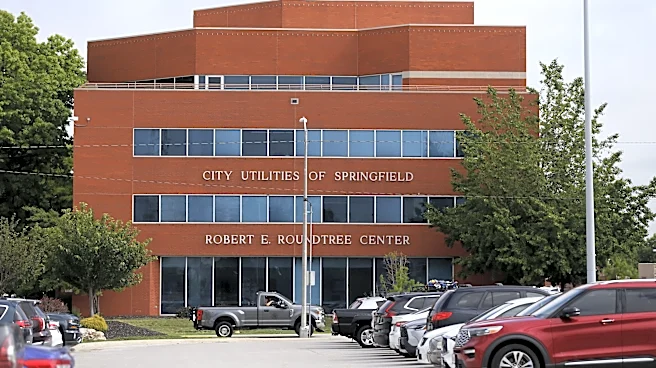
Springfield is home to public schools, public colleges, City Utilities, Greene County government, City Hall, public boards, public employees, and public records. These institutions educate children, train workers, hire employees, approve contracts, operate services, and spend public money. When they follow their rules, they should be able to say how.
The Missouri Sunshine Law reflects the public’s
right to know what public bodies are doing, subject to lawful exceptions. But access to records is only part of accountability. A file that exists but does not explain a consequential decision can still leave citizens in the dark.
Springfield should consider a practical reform: When a parent, teacher, faculty member, public employee, student, contractor, or citizen raises a good-faith, material, documented concern that a public institution has not followed rules governing records, standards, public funds, or official decisions, the institution should provide a written response identifying the rule, decision-maker, record reviewed, and reason.
Public institutions need authority. Superintendents must run schools. College leaders must manage campuses. City and county officials must supervise employees. Public managers must protect confidential records, reject baseless accusations, discipline misconduct, manage budgets, and keep institutions running. But authority is not opacity.
If a Springfield parent asks why an attendance, discipline, eligibility, special-education, or student-record process was not followed, “policy was followed” is not enough. If policy was followed, the institution should identify the policy, decision-maker, record reviewed, and reason.
The same is true in higher education. If a public college changes a grade, especially in academic integrity, the record should show who changed it, under what authority, and through what process. A grade can affect scholarships, eligibility, admission, licensing, employment, and reputation. If a public college creates a search committee, the committee’s work should not be theater. Administrators may retain final authority, but if a committee’s recommendation is rejected or bypassed, the institution should preserve the recommendation and state the reason.
The same principle applies to City Hall, Greene County, school districts, utility boards, and public agencies. If an institution departs from a published standard, or if a public employee raises a documented concern about spending, compliance, or records, the answer should be evidence, not reputation management.
Working taxpayers understand this. A mechanic has a work order. A nurse charts medication. A contractor invoices the public. Good records protect honest people as much as they expose mistakes.
This should not turn every complaint into a lawsuit. Some complaints are wrong, personal, exaggerated, or disruptive. That is why the rule should be limited to honest, meaningful concerns tied to policies, correspondence, minutes, forms, notices, financial records, or other identifiable evidence.
Nor should this become an expensive bureaucracy. It requires no new office, consultant, or federal program. It asks institutions to identify the rule, preserve the record, name the authority, and explain the reason. A short written explanation is often cheaper than confusion, grievance, turnover, litigation, or distrust.
Confidentiality also matters. Student privacy under FERPA, special-education protections under IDEA, disability protections under Section 504, personnel privacy, medical privacy, and protected internal records must be respected. A written-reasons rule should not publish private files or embarrass anyone. But confidentiality should not become a blanket excuse for silence. Institutions can protect private information while preserving the record and explaining what can lawfully be explained.
Different institutions operate under different rules. A school district is not a utility, and a university is not City Hall. The policy should be adapted to each institution. But the principle travels well: When public bodies exercise public authority, spend public money, keep official records, or make decisions that affect people’s futures, they should explain consequential decisions in writing.
I write from personal experience. I am involved in litigation with Lincoln University, a Missouri public university, which disputes, or may dispute, many of my allegations. The concerns I raised included academic-integrity grading and faculty search-committee processes. I do not ask Springfield readers to decide my case. Courts will decide legal questions.
But Springfield does not need to decide my case to see the larger point. Public institutions should answer documented concerns with records, reasons, and rule compliance — not slogans, fog, or reputation management. This reform would protect students and families, public employees, honest administrators, oversight boards, and taxpayers.
This is not a Washington solution. Springfield-area school boards, public colleges, city officials, county officials, trustees, utility boards, and public agencies can adopt written-reasons policies themselves. It should appeal across party lines: public power needs limits and records, families deserve fair process, and trust is impossible when citizens are told to “just trust us.”
Springfield’s civic life depends on whether public records can survive public scrutiny.
Public institutions should not fear written reasons. Honest institutions should welcome them.
Emir J. Phillips is a former associate professor of finance and business law at Lincoln University. He holds a DBA, JD/MBA, and MSFS, and writes on finance, law, public institutions and governance.
This article originally appeared on Springfield News-Leader: Springfield public institutions must show their work | Opinion