




Democrats keep winning the blind taste test and losing at the cash register.
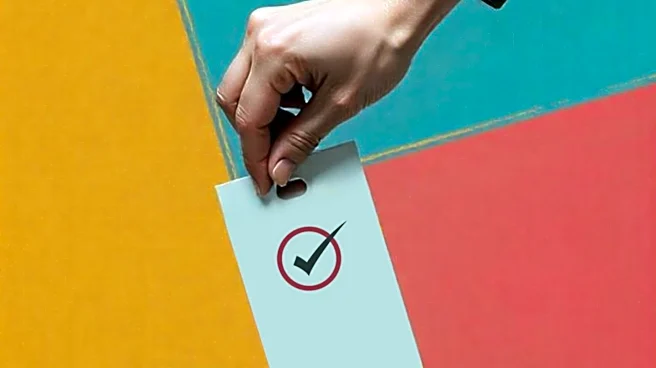
Missouri voters rejected two Republican-backed amendments Tuesday by overwhelming margins.
Amendment 4 would have required citizen initiatives to win a majority in every congressional district. Amendment 5 would have phased out the state income tax while authorizing expanded sales and use taxes.
Both received support from fewer than one in five voters.
These results fit a familiar pattern. Voters have approved Medicaid expansion, marijuana legalization, abortion rights, a higher minimum wage, and paid sick leave. Yet they continue electing Republican supermajorities.
The encouraging news for Democrats is they’re not starting from zero. Voters already agree with them on substance.
Democrats often cite that pattern as evidence that their policies are popular. But policy popularity is not the same as political success.
Pepsi has often beaten Coke in blind taste tests, but Coke crushes Pepsi in sales. People are not just choosing between products. They are choosing between brands.
Brands are shortcuts that tell consumers what to expect before they examine a product. Political brands work the same way. Most voters don’t compare platforms issue by issue. They rely on identity, familiarity, and trust.
Many rural voters support Democratic policies when they appear alone on a ballot. When candidates appear with a party label, the calculation changes. They are evaluating everything the Democratic brand represents, not one policy.
For many rural Missourians, that brand is associated with an urban professional culture that doesn’t understand their communities or speak their language. Whether that perception is fair is strategically irrelevant. Perceptions drive choices.
Republicans have spent decades connecting their brand with rural identity, gun ownership, and faith. Democrats have focused on explaining programs and positions. One party built an identity; the other assembled a platform.
The strategic mistake is treating ballot-measure victories as validation rather than diagnosis. If voters repeatedly support your policies and reject your candidates, the problem is not product awareness; it’s brand trust.
That perception can’t be changed one candidate or one election at a time. Local candidates inherit everything voters associate with the national party, whether those associations fit the candidate or not.
Changing what the label communicates requires plain talk and a clear connection between policy and daily life.
Persuasion isn’t compromise. Democrats don’t need to abandon their principles. They need to explain those principles in terms voters recognize, through messengers voters trust.
When voters already support the policy, the task isn’t to meet them halfway. It is to convert agreement into confidence.
Tuesday showed that Democratic policies can sell in rural Missouri. The question is whether Democratic candidates can eventually catch up.
Until the party treats that gap as a branding problem, it will keep winning the blind taste test and losing at the cash register.
Jacob W. Brower is a former journalist and president of downtown Springfield-based ABM Strategies. He can be reached at jacob@jacobbrower.com.
This article originally appeared on Springfield News-Leader: Republicans lost Tuesday but Democrats don't know how to win | Opinion