






Tax subsidies, especially those that freeze property taxes, are a relatively common tool used to spur investment in Springfield and across Missouri. But a review by the News-Leader shows the incentive package approved by Springfield City Council
for Andy's Frozen Custard new headquarters campus in northeast Springfield abates more tax dollars than previous projects and is the first time Queen City sales taxes have been cut for such a project.The Springfield-based company asked council to approve the issuance of $32 million in Chapter 100 Industrial Development Revenue Bonds to build a new campus and expand beyond its current corporate headquarters downtown. This means the city will take ownership of the project temporarily, allowing Andy's to use
the city's tax-exempt status to partially abate property taxes on the improvements for the length of the 25-year agreement.

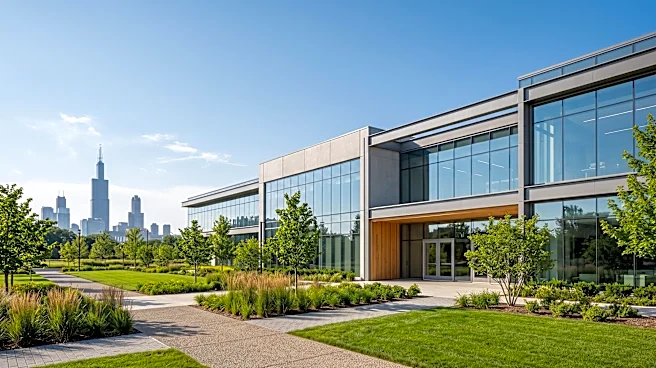
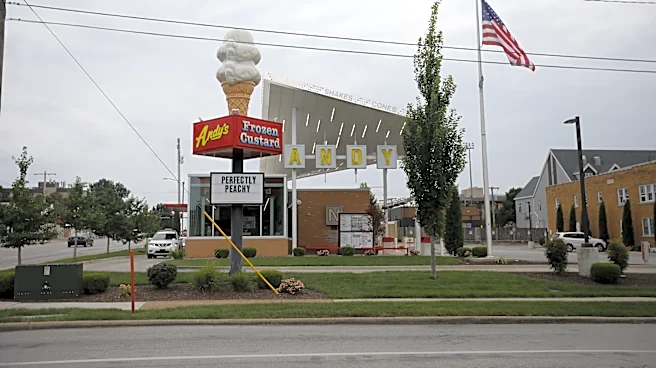
The stated purpose of the incentives is to spur construction of more than 43,000 square-feet of office space spread among three buildings and a 9,600-square-foot industrial warehouse all on a 10-acre plot of land on the northeast corner of LeCompte Road and Division Street.
Unlike past projects, this was the first time the city signed off on a sales tax exemption on construction materials. While that decision rests with the city, it impacts state sales tax collections far more than the city's. In total, the package will result in more than $4 million in taxes abated, though these estimates are based on tax rates remaining stagnant for the duration of the agreement.
How this compares to other Chapter 100 projects
Currently, several projects in Springfield benefit from ongoing tax abatement through Chapter 100. Those include 3M, Hotel Vandivort, Kraft Heinz and the Forvis Mazars office building.
The incentive packages for all of these abated either personal property taxes or real property taxes, except for 3M, which received personal property tax abatement through Chapter 100 but a real personal property tax break through the Enhanced Enterprise Zone program, per information provided by Cora Scott, the city's chief spokesperson. Tax abatement for 3M continues even as a lawsuit filed by City Utilities alleges the company knowingly contaminated James River with "forever chemicals."
Here's the breakdown of Chapter 100 incentives currently in effect:
- Forvis Mazars Building, UP Office Building at the time (2008): $21.5 million in bonds issued; real property tax abatement at 100% for first 10 years, at 50%, or 75% if LEED certified, for the following 15 years;
- Hotel Vandivort, under MBH, LLC (2013): $9.9 million in bonds issued; 25 years of real property tax abatement at 100% for first 10 years and at 50%, or 75% if LEED certified, for the following 15 years;
- Kraft Heinz (2016): bonds not to exceed $36 million; personal property tax abatement at 50% for 10 years;
- 3M (2017): bonds not to exceed $17 million; personal property taxes abated at 75% for 10 years;
- Kraft Heinz (2020): bonds not to exceed $48 million; personal property taxes abated at 75% for five years.
Another Kraft Heinz Chapter 100 project was approved in 2012 for $26 million in bonds that included a 10-year 50% personal property tax abatement. It concluded at the end of 2023.
While the city has issued industrial development bonds under the Chapter 100 program larger in sum than for the Andy's headquarters, the tax dollars estimated to be abated for the project are the highest in the past decade.
The Andy's project is divided into two phases. The first phase, pertaining to the construction of two of the office buildings, is estimated to result in more than $2 million in real property taxes abated. For the second phase, which includes the third office building and industrial warehouse, that amount will be roughly $1.6 million in abated tax dollars. For the construction materials, estimated to cost $11.6 million, another $313,500 and nearly $370,000 are estimated to be exempt from sales and use tax, respectively. For the sales and use tax, only 5% of purchases were anticipated to take place within Springfield.
Matt Schaeffer, assistant director of Economic Vitality, said via email that incentives for the Andy's project focused on real property tax instead of personal property because "the amount of personal property that will be subject to taxes is substantially lower than for a manufacturing operation like 3M, which requires large industrial machinery."
This total of more than $4 million in tax breaks, and even just the property tax portion of $3.7 million, surpasses the abatements estimated for Hotel Vandivort at up to $3.5 million in real property taxes. The tax rates used for the estimates were very similar. Estimates for tax abated for the personal property packages approved in the past decade did not exceed $1 million.
Without the project, total real property taxes on the site in that period would generate nearly $99,000 if the land remains undeveloped and designated as residential. Over the course of the 25 years of abatement, local taxing jurisdictions would in total still receive more than $1.5 million in payments in lieu of taxes, or PILOTs, across both phases, assuming tax rates remain stagnant. But Kristan Wong Karinen, research analyst on subsidies with Good Jobs First, said that amount still could be more.
"The PILOT is just a tiny fraction of what they would've owed if they just paid their taxes, so the community is really gonna be paying for this in a lot of ways that maybe just aren't apparent right now," she said.
The Andy's abatement will be incremental, with 90% abated on the improved value in the first 10 years, gradually stepping down to 50% abated in the final five years. According to previous News-Leader reporting, because of this tiered system, the project overall will see about 70% of taxes on improvements abated over the course of the agreement.
Evaluating impact of incentives
During council discussions, Councilman Brandon Jenson expressed frustration at providing incentives for businesses to move out of downtown. Director of Economic Vitality Amanda Ohlensehlen said then that downtown was explored as an option but did not provide enough available space for the campus-style development Andy's wanted to build. This was the first time Chapter 100 was applied for real property tax abatement for property outside of the city core in recent years.

Unlike some other incentive tools, eligibility for Chapter 100 use is fairly broad, only excluding retail and service industries in intrastate commerce and setting minimum investment thresholds. Other programs, like Chapter 353, require a blight declaration of the property while some only apply to specific industries and areas of town.
While Chapter 100 does not require any type of formal study for tax abatement use, the city's Economic Development Incentives Policy Manual outlines that all discretionary incentives will be subject to a "but for" test, meaning the city finds that the project would not occur, would only occur on a significantly smaller scale or public benefit would not occur without the incentive. Prior to council's vote on the incentive, Jenson questioned whether this was the case for the Andy's project, noting that it did not feel that the level of investment asked of the city matched expected outcomes.
For comparison, according to city documents the Hotel Vandivort project was a rehabilitation of a building on the National Register of Historic Places used for offices previously and was seen as an investment into downtown. While Chapter 353 was considered instead, the documents note that the building's previous renovations in the 1980s received tax abatement through that program and, while conditions had deteriorated, they were unlikely to meet the blight threshold. The office building at 910 E. St. Louis St., now housing Forvis Mazars, was seen as a way to retain roughly 300 employees and develop that side of downtown.
In several incentive scenarios, and certainly in Andy's case, the incentive package boils down to competing with other municipalities where the company could relocate. Keeping the business in Springfield means retaining jobs and investment of major industry players, and incentives often promise an overall greater tax revenue from the capital investment after abatement expires.
While city staff described the project as "competitive" and noted Andy's was in talks with other cities, Jenson remained skeptical, arguing the company's president had indicated they had not received any formal incentive proposal elsewhere. Andy's has owned the lot at Division and LeCompte since 2022. Research by an economist at the W.E. Upjohn Institute for Employment Research in 2018 found that at least 75% of firms receiving incentives would have made a similar location or expansion decision without the incentive.
"There's a lot of these other factors that go into a decision that a business like this makes about where to locate that call into question whether or not the incentive is truly like a deciding factor for them," Wong Karinen said, noting the fact that existing HQ employees already live in Springfield as an example. "And a lot of times we find that it just isn't — it's a very overstated piece of the puzzle."
The deal with Andy's included a performance agreement that requires the new headquarters to create 16 new full-time jobs, by the completion of both phases, and retain the current 54 employees. The agreement includes an annual compliance report to ensure these jobs pay an average of at least 150% of the county average wage, though information provided to the city suggested the average salary would be slightly higher, at $94,766. However, the agreement also allows for positions to be excluded from the report if inclusion would reduce the average wage below the requirement. Additionally, no new jobs are required to be added until 2030, although the first phase was estimated to be complete in 2028. Nothing in the agreement requires the new hires to be from within Springfield.
"It's several years for them to create these jobs, that gives them a lot of wiggle room," Wong Karinen said. "They'll get these tax incentives without really having to do anything."
If just 16 new full-time jobs are created, each would come at the cost of $275,600 in public dollars, per the projected property taxes abated. For comparison, the Forvis Mazars office building project, which included issuance of $21.5 million in bonds, was a way to retain roughly 300 employees at the BKD accounting firm at the time. The performance agreement for Hotel Vandivort did not include a job number requirement.
The Andy's performance agreement also includes several other clawback provisions that Andy's will have to meet or risk reducing or losing the incentives completely. Wong Karinen said that these types of measures are always a benefit to the government and the public but also require the city to ensure compliance and enforce violations. Instead, she said performance-based incentives provide more guardrails by ensuring that the business does not receive any incentives until certain requirements are met.
While the Andy's headquarters project is a done deal, council recently referred a review of the incentive policy manual to committee. Council members took issue with the process leading up to the vote for Andy's, with several saying there was not enough time or flexibility for the elected officials to be involved in changing parts of the agreement and others arguing policy decisions should not be made when reviewing a specific project. The referral to the Community Involvement Committee for the evaluation of the manual seeks to modernize the city's processes and better align it with council's priorities and goals set out in Forward SGF.
Marta Mieze covers local government at the News-Leader. Have feedback, tips or story ideas? Contact her at mmieze@news-leader.com.
This article originally appeared on Springfield News-Leader: Andy's $4M tax break first to include Springfield sales tax exemption