




West Springfield has seen a boom of development, bringing in new retailers, such as Dutch Bros and the new larger Target, to the metro area. The shopping center along West Sunshine Street, dubbed Springfield Plaza, houses Petco, Michaels, Jimmy John's and other retailers and includes a tax increment financing (TIF) district to reimburse the development for public improvements. With half of the area still awaiting construction, the developer is asking for changes to the original TIF deal.
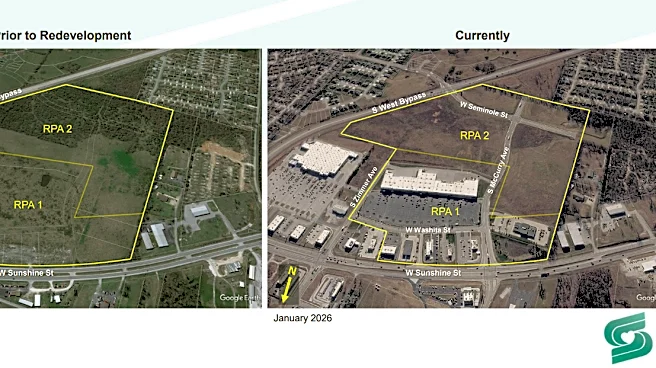
The TIF applies to the full 96 acres near the southwest corner of Sunshine and West Bypass, though it is split into two redevelopment project areas. The first, where the primary shopping area is now built out, spans nearly 36 acres and includes 194,000 square
feet of retail and commercial uses. The second includes the remaining 60 acres just south of this area and has remained undeveloped. This second area has four development-ready parcels.

The TIF allows incremental increases in property tax revenue to be captured and redirected toward improvement projects within the district's boundaries. TIFs are used to support redevelopment of blighted property that would not be possible if not for the incentive.
The Springfield Plaza TIF was first approved in 2013 to capture 100% of incremental increases in property taxes for 18 years, though 25% of these payments were to be declared surplus and remitted back to taxing districts. The TIF also includes capturing 50% of economic activity taxes, in this case sales taxes, to go toward reimbursement. The project also includes a separate Community Improvement District, or CID, that collects an additional half-cent sales tax on purchases in the area, half of which is subject to the TIF, and the other is kept by the developer to accelerate reimbursement.
The total estimated budget for the entirety of the project was nearly $78.5 million, with the TIF reimbursement for public improvements totaling $9.6 million.
Springfield Planning & Zoning Commission minutes from 2013, when the TIF was discussed, indicate some skepticism about the vacant property being declared blighted, which is required to qualify for a TIF. Minutes note the property's blight designation looked at factors such as economic under-utilization, obsolete platting and lack of adequate infrastructure such as connecting roads or utilities.
What the developer wants to change

Currently, the second redevelopment area is limited to commercial uses, including roughly 250,000 square feet dedicated for office space. However, earlier this year, a builder out of northwest Arkansas sought a rezoning at 2000 S. McCurry Ave. to build multi-family housing there. The rezoning approved makes way for 21 three-story apartment buildings with roughly 420 total units with amenities such as a swimming pool, resident clubhouse and sports courts.
Now, a proposed amendment to the TIF would modify the uses in this second zone to allow multi-family residential uses and approximately 325,000 square feet of retail and commercial space. It would also note that construction would start in 2026.
The amendment sought would also extend the duration of the TIF from 18 years to 23 years. This deadline is counted from the year the property was activated, which was 2016 for the first area and 2023 for the second area. If the change is approved, the TIF would expire for the first area in 2039 and in 2046 for the second area, though the TIF automatically ceases once the developer is fully reimbursed for public improvements. To date, $3.9 million out of the total $9.6 million has been reimbursed to the developer.
The proposal was in front of the Tax Increment Financing Advisory Commission, made up of representatives from each taxing entity that receives funds from property taxes, on Tuesday, Sept. 22.
Matt Schaefer, senior city planner in the Economic Vitality Department, noted that the change would not impact the total budgeted costs and TIF reimbursement. With the original use focusing on office development, which does not generate sales taxes, he said the change to more retail-forward development will likely mean the developer is repaid sooner.
"The net effect of this amendment is that it would facilitate redevelopment that would actually accelerate repayments of the public improvements, thus hastening the ultimate termination of the TIF," Schaefer said. "That's really in everybody's best interest to have this payout as soon as possible."
Residential buildings are assessed at a lower rate than commercial, meaning they bring in fewer property tax dollars than retail or office buildings do. However, Schaefer said that with the greater scale and opportunity for retail development for this second portion of the property, the TIF would generate greater revenues than the original proposal.

Tom Rankin, the developer behind the Springfield Plaza, spoke to the commission Tuesday, Sept. 22, noting that the change would simply allow more time for the money he has spent on putting in utilities and roads to be reimbursed. He said retail has changed drastically since the property was acquired in 2007, with the Great Recession, the COVID-19 pandemic and evolution of technology and online shopping. He said that no specific retail has committed to the remaining 40 acres.
"It's not a money-making proposition from our standpoint, it just allows us more time to receive reimbursements on all the money that we spent," Rankin said. "Retail is different than I think probably all of us will admit it was, you know, 19 years ago."
Republic Schools Superintendent Tyler Overstreet said there was a concern that the development would bring additional students to the school district, without adequate tax collection to support the increased enrollment. Republic school board Vice President Todd Wojciechowski said the district uses a 0.2 students per apartment unit estimate, which would mean more than 80 new students, or four classrooms worth, joining the district.
The change, and the district's concerns, mirror a similar amendment last year at the Brody Corner's TIF further southwest, where multi-family housing was also added as a use to spur development.
Schaefer said the city typically tries to avoid using TIFs for residential development, as commercial development offers a more robust payback. However, city staff are currently amid a review of its economic development incentive policy. Springfield, as the rest of the country, is in dire need of more housing stock.
The ordinance establishing the CID, which accelerates repayments for public improvements but operates separately from the TIF, sets a 50-year life for the district. Schaefer told the News-Leader via email that while it is possible it could continue once the TIF is paid off to fund maintenance of the public improvement only, the CID could also opt to dissolve entirely.
Despite the concerns raised, the commission unanimously recommended approval of the proposed changes. The matter will now head to Springfield City Council for a public hearing on Oct. 12 and a final vote on Oct. 26.
Marta Mieze covers local government at the News-Leader. Have feedback, tips or story ideas? Contact her at mmieze@news-leader.com.
This article originally appeared on Springfield News-Leader: Springfield Plaza developer asks for changes, extension of TIF deal