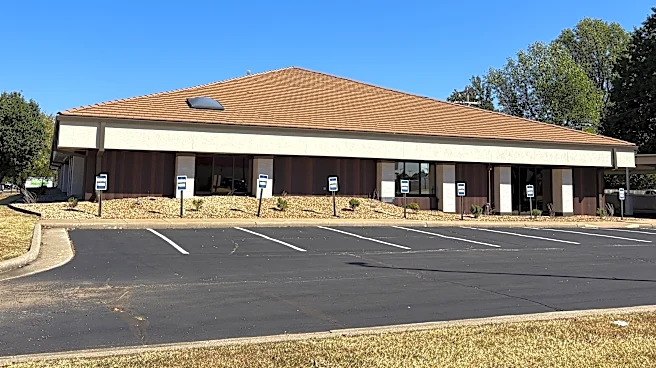





As Springfield leaders continue to grapple with what regulations for data centers may look like in the future, one local property has highlighted the gray area between past zoning designations and current definitions.
The possibility of a data center at 2900 S. National Ave. has been a topic of conversation for months, particularly as the city has hosted several public engagement sessions to gather input as it drafts data center regulations. Springfield City Council in late June approved a 120-day administrative delay on data center developments. While that is set to expire in mid-November, City Manager David Cameron has stated an extension of the moratorium is likely.
Data centers are facilities that house computer servers to compute applications
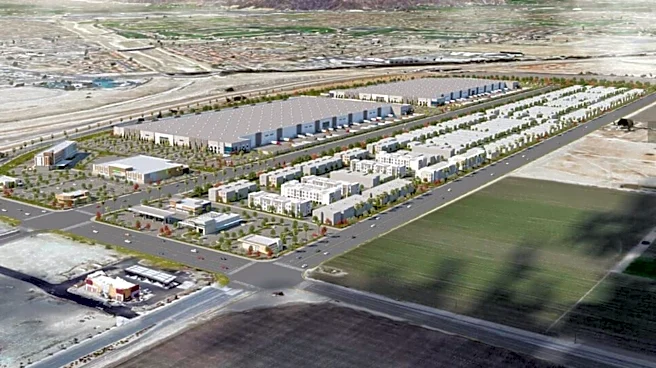
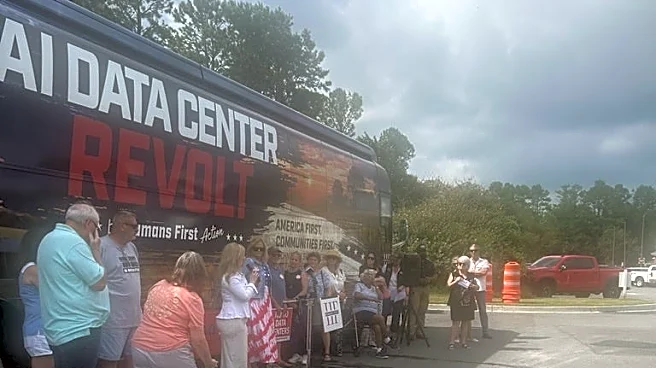
and power digital services. While data centers have been around for years, they have become far more common, grown larger in scale and power consumption, and dominated recent debates due to the artificial intelligence boom that has created greater demand for such infrastructure.

A rezoning application was filed recently for the property at 2900 S. National that would have changed the zoning designation from a planned development, a uniquely crafted zoning district with tailored requirements, to C-MX2, commercial mixed-use community district created through the city's recent land development code revamp efforts. The rezoning application indicated the change was sought to allow for a veterinary clinic and did not include mentions of a data center or data processing facility.
The rezoning, set to be in front of Springfield Planning & Zoning Commission on Sept. 10, was tabled until Oct. 15 but the future of the zoning and the property remains murky.
Trent Overhue, who owns the property under NSI A1 LLC, responded to the city's announcementof the postponement of the rezoning on Facebook by stating in a comment that under the current zoning, his plans for a data center are already permissible, and that he had greenlit a prospective tenant to seek a conditional use permit for a veterinary clinic, not a full rezoning.
What the current zoning allows
The planned development currently in effect for the property at 2900 S. National dates back to 2001 when the property was rezoned to make way for a neurological diagnostic and care center. The zoning change was largely to allow for the creation of a second building to house an imaging center complete with a high field open MRI scanner and equipment to fuse MRI images with CT images, according to city documents.
As a result, the language of the custom zoning district does include "data processing services" under the subsection of Administrative and Professional Offices in the list of permitted uses. The crux comes down to the difference between Overhue's and the city's interpretation of what this entails.
Based on Overhue's comments, his position is that the planned development already allows him to develop what he envisioned, without additional approval from Springfield City Council. According to pre-development information submitted, he is seeking to operate a "mixed-use office and high-performance computing (HPC) data processing facility." This was planned for one of the two buildings on the property, which would include offices on the main floor with the basement converted into a "small-scale HPC and data processing facility designed to support computational research applications." The pre-development form notes the system would use a closed-loop chilled water system, a form of cooling for computer equipment that lowers water consumption. In addition to servers, the facility would also include uninterruptible power supply systems and coolant distribution units.

The layout of the building included shows roughly 60 servers and 20 UPS units in the basement. The pre-development documents indicate City Utilities has capacity to provide up to 10 megawatts of power in the area without negatively impacting its system, but any improvements to serve the project would have to be funded by the developer.
Overhue submitted the information with a request for a pre-development meeting in late May. The meeting was held June 10 and a letter with staff comments sent to Overhue on June 15, according to information provided to local media by the city. The agenda for the council meeting where the moratorium was first introduced was published June 17.
The comments from the planning department indicate that initially the HPC portion was believed to be permitted as long as it took up less than 50% of the overall building. However, the comments include an "update" note stating it was determined that "the proposed use does not align with the PD's permitted uses." The city's chief spokesperson, Cora Scott, told the News-Leader in an email that reviewers from each city department bring initial comments to the meeting and then finalize them in the following days, after further internal discussions.
"Comments and questions raised in the meeting are the start of that process; the Summary Report is the outcome," she noted.
How city staff interpret 'data processing services'
In the city's announcement of the rezoning postponement, it asserted that the law department determined a data processing center and a data center are not the same thing. Neither of these terms are defined either in the PD nor city code, though codifying a definition of a data center is part of the work currently underway during the moratorium. The city has reiterated its stance that data centers currently are not allowed at 2900 S. National, under the proposed new C-MX2 district, or anywhere else in the city without a code amendment by council.
In response to the News-Leader's questions, Scott stated that data processing services is not listed in the current zoning as a separately authorized use, but an example of the types of activities included in the permissible use for Administrative and Professional Offices. "Data processing services" appear alongside a list of other examples such as travel agencies and law offices. Because the zoning district does not elaborate further on what "data processing services" entail, city staff are left to interpret it based on context, Scott said.
"In PD 251, 'data processing services' appears within a category describing offices that provide professional, management or administrative services. A data center, characterized primarily by computer/server infrastructure rather than an office-based professional or administrative operation, does not fall within that permitted office-use category," she said via email.
Overhue's comments indicated the prospective veterinary clinic tenant, which would occupy the smaller of two buildings on the lot, did not need to seek a full rezoning. He accused the city of pushing for a change in zoning to prohibit Overhue's data processing plans. Scott said a conditional use permit cannot add a use to a zoning district, only allow uses that the zoning district already conditionally allows. In this case, a veterinary clinic is not listed as a conditional or permitted use in the planned development, so the only way to add the use would be to rezone or amend the current zoning district. Scott said since the postponement, no amended application for the property has been filed.
Overhue did not respond to requests for comment via phone call and email. According to reporting by the Springfield Daily Citizen, Overhue did not intend to let the rezoning application for the vet clinic move forward as is and threatened a lawsuit against the city if the moratorium is extended.
Overhue has already been involved in a lawsuit against Benton County, as a manager of NSI 6, LLC. The lawsuit challenges a temporary data center moratorium passed by the county, which otherwise does not have zoning regulations. Overhue is also involved in the company pursuing a data center in Webster County.
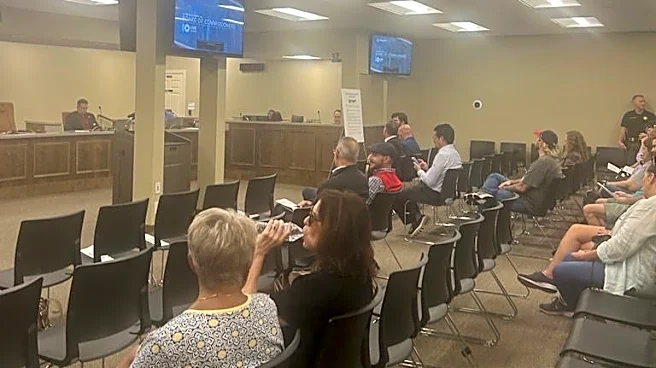
The city and CU will hold a third public engagement session on data centers to gather feedback about how the city should approach such developments and what a regulatory framework could look like. The event will take place at the Ozark Empire Fairgrounds E-Plex on Tuesday, Sept. 22 from 6-8 p.m. This third event was added after the first two drew capacity-size crowds.
The public can learn more about data centers and fill out an online survey about them on the city's website at www.springfieldmo.gov/datacenters. Feedback can also be provided via email at city@springfieldmo.gov or by calling a hotline with a voice mailbox at 417-864-1700.
Marta Mieze covers local government at the News-Leader. Have feedback, tips or story ideas? Contact her at mmieze@news-leader.com.
This article originally appeared on Springfield News-Leader: City staff, developer disagree on property use, data center definition