



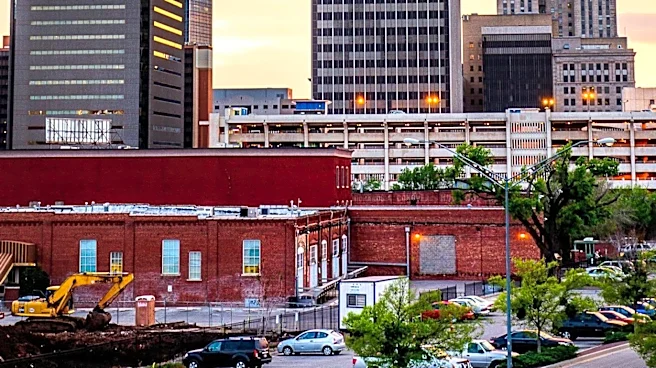
Springfield is launching a citywide pavement assessment that will help determine where street maintenance dollars can have the greatest impact and extend the life of roads across the city.
Beginning the week of Aug. 17, Springfield Public Works will evaluate all 1,770 lane miles of city-maintained roadways, according to a community announcement. The updated data will help guide maintenance and rehabilitation decisions during the next several years while supporting efforts to maximize taxpayer-funded transportation investments.
The assessment will be conducted by contractor Information Management Services, which will use a specialized vehicle to measure pavement surface conditions, smoothness and ride quality. The process is expected to take about
three to four weeks.
Public Works Assistant Director Tom Dancey said the assessment provides data needed to make more cost-effective infrastructure decisions.
“Maintaining a street before it reaches poor condition is significantly more cost-effective than waiting until it requires major reconstruction,” Dancey said. “This assessment gives us objective data to help make those decisions and get the greatest long-term value from the funding our community has invested in its streets.”
The information collected will be used to calculate a Pavement Condition Index, or PCI, rating for each roadway segment.
The city conducts the evaluation about every three years to monitor changing roadway conditions, review the performance of previous maintenance treatments and develop future maintenance plans.
Preserving pavement before major repairs are needed

City officials say the assessment supports a pavement preservation strategy focused on extending roadway life while reducing long-term costs.
Rather than repairing streets solely based on which are in the worst condition, Public Works considers whether preventive treatments can prolong the life of roads before more expensive rehabilitation or reconstruction becomes necessary, according to the announcement.
A roadway in fair condition, for example, may benefit from a lower-cost treatment that adds years of service life. Delaying repairs until the pavement deteriorates further can significantly increase costs.
When prioritizing projects, the city considers pavement condition along with traffic volume, roadway classification, pavement performance and broader transportation system needs.
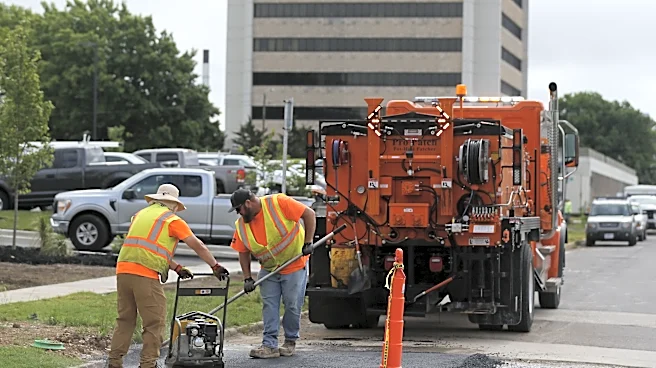
Potential treatments include asphalt mill and overlay, crack sealing, microsurfacing, rejuvenator applications and concrete street repairs. Street Operations crews also perform maintenance work throughout the year to help preserve infrastructure and maintain safe travel conditions.
The Street Operations Division's goal is to provide some form of roadway treatment to 10% of the city-managed roadway network each year.
Sales tax funding supports resurfacing program
Pavement maintenance and rehabilitation projects are funded primarily through Springfield's major street resurfacing and rehabilitation program.
The program is supported by the voter-approved 1/8-cent Transportation Sales Tax and 1/4-cent Capital Improvement Sales Tax.
This story was produced with the assistance of Artificial Intelligence (AI). Journalists were involved in every step of the review, editing and publishing process. Learn more at cm.usatoday.com/ethical-conduct.
This article originally appeared on Springfield News-Leader: Springfield study aims to extend street life and cut costs