





Marijuana dispensaries that offer drive-thru services in Springfield could have a new process to follow if they want their hours extended later into the night. After a broader code change was sent to committee for review, city leaders are proposing such requests be handled using a more case-by-case approach.
The city received a request to amend its regulations on drive-thru dispensaries as a whole and allow them to remain open until 1:30 a.m. earlier this year. Under current city rules, marijuana facilities can only be open between 6 a.m. and 10 p.m. V3 MO Vending, LLC, which operates Terrabis dispensary at 850 E. Kearney St., had submitted the request to allow it to remain open until 1:30 a.m., matching the limit applied to retail liquor sales
under state law.
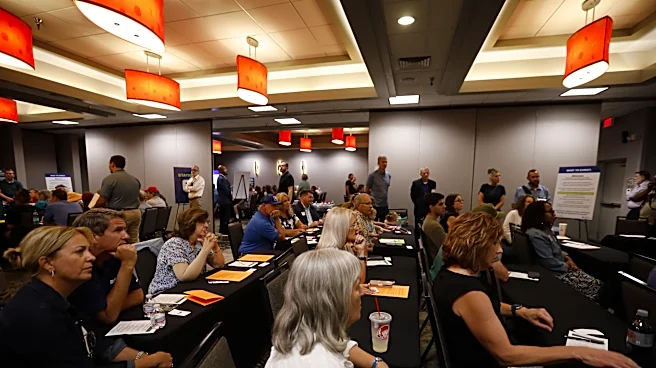
While the matter had made it through Springfield Planning & Zoning, Springfield City Council referred the measureto the Plans and Policies Committee. On Tuesday, Sept. 15, the proposal was discussed by the committee with Councilman Craig Hosmer, who made the motion for referral and was the most vocal in opposing extending hours of dispensary operations.

The business had worked with city staff and Springfield Police Department to come up with the proposal. SPD took a neutral stance on the extended hours. On Tuesday, Sept. 15 Maj. Tad Peters agreed with Hosmer's concerns that longer hours of operations could lead to additional public safety problems due to impairment, much like it does with alcohol sales.
City Attorney Jordan Paul said most other large metropolitan cities in the state do not allow extended hours for dispensaries, except for St. Louis, which allows hours to be extended through a conditional use permit process. He noted that other, smaller communities, have different regulations that do allow 24-hour operations or allow dispensaries to operate into the later hours. Hosmer pointed out that if Springfield allows dispensary drive-thrus to operate until 1:30 a.m., it would be the largest city to do so.
Previously, a representative of the dispensary had described the proposal as a commercial benefit, both for the business sales and the sales tax the city collects from recreational marijuana sales. The city's director of finance, David Holtmann, said the city currently collects about $1.9 million from the marijuana sales tax. This money is earmarked for a plethora of public safety and mental health initiatives, including the jail diversion program, crisis cold weather shelter funding and setting aside funds for a future new municipal court building.
Holtmann said that while extended hours have the potential of generating additional tax revenues, he compared it to a new business opening up, which typically re-allocates the same spending to a different area.
While Hosmer most obviously opposed extending dispensary operational hours, arguing such businesses do not add to the city's quality of place efforts, his colleagues said dispensaries should not be treated differently than other similar businesses. Councilwoman Heather Hardinger said dispensaries are typically a much more secure and regulated retail environment than stores that sell liquor or unregulated hemp products.
"We're talking about substances that can cause impairment. If bars and gas stations and things like that can sell substances till 1:30 a.m., I don't know why it's our job as government to limit when [dispensaries] can sell," Councilwoman Callie Carroll said. "When we're just going to point out like this substance is worse off than this substance like that — that's not our role."
Ultimately, the committee recommended the extension of hours for marijuana dispensary drive-thrus be allowable with a conditional use permit, or CUP, in a 3-1 vote with Hosmer opposed. While Hosmer believed a CUP process would allow for more discretion and case-by-case review than the originally proposed city-wide code amendment, he wanted these particular CUPs to go to council for approval. Under the revamped land development code, CUPs stop at P&Z, though an applicant can appeal to council. No other CUPs are carved out to go to council, though city staff noted that was in council's power to do so.
The CUP process would also require nearby residents to be notified of an application and a public hearing to be held by P&Z for each dispensary that wishes to extend its drive-thru operating hours. Per city staff who referenced the state list of licensed dispensaries, there are nine marijuana dispensaries within Springfield city limits, six of which have a drive thru.
Ryan DeBoef, a local lawyer and lobbyist representing the dispensary seeking the change, attended the committee meeting Sept. 15 and noted that his only concern regarding the CUP process was the added delay for the change, which he said has already been in the works for a year.
Under the new development code, any new drive-thru, regardless whether it is a dispensary or not, requires a CUP. Steve Childers, city's director of Planning and Development, said that with the business also recently applying for a second drive-thru at the same location, one CUP process could encompass both requests — the additional drive-thru and extended hours.
The proposal to allow drive-thru dispensaries to apply for extended hours via CUP will now go before the full council for a public hearing and a final vote. If that is approved, Terrabis will have to begin the CUP process separately.
Marta Mieze covers local government at the News-Leader. Have feedback, tips or story ideas? Contact her at mmieze@news-leader.com.
This article originally appeared on Springfield News-Leader: Committee recommends permits to extend Springfield dispensary hours