





The city of Republic has filed a lawsuit that questions the legality of an agreement with Springfield regarding annexation and provision of utility services. While both cities have their respective future growth areas that are currently unincorporated but set aside for each city's possible annexation, Republic is arguing the agreement illegally prevents property owners within these areas from seeking annexation and utility services from Republic.
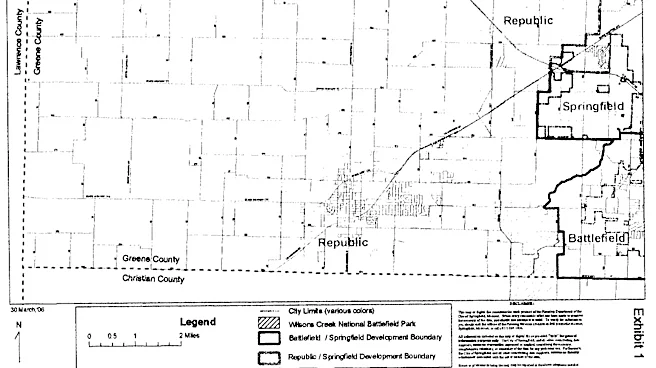
Springfield and Republic have a standing agreement, entered into in 2006, that creates boundaries for each city's future growth and prohibits each city from annexing or providing utility services to properties in the other city's future growth areas. The agreement, a settlement as a result of a three-year
annexation dispute, limits Republic's growth to the north and east and Springfield's to the south and west.
A lawsuit filed Wednesday, Aug. 26, on behalf of the city of Republic by attorney Bryan Wade claims the agreement has prohibited owners of property situated within the boundaries of Springfield's future growth area but closer to Republic's existing utility service lines from seeking services from Republic.

(Editor's note: Wade has at times represented the News-Leader in legal proceedings related to licensing and the Sunshine Law.)
Springfield's chief spokesperson, Cora Scott, told the News-Leader the city refrains from commenting on pending litigation.
Particularly, the lawsuit cites a legal case from 2021 filed against the cities of Republic and Springfield by real estate companies alleging the agreement prevented the land owner from obtaining utility services. While in that case Republic had sought a declaration regarding the agreement's enforceability, the land owners dropped the case and the matter was never decided upon by the courts.
According to the lawsuit filed by the city of Republic, the land owner in this previous case had purchased property near the northeast quadrant of State Highway MM and Interstate 44. While the property was in Springfield's future growth area, it was closer to Republic's existing utility lines. According to the petition, when the property owner contacted Springfield about utilities, the city refused to provide utility services unless the owner paid more than $3 million for the infrastructure. Despite proximity to Republic, the 2006 agreement prohibited Republic from providing utility services.
Because of the 2006 agreement, Republic is unable to consider voluntary annexation requests nor provide utilities to properties similarly situated. The lawsuit argues the agreement denies property owners their rights under state law to have a public hearing and good-faith consideration of whether the city could annex property and whether the city is able to provide municipal services to the area.

"The 2006 Agreement operates as an impermissible limitation on Republic’s free exercise of legislative discretion by preventing Republic from considering annexation applications and from providing utility services to property identified in the 2006 Agreement," the petition filed in court stated.
The lawsuit ultimately asks the court to determine whether the 2006 agreement is enforceable, whether the execution of the agreement exceeded the authority of the cities under state law and whether the cities may annex and provide utility services to properties in question.
Republic is not the only city with which Springfield has an agreement in place regarding growth boundaries. Other cities with annexation agreements include Willard, Strafford and Battlefield. Springfield also has its urban service area, which sets boundaries for long-term growth to which utility services could be extended in the future.
Marta Mieze covers local government at the News-Leader. Have feedback, tips or story ideas? Contact her at mmieze@news-leader.com.
This article originally appeared on Springfield News-Leader: City of Republic sues Springfield over annexation, utility agreement