





With student enrollment on a steady decline and school buildings aging, Springfield Public Schools is likely to see schools gradually close and consolidate in the next decade. Through a new facility master planning effort, the district hopes to determine next steps to ensure quality of instruction is retained.
The district is working on a new facility master plan that surveys the current conditions and usage of all buildings and determines how SPS can continue to provide quality learning experiences while remaining financially stable. In March, the Springfield school board hired Capital AE, a St. Louis-based architectural, engineering and owner's representative consulting firm, to complete the work, with the total cost of the services not to exceed
about $657,000. The district has also set up a 60-member advisory council for the master planning process.
The team has completed the condition assessment and financial impact analysis with the data pointing to needed change on the horizon, though specific recommendations are yet to be determined. SPS is far from the only district across the country to face declining enrollment and aging facilities, with funding that can't keep up with increased costs. The facilities master planning process is a way for the district to be proactive about planning for the future, SPS Chief Communications Officer Stephen Hall said, rather than kicking the can down the road until cutting costs becomes urgent.
Elementary schools in worse condition, high schools more expensive
Capital AE assessed every SPS facility, with 44 campuses assessed in person and 21 newer campuses assessed via a life cycle review that estimates renewal based on records rather than a physical walk-through. Facilities were scored using a Facility Condition Index, or FCI, which is calculated by dividing age and condition need by replacement value. While higher scores generally indicate worse condition, that does not necessarily mean the building must be replaced.
"FCI is an indication to be considered, but it is not a be-all, end-all metric on what happens with the building without considering all the other inputs into the decision," said Capital AE Founder Josh Chism.

The FCI for the entire district sits at 33%, though roughly half of the campuses exceed 40% FCI. While all district facilities were assessed, the greatest focus for improvements is being placed on academic buildings. Here are the schools that ranked highest with the worst conditions.
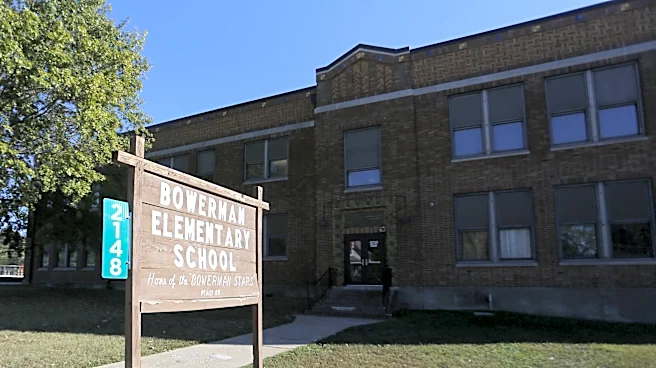
- Bowerman Elementary School at 64.1%
- Rountree Elementary School at 61.1%
- Pleasant View K-8 at 55.1%
- Gray Elementary School at 54.6%
- Campbell Early Childhood Center at 52.4%
- Glendale High School at 52.1%
- Weller Elementary School at 50%
Chism noted that schools ranking high on the FCI are not necessarily at the end of their useful life but the score could indicate a need for modernization or component replacement. Beyond school buildings, the assessment also included sports fields and play areas, parking lots and accessory structures.
While the list is topped by elementary and early childhood center buildings, high schools make up a larger share of the improvement costs.
Enrollment declines, classrooms become underutilized
David Sturtz, CEO of Sturtz & Company, said funding for operations follows the population of students. Due to declining birth rates, increased choices for families and inflation, enrollment is declining and it is becoming more costly to keep the same level of operations.
"Revenue follows the students, so declining students means declining revenue," he said. "Costs are going up, so if the operations stay the same, your fixed costs stay the same and start to go up over time just with inflation, while your revenue goes down, that means less money to support kids' education over time."
The team anticipates seated enrollment will drop by roughly 3,200 students in the next 10 years, declining to just under 19,000 by 2035-36 compared to today's 22,000 students. That means cost per pupil will continue to rise as the number of classrooms and schools remain the same but there are fewer students to occupy them.
The district already has more seats available at the district than enrollment — about 30,000 seats. Sturtz said this is roughly the same as it was a decade ago, but enrollment since then has changed.
"The district has prioritized having a high level of service to every kid, but what's variable is how much they're spending to do it," Sturtz said. "As those enrollments go smaller and smaller and smaller at many of the schools, the cost to offer that level of service gets higher and higher and higher. And we're looking ahead, seeing that that is not sustainable over time and that we need to adjust operations in order to maintain the level of service, which is a priority."
While high schools are the most efficiently used today, at 76% of capacity utilized, they will see the steepest decline in utilization in the next decade — a drop of about 12 percentage points. Kickapoo High School, which is used at nearly full capacity today, will fall to 72% by 2035-36, according to the analysis. Middle schools are already experiencing the greatest surplus capacity, and the utilization rate is only expected to continue to decrease and fall below 51%, meaning buildings across six campuses will be operating at half capacity.

"What we need to do is look at what is a minimum viable enrollment, target enrollments for elementaries, middles and highs that allows the district to sustainably staff and resource the kind of education that they want over time, cognizant of these changes," Sturtz said. "So that you don't need to sacrifice the level of service and quality just to maintain every school that you have, which quite frankly is not realistic over the period of time."
He said SPS must also consider where to strike the balance between cost and classroom size. Larger classes mean lower spending per student, whereas smaller classrooms cost more. Classrooms under 700 square feet force a lecture-style instruction, with standard calling for at least 36 square feet per student.
"When you talk about creating larger schools, you're not talking about creating larger class sizes," Sturtz said, noting that there is a way to strike the "Goldilocks zone" that serves student needs and provides quality instruction without being a detriment financially.
Most of the elementary schools the district has opened in the past decade have tended to be larger in capacity, around 500 students, which Sturtz said is what's needed to sustain service, whereas several smaller schools often need to be supplemented. He noted many neighborhood schools were built in the 1950s and 1960s for the needs and expectations of the time and do not have adequate space to meet modern educational expectations in a financially sustainable way.
Costs outpace available funding
The analysis found that there is $422 million in improvement needs due now, meaning the replacement year has already arrived. In five years, that amount will rise to $557 million and $866 million will be due by 2036, without adjustments for future cost increases. Out of the total $422 million due now, 39% is considered urgent. The greatest capital needs are concentrated in plumbing and HVAC replacement, which aligns with the average age of the buildings and complexity of work involved in replacing that type of infrastructure.
The industry standard to fund renovations, modernization and replacement is to invest 2-4% of replacement value each year. According to the data gathered, for SPS, the current replacement value is $2.5 billion, making the 2% annual reinvestment target $51 million. With more than $400 million already due, to sustain the current system the district would have to invest $92 million annually, the data found.
Assuming a 3.5% annual cost growth, Capital AE anticipates the district would have $1.1 billion in total capital needs in 10 years, which combines the current backlog and annual renewal. Over the course of the decade, the study found the district would have $560 million available, which would include $15 million in general funds annually and two $220 million general obligation bond issues. That would not be enough to fully pay off the current backlog of improvement needs and would still leave $532 million in total capital needs unfunded in 2036.

Overall, over the past decade, salary costs have increased at a far greater rate than the state's per-student funding rate, which recently has seen increased threats of being further defunded in Jefferson City. That, combined with inflationary capital project cost increases, leaves expenses outpacing the revenues.
Sturtz said so far, the district has been able to stay in the black despite enrollment declines and higher costs through innovation, such as the Launch Virtual Learning program, and staff reductions. Moving forward though, he said that will not be enough. Without new money, and no desire to cut the programs students currently have access to, Sturtz said SPS will need to find efficiencies by operating fewer schools.
"It's not doom and gloom; it's a reset button," he said. "What I see is this is the opportunity. Your school district was designed in the 1950s, 1960s for that time in that budget. Now's the time to redesign your schools again, design your district."
How to share your thoughts
The key takeaway from the trends the team has noticed is the need for SPS to have "newer schools, fewer schools, financially stronger schools in better condition," Sturtz said. The district will have to make changes, but he said any change will be intentionally made as a "trade up for kids."
The district will host two community engagement sessions. One will take place Monday, Oct. 19 at Glendale High School while the other will be on Tuesday, Oct. 20 at Central High School. Both will take place from 5:30-7:30 p.m.
The sessions will be an opportunity for people from across the district and community to weigh in on how facility conditions have impacted them, what their priorities are and what are ways to best serve students. Specific questions, Stutz said, are still in the works but they will ask folks to weigh in on the key themes emerging from the data. The planning team will also engage smaller stakeholder groups separately.
After gathering public input, the planning team will reconvene with the advisory council and create their recommendations for the next 10 to 15 years, which will be presented to the school board in December. From there, additional public engagement sessions specific to recommendations may follow before the master plan is officially adopted by the board in the spring. According to an SPS news release, the board may appoint a Community Task Force on Facilities to help prioritize facility needs, similar to the process used in 2019 and 2023.
The updated facility planning comes as the district will complete its final facility improvements in 2028, which were approved by voters through a 2023 bond issue. Community support for both the 2023 and 2019 bonds has allowed SPS to upgrade safety and security at all schools, add storm shelter gymnasiums at select elementary schools and construct new schools like Pipkin Middle School and York Elementary. Hall said these investments have set up the district to be in a better position to address needs moving forward.
In 2024, the board voted to close Pershing Elementary and Robberson Community schools. Boundary lines were also adjusted later that year to address underutilized schools and overcrowding.
Marta Mieze covers local government at the News-Leader. Have feedback, tips or story ideas? Contact her at mmieze@news-leader.com.
This article originally appeared on Springfield News-Leader: Facility plan points to Springfield school closures, consolidations