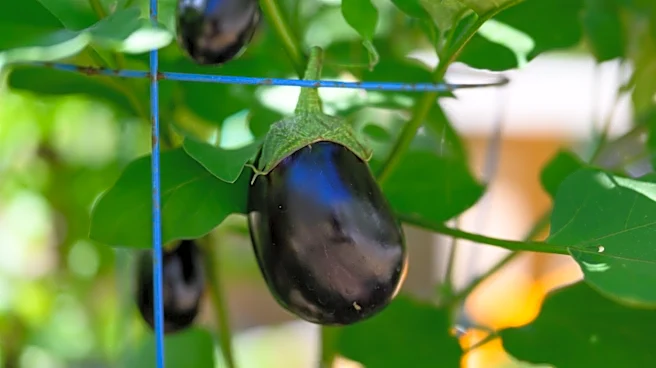







My eggplant seemed to be ripening but are now turning green and have a rough texture. Why is this happening?
The most likely cause is that the fruits have been left on too long and are overripe. Other causes include uneven watering or high temperatures. Harvesting a bit sooner may help in the future, as well as watering more consistently, watering less often but more deeply. There’s not much to be done about high temperatures but moving into an area with some partial shade may help. Applying mulch to moderate soil moisture and temperature is also a good idea. The eggplants may still be okay to cook and eat if the flesh is still firm and smells fresh, with no mold inside. If taste testing a small raw piece of the flesh is very bitter, it is probably too ripe and bitter to enjoy and may be too tough to eat.
When is the best time to dig up a crepe myrtle? It is four or five years old and growing too close to the sidewalk.
The best time to move a crepe myrtle is when
it is dormant, from late fall to late winter, when the soil is workable. The shrub is dormant after all leaves have dropped until spring leaf break, but before any first leaves have emerged. The larger the tree, the more difficult the move will be. It is possible to cut back the shrub to make the move a little easier, however cutting back to the ground will result in regrowth as a dense shrub with multiple stems rather than a tree form.
When moving the shrub, the first important step is finding a new and more favorable location. The new spot should be well dug and watered thoroughly before digging and moving to the new location. When digging up the shrub, a root ball at least 2 to 3 feet in diameter, not too deep, should provide enough roots for the shrub to thrive and regrow in its new location. The root ball should be lifted out and placed on a tarp to slide it to the new location, then replanted and watered well. If you live in the colder end of this plant’s range, which is Zones 7 to 10, transplanting later, just prior to bud break, rather than at the start of winter, may also help the shrub survive the move.
Why are the leaves on my tomato plants turning yellow from the bottom up?
There are several factors that may cause this, including inconsistent watering (too much or too little), lack of food (nitrogen) in the soil, natural aging, or fungal plant diseases such as early blight or septoria leaf spot. I hesitate to suggest adding soil additives without a soil test, but some plant food specifically for tomatoes might be used sparingly, in addition to watering less often but more deeply. The affected leaves should be removed and disposed of in the trash, never added to compost in case of fungal diseases.
Readers can pose questions or get more information by calling 417-874-2963 and talking to one of the trained volunteers staffing the Master Gardener Hotline at the University of Missouri Extension Center in Greene County located inside the Botanical Center, 2400 S. Scenic Ave., Springfield, MO 65807.
This article originally appeared on Springfield News-Leader: Master gardener warns inconsistent watering can cause trouble