





Southwest Missouri has a strong economy, experiencing growth beyond the state and national averages. But that does not mean it's without its challenges.
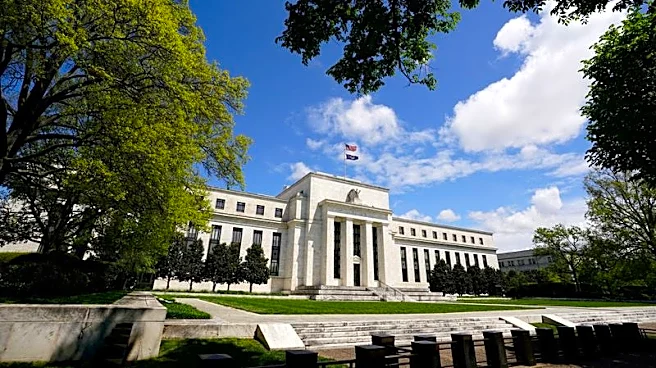
On Wednesday, Aug. 19, the Springfield Business Development Corporation hosted its economic outlook event where economist Charles Gascon, assistant vice president at the Federal Bank of St. Louis, shared the current state of the economy and what's expected in the future.
Overall, he said the economy has remained resilient despite uncertainties and inflation, largely as a result of large investments into artificial intelligence. Incorporation of AI into the workforce also means the economy can continue to grow even when the labor force is shrinking due to an aging population and more stringent
immigration policies and unemployment remains stable.

Discretionary spending dips
The economy continues to grow. Springfield saw an average of 3% year-over-year growth in its gross domestic product, outperforming averages for the state and nation as a whole. While the national economy also saw growth, Gascon noted average rates mask more regional and local trends of smaller economies that are contracting in some parts of the country.
He said this growth was largely due to the fact that income growth has slowed yet consumption growth has remained stable. However, because of the higher prices of goods, there have been changes to the portion of consumption going to discretionary versus non-discretionary spending.
"If you look at the share of people's spending that's going to non-discretionary items versus going out to eat or going on a vacation, in 2025 about 75% of spending was non-discretionary spending," Gascon said. "The underlying trend over the last couple of years, even if I go back further, is a greater and greater share of households' budgets going to these non-discretionary purchases."
He also highlighted that higher-income households also drive the aggregate spending trends, as their consumption habits are less impacted by inflation.
Wage growth keeps up with inflation
Compared to five years ago, Gascon said prices have gone up roughly 20% with wages increasing about the same amount during that period. That means the real wage growth has remained unchanged since 2021.
"These compounding gains in the inflation rate have really eroded people's incomes and have led to a, you know, basically no improvements in people's standard of living over the last five years," he said.

This has also been true between workers who switch jobs versus those who remain at the same employer. He said wage increases are the same between the two groups, which is a good indicator of the workforce.
"When this thing inverts and goes in the opposite direction, that means people are getting laid off and taking jobs out of necessity, and they may actually be taking pay cuts as a result of that," Gascon said. "It does suggest that we have a pretty healthy labor market, and people wo are out looking for jobs are finding if they have the right skills that they have great opportunities."
Hiring has slowed down but because the labor force is also slowing in growth, that has meant unemployment rates have remained the same.
Inflation, uncertainty remain challenging
Inflation remains a central focus in the economy. Goods and energy prices are the driving force behind the higher inflation due to tariffs policies and war in the Middle East. Gascon said even domestically, supply chain issues have also added strain to the market as reports note trucker shortages. He said the lack of growth in the supply to match the rate of growth in demand remains an issue.
The uncertainty in economic policy has also hit a historic high which poses a challenge in the future outlook.
"Going all the way back to the 1960s, these are the highest levels of uncertainty that we've had about economic policy in our history, and for many people in their lifetime," Gascon said regarding the COVID-19 pandemic and start of 2025. "If uncertainty diminishes further, that could be a really big boom for growth as we move into 2027. If it spikes further, that could lead to recessionary conditions."
The economist presented that expectations of inflation into the future have risen slightly, largely due to oil prices. Overall, however, financial conditions are looking optimistic for growth in 2027.

Need for residential investment hits close to home
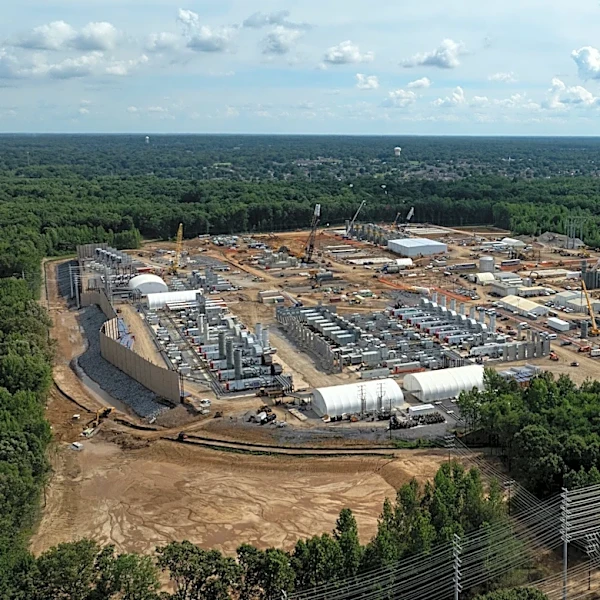
Gascon shared that in 2025, business and residential investments diverged with residential dipping and business investment booming, largely thanks to AI development. For Springfield, residential investment is seen as key to the long-term success of the region.
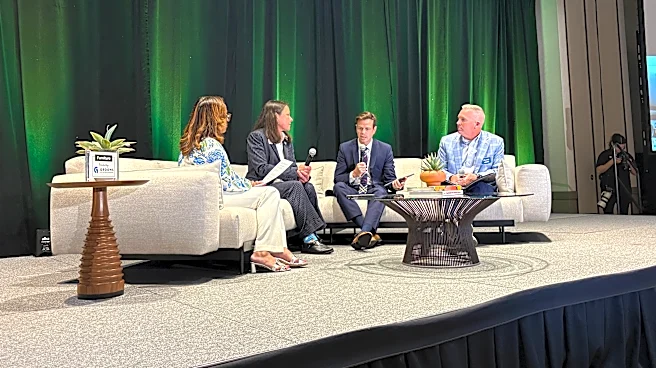
Following Gascon's presentation, a panel consisting of Stephanie Hurt, managing director with Forvis Mazars Private Client; Ryan Murray, CEO of R.B. Murray Company; and Shane Cowger, president of Arvest Bank, Springfield, shared insights of local economic trends.
Murray said the region has seen strong business investments on large projects, despite shrinking margins as cost of construction rise, which he said points to a confidence in the market.
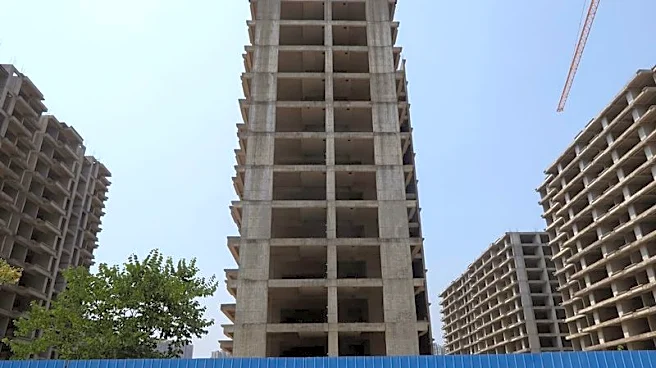
Chamber President Matt Morrow said affordability has been Springfield's competitive advantage for years. But, he said, recently the Queen City's housing cost position is less favorable compared to nearly every other nearby midwestern community. Morrow noted it is not yet clear whether this is a one-year anomaly or a part of a larger trend. This poses problems as Springfield tries to attract more investment and workers for growing or new companies moving into the area.
Cowger agreed that the area is in need of additional affordable housing stock to entice workers to move to the region and retain those already here, and ensure wages keep up with rising housing costs. A key part of this is also having the infrastructure that can support more residential development and higher density, he noted.
Hurt also highlighted that it has been hard to fill more high-skill vacancies and Springfield is in need of specifically skilled workforce. She too said it was important to retain younger employees who may think of bigger cities as "greener pastures."
Marta Mieze covers local government at the News-Leader. Have feedback, tips or story ideas? Contact her at mmieze@news-leader.com.
This article originally appeared on Springfield News-Leader: Springfield economy sees continued growth, needs housing investment