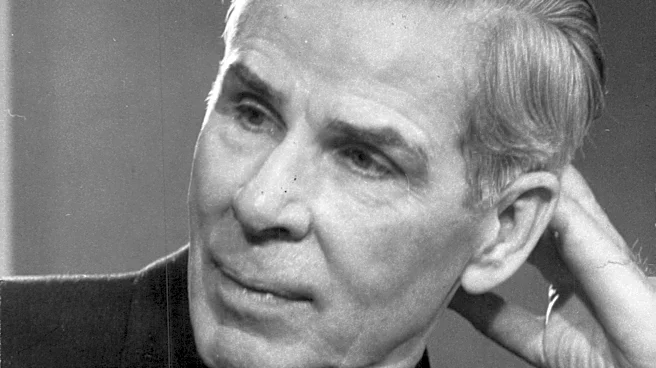






In October 1966, members of the Diocese of Rochester were excited and puzzled, because Pope Paul VI had appointed a world-famous televangelist, author, speaker and educator to be its bishop.The Most Rev. Bishop Fulton J. Sheen, then 71, whose radio and television shows, columns and books had captivated millions of people and earned him an Emmy Award, expressed enthusiasm.
"I have been serving the world … but I couldn't get my arms around it," he said at a press conference in New York City that month, referring to his 16 years as director of the U.S. branch of the Society for the Propagation of the Faith. "I can get my arms around Rochester and embrace all the people. I hope they will put their arms around me."
For nearly three years, “Bishop Sheen
and Rochester tried very hard to embrace each other. At best, they were fleeting hugs,” reporter Bill O’Brien wrote in the Democrat and Chronicle on Dec. 10, 1979.
Sheen’s swift changes to the diocese and his other ideas, many of them inspired by the Second Vatican Council or by his concern for the poor, alienated some. Others expressed discontent that he often didn’t consult priests and parishioners over the changes.
The climactic backlash came when he attempted to donate the land and buildings of St. Bridget's Church in Rochester's inner city to the U.S. Department of Housing and Urban Development for affordable housing, which some people here still hold against him.
In his autobiography and in his only interview with a local newspaper, Sheen, who had experienced decades of success, dwelled on his failures here. He ended up resigning early.
Reflecting on Sheen's beatification and his tenure in Rochester

Now, after an extensive examination of his life and of a healing approved as a miracle due to his intercessory prayers, the Ven. Fulton J. Sheen will be beatified Sept. 24, one step away from sainthood. He is the first person who has lived in Rochester to earn the title of "Blessed.".
So why is he being considered for sainthood despite criticism of his time in Rochester?
“I think Sheen certainly was not perfect. But isn't that a wonderful Catholic truth that you become a saint, you don't have to be perfect?” the current Rochester bishop, the Most Rev. John S. Bonnici, said.
“His imperfections, his mistakes, his errors, I think are certainly outweighed by his love of Jesus, his daily Holy Hour where he found energy and wisdom, his desire and preferential option for the poor, not only here, close at home, but everywhere in the world.”
Many of the changes Sheen made in the diocese have continued or evolved, including major changes in the seminary, creation of a Spanish-speaking ministry, increasing participation by laypeople, ordination of a permanent deacon, creation of a housing foundation and a change in confirmation ages.
“I think he did a very good job in a very difficult time,” Bonnici said. "He took the whole message of Vatican II to heart.”
Sheen and the Second Vatican Council -- a push for change

The Second Vatican Council, also known as Vatican II, ran from 1962 to 1965, intended to bring the church up to date. Sheen's recommendations to the council included modernization of seminary training for priests; restoration of the permanent diaconate – men serving the church as deacons but not ordained as priests; and more cooperation between Catholics and Protestants in social justice activities. He also endorsed a document promoting increased activity by laypeople in Masses and more.
The difficult time to which Bonnici referred included the Vietnam War, which was causing rifts in the city.
Rochester also was facing issues of income inequality and police-community tensions that had spurred race riots in 1964. Among them, some blamed Eastman Kodak Co. for high unemployment among African-Americans. Also, City Historian Blake McKelvey wrote in Rochester History in October 1965 that Rochester had “lagged behind most cities in the construction of public housing,” though several church groups and government entities were working to correct the situation.
Still, “the diocese as a whole was known widely to be conservative and self-satisfied, reflecting the outlook of the people of Rochester as a whole,” Thomas C. Reeves wrote in “America’s Bishop: The Life and Times of Fulton J. Sheen.”
How Sheen came to Rochester from New York City

When he was appointed as bishop here, Sheen was 71, four years shy of the age that Pope Paul VI had just required for bishops to submit their resignations. He was serving as auxiliary bishop of the Archdiocese of New York under Cardinal Francis Spellman as well as raising nearly $200 million for the society to support thousands of schools, hospitals, orphanages and more around the world.
Sheen and Spellman had clashed for more than 10 years, and Spellman wanted him out of the archdiocese. Reeves wrote.
Sheen had visited the Rochester diocese numerous times starting in 1929. In 1955, two of his lectures drew packed crowds of 10,000 people apiece to the Scenearama, a weeklong diocesan event highlighting 100 church missions at the newly opened Community War Memorial in Rochester.
“My parents went and they came home raving about how wonderful it was,” said the Rev. Ed Palumbos of Rochester, who later was a seminarian during Sheen’s tenure as bishop. “He came down the aisle in his ferraiola red cape. … He got up to the stage, and he looked at people … with those piercing eyes, and he said, ‘OK, let’s get it over with. I’m not as tall as you thought I was.’”
(Sheen, who wrote in his autobiography, “Treasure in Clay,” that humor was the best way to begin a talk, is listed in various books as being 5 feet 5 or 5 feet 7.)
Rochester Bishop James E. Kearney, who was had been installed in 1937, began to slow down, giving over many duties to Auxiliary Bishop Lawrence Casey. “Towards the end, … he was quite infirm,” Palumbos said.
Casey became bishop of Paterson, New Jersey, on March 9, 1966, some say at Spellman’s instigation, and Kearney, 81, had to resign because on Aug. 6, 1966, Pope Paul VI urged bishops to submit resignations at age 75.
Could Diocese of Rochester become showcase for Catholic Church reforms?

The diocese was making some of the changes Vatican II had called for. Masses were switched from Latin to modern languages, altars were being moved forward so priests faced congregations instead of keeping their backs to them, and the diocese was making efforts to connect with non-Catholic religious groups, the Rev. Robert F. McNamara, diocesan historian, wrote in “The Diocese of Rochester in America, 1868-1993,” second edition.
However, many Vatican II changes had not been implemented. Some people thought the reforms “had gone too far and others not far enough,” Reeves wrote.
Sheen, who had participated in Vatican II, wanted to make Rochester a showcase of Vatican II reforms, McNamara and others wrote.
Sheen’s arrival in Rochester previewed his plans to implement reforms.
An installation as bishop including laypeople, Protestants and Jews

On Dec. 14, 1966, he arrived and spent the night at St. Bernard’s Seminary, now St. Bernard’s Park Senior Housing Apartments, 2260 Lake Ave.
The Rev. Frank E. Lioi of Auburn, who had been ordained in 1960, was working as deacon at St. Bernard’s. He said all 200 students gathered in the front hallway to greet Sheen. “We all clapped and cheered.”
Sheen spent the night there, then went to Sacred Heart Cathedral in the morning, praying quietly at 9:20 a.m. before the noon installation and Mass.
Sheen’s dedication to working with other churches and to laypeople’s involvement, both of which had been emphasized during Vatican II, was apparent in his installation Dec. 15. Previous installations had been “almost purely a (Catholic) clerical event,” a Rochester Times-Union reporter wrote in 1966. In Sheen’s case, about half of the 1,000 people in the cathedral were laypeople, and Protestant and Jewish leaders were given prominent seats.
Fulton Sheen takes on Kodak
On Jan. 3, 1967, Sheen began his first clash in the city, naming the Rev. P. David Finks to the new position of vicar of urban ministry to help the poor.
However, Finks was one of the few white people associated with FIGHT. The African-American organization, led by Minister Franklin Florence, was struggling with Eastman Kodak Co., which had rescinded an agreement to hire and train 600 unemployed African Americans.
By August, the dispute had been settled, but The New York Times quoted an unidentified resident as saying Sheen’s “support for FIGHT has caused many Catholics to drop buttons into the collection plate.” They were supporting Kodak.
Priests get more say; seminary changes

Following Vatican II’s concept of collegiality, Sheen asked all of the diocese’s priests to submit the names of people to serve in leadership roles and followed their advice. He also created a priests’ council and turned over financial affairs to three laypeople.
Within his first few months, he also began one of his longest-lasting changes.
St. Bernard’s Seminary on Lake Avenue then was known as “the Rock,” drawing seminarians from other dioceses as far away as Savannah, Georgia.
“Prior to the council, it was one of the most strict and conservative seminaries in the entire country,” said Matthew Kuhner, vice president/academic dean and associate professor of systematic theology at what is now St. Bernard's School of Theology and Ministry, 20 French Road, Pittsford. "You could go off campus once a week, and that was only to visit a church.”
Sheen had seminarians go out into the inner city to help the poor. He also added psychology classes and fieldwork at a mental health hospital, and had psychological tests done on seminarians “to determine their fitness for service,” Sheen wrote in his “Eight Months Report on the Diocese of Rochester, New York, U.S.A.”
Sheen added 14 professors to the staff, some of them prominent Europeans, including convert Douglas Hyde, a former Communist who had edited a London newspaper. Protestant hires included the Rev. Conrad Massa, pastor of Third Presbyterian Church, who helped instruct seminarians on preaching.

Sheen also sought cooperation between St. Bernard’s and Colgate Rochester Divinity School, which eventually lasted until 1981. “I had Protestant classmates who I still have contact with today who took our Scripture classes with us and moral theology classes with us. And I went over to Colgate for the clinical pastoral education and preaching (class),” Palumbos said.
He also allowed laypeople, including women, to take classes – one of the first seminaries in the U.S. to do so – and supported the addition of graduate degrees. (The seminary now educates only laypeople.)
“I think he really had a powerful, powerful, inspiring influence on us” by opening up the seminary, said the Rev. Jim Schwartz, whom Sheen ordained in 1968 and who now is pastor of St. Joseph Church in Penfield and Holy Spirit Church.
Sheen’s emphasis on prayer and his belief that “the church is meant to be engaged in the lives of people … really was transformative to my view of priesthood and to our view of priesthood.”
Quick changes startle Rochester Catholics

Among the many other changes he made during the first eight months of his tenure, Sheen permitted Masses and Eucharistic adoration in residences and made plans to change the usual age of confirmation from 10 to 15, so the child was old enough to have greater commitment to the church.
He also organized a Spanish-speaking ministry and assigned three priests to visit the poor, the unchurched and migrants in rural areas. Parochial school education also came in for substantial reform.
The wide array of changes and their rapidity startled many people, delighted some and annoyed others.
“Anyone that does things quickly, even if their motives are crystal-clear and positive, are not always going to make the entire population happy,” Bonnici said. "That's like a natural wall. It just doesn't work.”
Sheen also spoke at Protestant churches and Jewish synagogues and toured all 12 of diocese’s counties, bestowing the sacrament of confirmation upon children, visiting ailing priests and even hearing confessions. He wrote in his “Eight Months Report” that he had preached more than 400 sermons during those visits.
Sister of Mercy Jeanne Reichart recalled a confirmation Mass in Elmira, where she was teaching. Instead of meeting the children indoors as bishops usually did, he walked around the church to where they were waiting and began talking to them, “friendly and gentle and kind as could be.”“Well, my impression was from him on television, and I was astounded to think that he had an ordinary voice!” she said.
Sheen also visited sites around Rochester. Sister of Mercy Phyllis Bernardo recalled his winter visit with actress Loretta Young to what is now St. Michael’s Woodshop, which the order opened in 1967 to teach children things such as sewing, music and the Bible. The center had a beautiful blue carpet, and a boy approached Sheen and said, “You know, you need to take your boots off,” as the children were required to do.
So he did.
Sheen opposes Vietnam War

In another notable and debated move, Sheen asked in his sermon at Sacred Heart on July 30, 1967, that all American troops be withdrawn from Vietnam. Since Sheen had spoken out against Communism for decades, this made headlines nationwide.
Sheen argued later on “60 Minutes” that the money spent on armaments for the Vietnam War would be better used to alleviate the sufferings of the poor, Kathleen L. Riley wrote in “Fulton J. Sheen: An American Catholic Response to the 20th Century.”
Sheen’s stances on civil rights, the war and more caused resentment among some people. His style of administration caused frustration.
“Fulton Sheen was an ‘idea man,‘ with a lively imagination,” McNamara wrote. “His proposals were usually thoughtful, sometimes brilliant, often farsighted. … Unfortunately, while he was good at inventing, he was not good at following through.”
Sheen had not worked in a parish for 40 years so had little experience working with priests and parishioners. He disliked meetings, and had an iron will about his decisions, McNamara wrote. Even though he promoted dialogue, McNamara said, “his prime gift was as a monologist, not a dialogist.”
Sheen probably had an old-school, top-down approach, Bonnici said. “But he did infuse in that top-down approach a lot of the elements of the (Vatican) Council that no one else was doing at the time.”
Sheen knew all of his priests’ names and ate meals with a few at a time as well as monthly with seminarians. Some priests were uncomfortable around him because of his fame; others resented his domination of discussions and said that when they wrote to him, the replies were often just form letters, writers say.
Sheen's ill-fated plan to close St. Bridget

One of Sheen’s greatest concerns was housing for the poor. He wrote that only 40 or 50 units had been built in Rochester over several years.
In November 1966, Sheen had an idea that he would later call his most spectacular failure in Rochester: giving a church’s property to the U.S. Department of Housing and Urban Development for the construction of affordable housing, hoping that would prompt other dioceses to do the same.
Almost all of the critics in 1967 and later stories thought Sheen had made the decision on his own. However, he spoke about the plan to the Vatican, the apostolic delegate and to city housing officials, Riley wrote, though the Times-Union reported that Sheen had not planned to tell city officials until the day after his announcement.
Sheen wrote to the HUD secretary, who accepted the offer.
HUD officials surveyed several properties and chose St. Bridget, which had about 100 parishioners, mostly Puerto Ricans, in a poor part of the city.
The Times-Union reported that the church’s pastor, the Rev. Francis Vogt, and other priests heard rumors and tried to reach Sheen to recommend against the plan.
All agree on one thing: The parishioners had been told nothing.

Sheen made the announcement with fanfare on Feb, 28, Ash Wednesday. To what the bishop called his “great surprise,” outraged opposition erupted.
“There is enough empty property around without taking down the church and school.” Vogt told the Times-Union. He said the church had been a center for services to area residents and the school “was the most important thing in the neighborhood.”
Parishioners made more than 100 calls to the bishop’s office to protest the plan. Female students from Monroe Community College, volunteers at the church, picketed the Columbus Civic Center with signs such as “God’s house is more important than housing.” When he visited a school, several hundred protesters were present and some threw pebbles at his car.
Perhaps worst of all for Sheen, 22 priests signed a letter urging him to rescind the offer; the signers eventually totaled 125.
Sheen rescinded the offer March 3. Vogt later said that had the bishop been willing to work with the parishioners for a while, they might have agreed.
The Rev. Patrick Collins later wrote to Reeves that when he spoke to Sheen in 1974 about the incident, “The pain was still palpable. … (He) felt deeply the rejection and hurt.”The church and school are now closed.
Despite that upheaval, Sheen remained deeply interested in housing; he had helped poor families buy homes with his own money. On April 16, 1968, he created the Bishop Sheen Housing Foundation, which gave interest-free loans to poor families for down payments on houses.
“In the first year Bishop Sheen was so interested he would drop what he was doing to go with me to see a family,” Eleanor Cook, former president of the foundation, told the Times-Union in 1979. “He was very impulsive and always accessible to people.” He continued to be honorary president of the board of the foundation until his death.
The foundation later expanded its territory, added help with housing repairs and merged with an Episcopal organization to become the Bishop Sheen Ecumenical Housing Foundation Inc., which still exists.
Sheen also fought construction of multimillion-dollar churches, saying the money should go to the poor.
The summer of 1968, he angered more people by supporting Pope Paul VI’s encyclical Humanae Vitae, which opposed contraception.

In May 1969, at age 74, he made a private visit to Pope Paul VI in Rome and resigned. The pope agreed to accept the resignation later that year.
But he continued working. In June, Sheen became the first U.S. bishop to ordain a permanent deacon: Michael Cole, a former Anglican priest. Although Cole later reverted to Anglicanism, the diocese now has about 100 permanent deacons, who are educated by St. Bernard’s, Kuhner said.
Sheen’s resignation was announced in October. He returned to New York City, later donating many of his books and artifacts to St. Bernard’s, which holds the rights to his TV shows. He died in 1979.
One of his failures, he told the Democrat and Chronicle, was raising awareness of the poor. “If we could only have people in the suburbs get their hands dirty. There are certain things you can't love until you touch.”
Still, Sheen is “not a failure, definitely a pioneer,” Bonnici said. “He planted a lot of seeds that then took years to actually fully develop and appreciate.”
His successor, Bishop Joseph L. Hogan, brother to Sheen’s secretary, “took on a lot of the things that Sheen started and just went even further and had a longer tenure as a result.”
Sheen’s daily life in Rochester

Bishop Fulton J. Sheen refused to evict his predecessor, Bishop James E. Kearney, from his home on East Avenue, instead living in a second-floor apartment at the Columbus Civic Center (now Columbus Civic Plaza). As he had arranged in his previous homes, it contained a small chapel where he prayed during a Holy Hour daily before the Eucharist, “with two giant angels in the front on either side of the altar, bowing down in adoration, and he would sit between them … for his prayer time,” the Rev. Ed Palumbos said. “And you know, it was pretty impressive. That a man … who was that busy and that famous, and that knowledgeable, would make that a priority.”
He rose each morning at 5 a.m. to pray, his secretary, the Rev. Michael “Mike” Hogan, told the Times-Union after Sheen’s death in 1979. Writers said he often worked 18 or more hours a day.
To stay fit, The New York Times reported in 1967, Sheen rode an electric bicycle for 15 minutes every morning and played tennis twice a week – at Genesee Valley Club on East Avenue, Palumbos recalled.
The apartment was two floors below the offices Sheen quickly renamed from “chancery,” which seemed to him to be too bureaucratic, to “pastoral.” His own sparse office was jammed with books; he had brought 10,000 from New York City, 3,000 of them by Protestant scholars.
At the time, the Rochester Fire Department’s Engine 1 company was on Chestnut Street, about a block from Sheen’s home; it’s now at Monroe Avenue and Alexander Street. “He’d come in at mealtime and sit and drink coffee and gab with us,” Lt. Richard Fair told the Times-Union in 1979. Knowing that many firefighters were Protestant, Sheen didn’t discuss religion, though he blessed the equipment several times. “He had quite a sense of humor. You could really feel at ease with him,” Fair said.
Sheen saw many beggars on the city streets and always gave them money, as had been his longtime habit, his niece Joan Sheen Cunningham said in the book “My Uncle Fulton Sheen.”
Rochester Bishop John Bonnici said that when Sheen's secretary, the Rev. Michael Hogan, asked him why he was giving money to obviously drunk people who were regularly near his residence, Sheen replied, “because I never want to make the mistake of denying Jesus that he's looking right at me.”
He told his niece he was doing so because “their children might be hungry.’’
Despite all of his work in the diocese, Sheen would continue to write his syndicated column and to go to New York City to pre-record his most recent television program. He would speak in other cities.
He also still belonged to the Commission on Missions charged with implementing the Vatican reforms.
How to watch Fulton J. Sheen's shows
The cable television network EWTN airs episodes of the Ven. Fulton J. Sheen's TV series "Life Is Worth Living." The Fulton J. Sheen Co. Inc. offers a subscription streaming service and purchasable DVD episodes of that series and "The Fulton Sheen Program" at bishopsheen.com/. Videos, including a few free clips, can be seen at fultonsheen.tv/. Sheen bequeathed all library manuscripts, files, kinescopes and videotapes to St. Bernard's Seminary, now St. Bernard’s School of Theology and Ministry, which has licensed the rights.
Conference to celebrate Fulton J. Sheen
What: "The Life, Thought and Holiness of Fulton J. Sheen: Proclaiming Christ and the Wisdom of the Cross"
When: 9 a.m. to 5 p.m. EDT Saturday, Oct. 24
Where: St. Bernard's School of Theology and Ministry, 120 French Road, Pittsford. Attendance is in person or via Zoom.
Cost: $35 in person, $25 via Zoom
To register: Go to https://stbernards.regfox.com/fulton-sheen
Keynote speakers: Monsignor Jason Gray, executive director of the Archbishop Fulton Sheen Foundation in Peoria, Illinois, and Cheryl C.D. Hughes, whose biographies include "Archbishop Fulton J. Sheen: Convert Maker" and the newly published "Archbishop Fulton J. Sheen: God’s Great Communicator." .
Laura Nichols is a staff writer for the Rochester Democrat and Chronicle.
This article originally appeared on Rochester Democrat and Chronicle: The bishop who rattled Rochester now stands on the brink of sainthood