




The Buffalo Bills traded artificial turf for real grass when they moved across Abbott Road into their new stadium.
They've already replaced the field once.
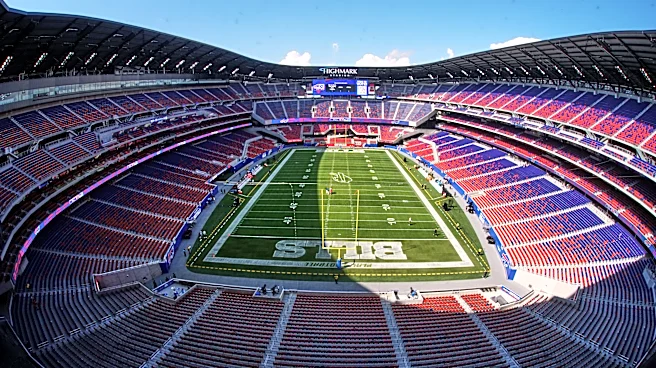
The new $2.2 billion Highmark Stadium has a natural Kentucky bluegrass playing surface with an underground heating system designed to keep the field playable through western New York winters.
The Bills will play their first regular-season game at the stadium Thursday night against the Detroit Lions, giving a national television audience its first look at Buffalo's new home.
The grass they'll see wasn't there two weeks ago.
Buffaloreplaced the entire playing surface in early September after large sections of the original sod came loose during practices and preseason games in August.
The Bills finally
got onto the replacement field Tuesday, two days before the home opener. Josh Allen said the footing felt better and the surface seemed more stable and solid.
Here's what to know about the grass at new Highmark Stadium, why the Bills already replaced it and how the heated field works.
Is the new Bills stadium grass or turf?
The new Highmark Stadium has natural grass, not artificial turf.
The playing surface is Kentucky bluegrass grown by Tuckahoe Turf Farms in New Jersey.
That's a major change from the old Highmark Stadium, where the Bills played on A-Turf Titan artificial turf.
The original grass at the new stadium was installed in October 2025, nearly a year before the first regular-season game. Approximately two acres of Kentucky bluegrass were laid over a sophisticated heating, irrigation and drainage system.
But that field didn't make it to the regular season.
Why did the Bills replace the grass at new Highmark Stadium?
The Bills replaced the entire playing surface after problems developed once NFL players started using it.
The grass had been growing at the stadium for months before the Bills held their Return of the Blue & Red practice Aug. 8. That was the first time the grounds crew could see how the surface responded to NFL players running, cutting and tackling on it.
Large sections of sod began coming loose.
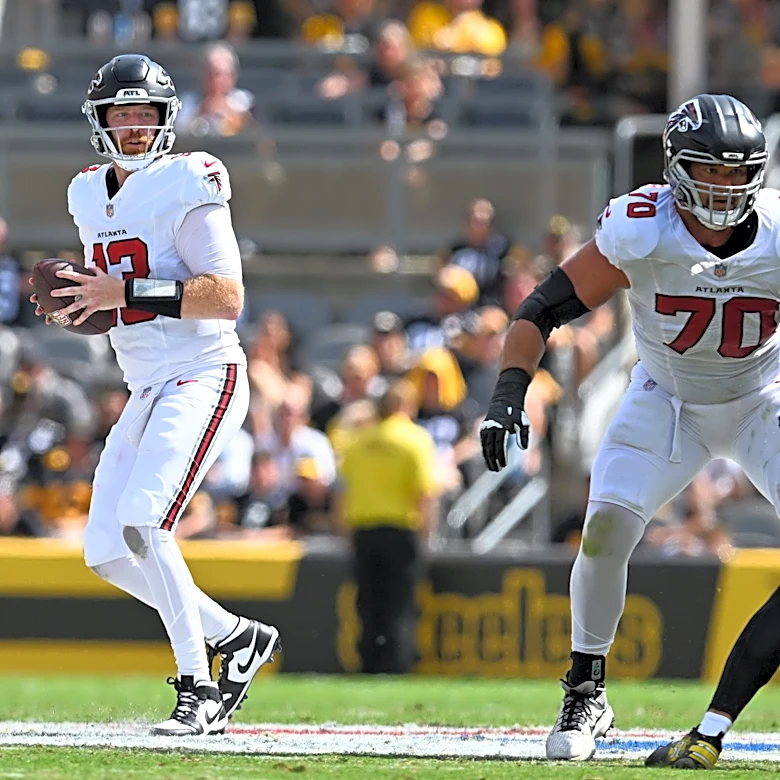
The problem became particularly noticeable during Buffalo's preseason opener against the Carolina Panthers on Aug. 15. On one play, a large chunk of grass was displaced when Bills quarterback Kyle Allen slid after scrambling.
Players and stadium workers had to push sections of sod back into place.
The field improved before Buffalo's preseason finale against the Pittsburgh Steelers and passed the NFL's safety and playability standards, but the Bills decided to replace it before the regular season.
"We're committed to having the best possible playing surface for our players," Bills president of business operations Pete Guelli said in a statement. "With a stretch of three consecutive home games early in the season, we decided it was the appropriate time to re-sod our field."
Where did the Bills' new grass come from?

The replacement grass also came from Tuckahoe Turf Farms in New Jersey.
The farm had approximately 80,000 square feet of Kentucky bluegrass available for the Bills to use for repairs and eventually a complete replacement of the playing surface. An NFL field covers about 57,600 square feet.
The Bills tested some of the stronger sod in the south end zone during the preseason finale against Pittsburgh. It held up during the game.
Aaron Ramella, the Bills' senior director of grounds, told The Buffalo News that the replacement sod was stronger than the original grass.
Guelli said the replacement field also has a deeper root system than the original, which should make for a healthier and sturdier playing surface.
Crews began removing the first field Aug. 31 and installed the replacement in early September, giving the new grass time to settle before the regular-season home opener.
The Bills held a walk-through on the replacement field Tuesday, their first time practicing on the new surface.
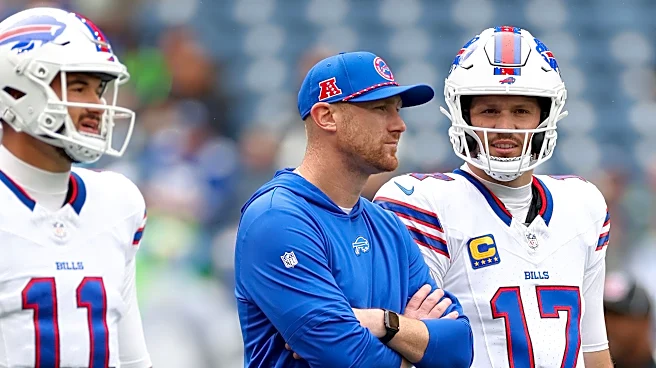
"The footing seemed better," Allen said. "More stable, more solid. Very happy and fortunate that our team, our ownership went out there and made it as good as possible and made the switch for us. We weren't moving full speed today, but it seemed really good."
The walk-through wasn't a full-speed test, but Bills coach Joe Brady said he had no concerns about the field entering Thursday night's game.
"There'll be no concerns come Thursday," Brady said. "And our guys are excited just to be on grass."
Is the field at new Highmark Stadium heated?

Yes.
The Bills installed an underground heating system beneath the natural-grass playing surface to help keep the field from freezing during Buffalo winters and create conditions that allow the grass to continue growing.
The system can regulate conditions beneath the playing surface, while irrigation, drainage and a sub-air system help manage water and moisture.
The Bills also can use grow lights to help maintain the grass when sunlight and temperatures become less favorable later in the season.
The problems with the original field weren't caused by cold temperatures or dying grass. The concern was that larger sections of the top layer of sod were separating when players hit the field at different angles.
"We didn't know leading up to Return of the Blue and Red," Ramella told The Buffalo News. "Nobody was on it. We're going off what we did at the practice fields and some past history."
Will the Bills replace the grass again this season?

Probably.
The Bills planned to replace the playing surface at least twice during the 2026 season even before problems developed with the original field. The first replacement simply came sooner than expected, Guelli said.
Replacing natural grass during a football season isn't unusual.
Ramella told The Buffalo News that the average lifespan of a grass surface at a football-centric facility such as Highmark Stadium is approximately seven events.
Buffalo has eight regular-season home games in 2026. Weather, usage and the condition of the field will determine when another replacement is necessary.
Even a healthy natural-grass field will produce imperfections.
"It's not a cure-all," Ramella said. "We're still going to have divots. It's a living grass field. We'll be better than where we're at now. There will be a random push or random divot. That's football. We're not playing on a rug anymore."
Is the new Bills stadium a dome?
No.
Highmark Stadium remains an open-air stadium.
The building has a large canopy covering approximately two-thirds of the seats, providing more protection from rain and snow than the Bills' old stadium.
The canopy does not extend over the playing field.
How many seats are in new Highmark Stadium?
The new Highmark Stadium has a capacity of 60,108 but can expand to about 63,000 for a football game with standing-room-only tickets.
That's smaller than the old stadium, which had a capacity of 71,608.
The new stadium was designed with more premium seating and amenities.
How much did new Highmark Stadium cost?
The new Highmark Stadium cost approximately $2.2 billion.
Construction began in 2023 on the site across Abbott Road from the Bills' former stadium in Orchard Park.
Where is the new Bills stadium?
The new Highmark Stadium is in Orchard Park, New York, directly across Abbott Road from the Bills' former home.
The new stadium was built on the opposite side of Abbott Road from the old Highmark Stadium. It was funded through a public-private partnership, with New York state contributing $600 million and Erie County adding $250 million. More than $260 million was raised through personal seat licenses sold to fans.
What happens to the old Highmark Stadium?
The Bills played their final season at the old Highmark Stadium in 2025.
Their former home is now being demolished piece by piece. The demolition is scheduled to be completed by March 2027.
This article originally appeared on Rochester Democrat and Chronicle: Is the Bills' new stadium grass or turf? Why they already replaced the field