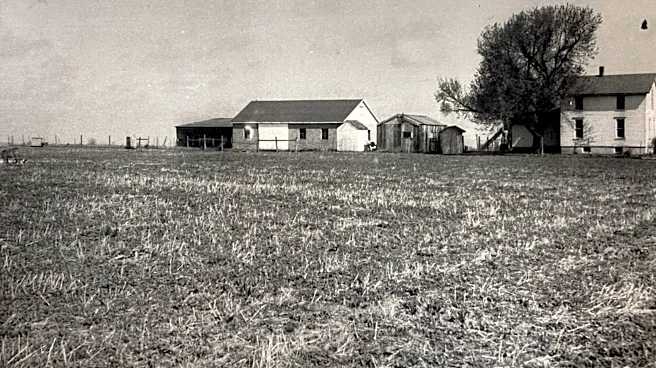

Details from the rich and impactful life of Fulton J. Sheen, who is to be beatified Sept. 24 in St. Louis:
May 8, 1895: The eldest of four brothers is born to Newton Morris Sheen and Delia Fulton Sheen in
El Paso, Illinois, and is baptized Peter John.
Circa 1900: His family moves to Peoria, Illinois, and enrolls him in St. Mary’s School, where, he wrote, his maternal grandfather said the boy's name was Fulton. Other sources say he changed his name himself.
1917: He receives his A.B. degree from the now-defunct St. Viator’s College and Seminary in Bourbonnais, Illinois, and his M.A. degree in 1919.
Sept. 20, 1919: He is ordained to the priesthood at St. Mary’s Cathedral in Peoria after completing his theological studies at St. Paul Seminary, St. Paul, Minnesota. He makes two resolutions: to “offer the Holy Eucharist every Saturday in honor of the Blessed Mother to solicit her protection on my priesthood” and to spend a Holy Hour – an hour of prayer - every day in the presence of the Blessed Sacrament.

June 16, 1920: He receives bachelor’s degrees in sacred theology and canon law from the Catholic University of America.
July 23, 1923: He receives his Ph.D. with greatest distinction from the University of Louvain in Belgium after writing a 186-page dissertation. He soon turns his dissertation into his first book, “God and Intelligence in Modern Philosophy in the Light of the Philosophy of St. Thomas Aquinas,” which is published in New York and London, with a foreword by G.K. Chesterton.

1925: Despite receiving several offers to teach at universities, Sheen is called back to his home diocese and serves for less than a year as a parish priest. He later wrote that the bishop was testing his ability to be obedient.
April 1926: Sheen is appointed to teach at Catholic University in Washington, D.C,1930-52: He is a frequent speaker on “The Catholic Hour” on NBC radio.
1934: Pope Pius XI names him a papal chamberlain with the title of monsignor. A year later, the pope names him a domestic prelate with the title right reverend monsignor.
Nov. 1, 1950: Sheen resigns from Catholic University and becomes national director of the Society for the Propagation of the Faith in New York City. For weekend retreats, he later buys a home in Yonkers, then one in Mount Pleasant.
June 11, 1951: Sheen is consecrated as bishop in the Church of Ss. John and Paul in Rome, and becomes auxiliary bishop of the Archdiocese of New York.

Feb. 12, 1952: his television show “Life is Worth Living” debuts on the Du Mont Network. It airs opposite NBC’s Milton Berle show on Tuesday nights, and Berle, known as “Uncle Miltie,” jokingly calls Sheen “Uncle Fultie.” Sheen wins an Emmy Award in 1953; in 1955, the show moves to ABC.

October 1955: Sheen gives two lectures at the Mission Scenarama, a missionary congress, at the seven-day-old War Memorial Auditorium in Rochester. Each attracts 10,000 people.
1958-1961: “The Best of Bishop Sheen” airs.
1961-1968: “The Fulton Sheen Program” airs.
October 1962-Dec. 5, 1965: Sheen participates in the Second Vatican Council.

Dec. 15, 1966: Sheen is installed as bishop of Rochester.
Oct. 6, 1969: Pope Paul VI names him an archbishop. His resignation as bishop of Rochester becomes official Oct. 16, and he later moves back to New York City.

July 1977: He undergoes open-heart surgery.
Dec. 9, 1979: He dies in his chapel in New York City, before the Blessed Sacrament. Starting in 2026, the Diocese of Peoria will celebrate Dec. 9 as Sheen's feast day.

Sources: "America's Bishop: The Life and Times of Fulton J. Sheen," by Thomas C. Reeves; "Fulton J. Sheen: An American Catholic Response to the Twentieth Century," by Kathleen L. Riley, Ph.D.; "Treasure in Clay" by Fulton J. Sheen; and celebratesheen.com, the website of the Archbishop Fulton J. Sheen Foundation.
This article originally appeared on Rochester Democrat and Chronicle: The remarkable life of Fulton Sheen from farm boy to archbishop