



AVON – Less than 40% of Section V member schools field their own varsity football team.
Merged programs dominate headlines. Small-school football resembles nothing of its former self.
Class D now features just five single-school teams. It will reach four when Red Jacket co-operates with Midlakes in 2027.
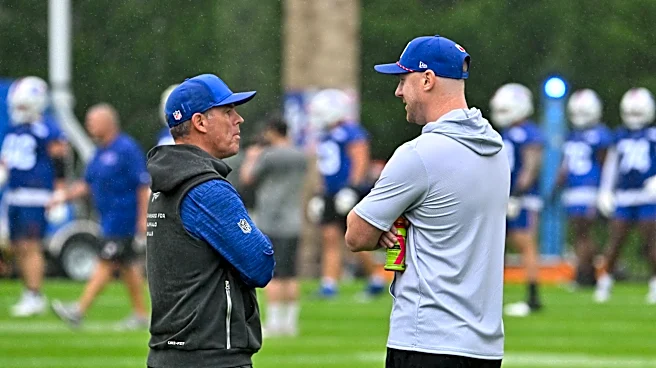
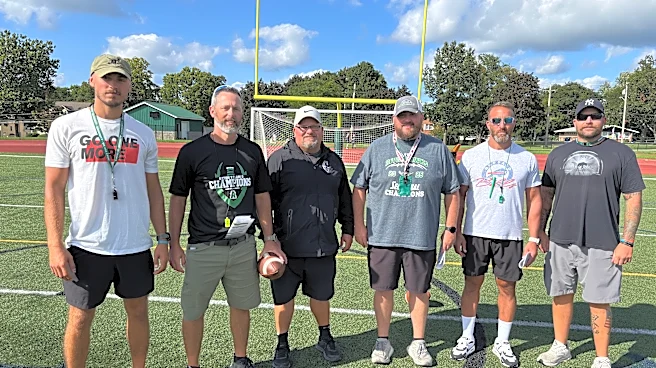
Andy Englert’s Avon staff watched everything change first-hand.
Their schedule once consisted of LeRoy, Caledonia-Mumford, Letchworth, Warsaw and Perry. Those five schools now form two teams.
Eight-man football once appeared to be the future. It now sits dormant within Section V.
Declining participation numbers have reshaped Section V football in recent years. Two or three-school teams are now commonplace, including what were once the area’s greatest
small school rivals.
But football still thrives in some rural pockets of Section V. These programs haven’t just preserved tradition – they’ve overcome a trend sweeping high schools across the United States.
What happens when numbers finally fall short? Will they be left out of the co-operative arms race, return to 8-man football, or add to the growing pile of teams whose names are hyphenated?
Answering that question could define football’s future in this region.
We’re still here
Canisteo-Greenwood graduates roughly 80 students each year. It still fields three levels of interscholastic football.
Clyde-Savannah holds court to the north. Attica, a Class B or C school in most sports, plays football in ‘D’ beside Avon and Red Jacket.
Twelve schools comprise the other six members of Class D. Twenty-four schools make 13 teams in Class C.

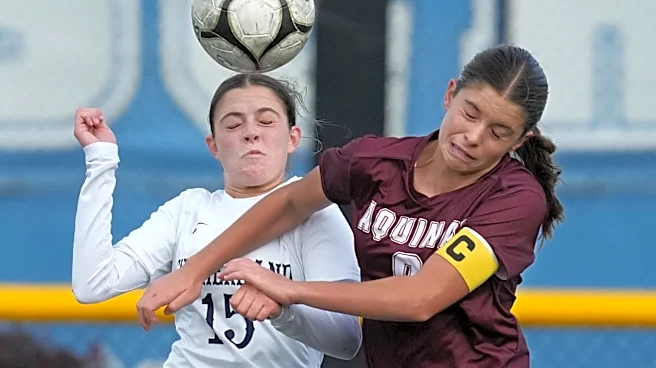
Even large schools have co-opted in Section V, such as Aquinas/RACS in AA. The list grows annually.
Others have resisted. Low numbers, Englert said, were a concern when he arrived at Avon in 1998.
Numbers remain limited at a school such as Avon, where graduation statistics rival Canisteo-Greenwood. But the Riverhawks have thrived under Englert, who this season relinquished head coaching duties to longtime offensive coordinator Justin Dueppengiesser.
“It’s the old-school mentality,” Englert said. “Let’s do it as long as we can just ourselves. We try to find guys who might not play other sports – come get involved with us.”
Numbers don’t lie. After three years of rebuilding, Avon is 154-81 with seven Section V championships since 2001, including Class D titles in 2024 and 2025.
“(Englert) talks to kids in the hallways and gets them excited about football,” said longtime Avon defensive coordinator Mike McGough. “It’s just as important when you have those down years that you don’t quit or look for an easy way out. We just had to stay the course and get the numbers back up to rebuild.”

Successful rebuilds brought Red Jacket and Canisteo-Greenwood back to 11-man football after detours into 8-man play. C-G even features a junior varsity team this fall.
“We want everyone to learn and love the game of football,” said Canisteo-Greenwood head coach Bill Drake. “But also have fun and learn to be better people in the game of life. That’s small-town football.”
Drake hails from Hornell, where – despite a current high school enrollment roughly 30% larger than C-G – the Raiders began a football co-op with Arkport/Canaseraga in 2024.
Predicting precisely when varsity numbers will fall short proves a difficult proposition. Red Jacket, therefore, acted while it could.
Strike while it’s hot

Red Jacket enjoyed two Section V titles in 8-man football. Increased numbers prompted the Cardinals’ return to 11-man play in 2025, a “huge success,” according to head coach Josh Henninger.
Why, then, co-op with rival Midlakes? This reunion began at youth and modified levels in 2026 and will unite the schools’ varsity programs in 2027.
“We are honestly just looking ahead at projected numbers,” Henninger said. “We want to be forward-thinking so that we’re not stuck and don’t have to scrap (football).”
Dwindling youth football participation and declining district populations present a twofold challenge. A 2024 study by Cornell University’s Jeb E. Brooks School of Public Policy projected that New York could experience a 13% population decline by 2050, with Finger Lakes and Southern Tier regions both seeing losses.
This reality has spurred most to act. Co-ops have saved many programs, but they’re not perfect.
“Anyone who thinks it’s as easy as adding 45 graduates at Oakfield-Alabama plus 30 graduates at Elba, it’s not that clean of a math equation,” said Oakfield-Alabama/Elba coach Tyler Winter, who doubles as Elba’s director of athletics. “I would love to be a presence in the O-A building but don’t have that luxury.”

Winter started his career at York/Pavilion, one of the area’s first football co-ops. Unlike OAE – which combined two storied football programs – that merger saw York absorb a non-football school.
Marcus Whitman did the same with Bloomfield in 2019 under Bruce Wagner, now the head coach at Midlakes. Community concerns, Wagner said, don’t outweigh the threat of dropping football.
“It’s people from days gone by who don’t want to lose (Midlakes’) Carolina blue and black,” Wagner said. “But the writing is on the wall – either you merge, or you lose your program. I can’t even explain how bad that would be for both of us.”
Like at Red Jacket, 8-man football helped OAE overcome early struggles. The Aggies won 8-man sectional titles in 2018 and 2019 before claiming Class D crowns in 2022 and 2023.
Five teams played in Section V’s most recent 8-man season (2024): Red Jacket, Bolivar-Richburg (now combined with Cuba-Rushford and Portville in Section VI), Holley (combined with Lyndonville), Pembroke (combined with Alexander) and Wellsville (combined with Genesee Valley/Belfast).
“I just hope that everyone involved is doing their best to preserve the game,” said Winter, also Section V’s football chairman. “Life for a teenage kid can be effortless because the whole world is at their fingertips. Whatever we can do to give kids the chance to play football the correct way, I support whatever that looks like.”
Where do we go now?
Dueppengiesser’s Avon tenure begins in a familiar spot.
He’s seen numbers fluctuate throughout his 17 years on staff. Standards, though, have not changed as the Riverhawks seek their first Section V three-peat this fall.
Englert, though no longer head coach, will continue recruiting Avon High School hallways as director of athletics. He'll confront that question if the day ever comes.

“Somebody will always want to dance with you,” Englert said. “If it gets to that point we’ll figure it out. Right now, we’re lucky to have just us.”
Community support, multi-sport athletes and program culture drive programs such as Avon. Things can change quickly, though.
Just ask Mynderse, which planned to play in Class D this season before low preseason numbers left it in a Class B co-op with Waterloo. Wilson/Early College, citing low numbers, won’t play a varsity season this fall.
“It’s going to come, at some point, for all the smaller schools,” Henninger said. “It’s an issue that each district will need to look at and evaluate themselves.”
Geography proves a challenge for schools such as Canisteo-Greenwood, one of just 13 districts in spacious Steuben County. Clyde-Savannah, the smallest Section V football school by enrollment, is one of three Wayne County programs still playing solo.
The future of small-school football in Section V remains unclear. For now, survival trumps all.
“It seems more districts are welcoming whatever gives kids the chance to play the most appropriate level of football they can,” Winter said. “If anything, it’s going to grow. Anyone still resistant to it might as well buckle up for the ride.”
Jeff Uveino joined the USA Today Network in 2023 and began covering Rochester-area high school sports in 2026. He is a graduate of St. Bonaventure University's Jandoli School of Communication and native of Perry. Contact him at juveino@usatodayco.com. Follow him on X @realjuveino and on Instagram @jeffusports.
This article originally appeared on Rochester Democrat and Chronicle: The clock may be ticking on small-school football in Section V | Exclusive