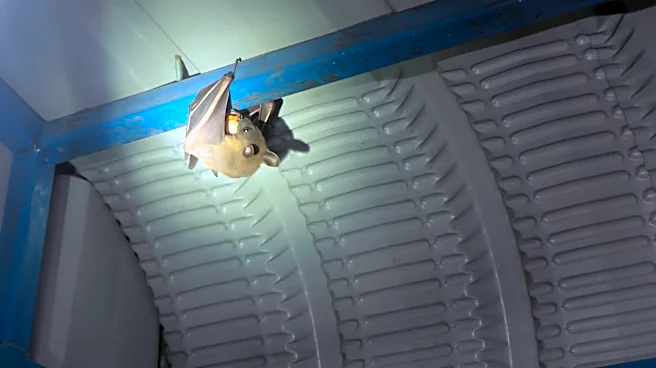









A bat flying through your home can be startling, but health experts say homeowners should stay calm, avoid direct contact and determine whether anyone or any pets may have been exposed to rabies.
Most bats are healthy and play an important role in controlling insect populations. However, bats are the animal most commonly associated with human rabies deaths in the United States. Bat bites can be tiny and difficult to detect, so any potential exposure should be taken seriously, according to the Centers for Disease Control and Prevention and the New York State Department of Health.
Who should you call?
If a bat gets inside your home, the CDC recommends contacting local animal control or your local health department, particularly if the bat may have come into contact with
a person or pet.
Do not release the bat before public health officials determine whether it should be tested for rabies.
If you suspect a bat colony is living in an attic, chimney or wall, you can also contact a licensed wildlife control professional. For concerns about possible rabies exposure, contact your local health department or health care provider.
When is a bat considered a rabies risk?

The New York State Department of Health recommends evaluating any possible contact between a bat and a person.
Extra caution is warranted if a bat is found in a room with a sleeping person, an unattended child, someone who is intoxicated or someone who cannot reliably determine whether contact occurred.
If you know you were bitten or scratched, immediately wash the area with soap and water and seek medical attention.
Rabies is nearly always fatal once symptoms develop, but post-exposure treatment is highly effective when given promptly after an exposure.
How can you safely get a bat out?
If no person or pet has had contact with the bat, wildlife experts recommend closing interior doors and opening an exterior door or window to give the bat a way outside.
Do not attempt to handle a bat with your bare hands.
If the bat needs to be captured for testing, contact animal control or another appropriate local authority for guidance. If you must handle a bat, use appropriate protective equipment and a container rather than touching it directly.
How can you keep bats from coming back?
The CDC says bats can enter through openings as small as one-quarter inch.
Homeowners can help keep bats out by sealing gaps around doors, windows, plumbing and utility lines, installing chimney caps and repairing damaged screens.
The bottom line
A bat inside your home does not necessarily mean someone has been exposed to rabies. However, any possible contact between a bat and a person or pet should be taken seriously. When in doubt, avoid touching the bat and contact your local health department or animal control for guidance.
This article originally appeared on Rochester Democrat and Chronicle: What to do if a bat gets in your house: Here's what experts say