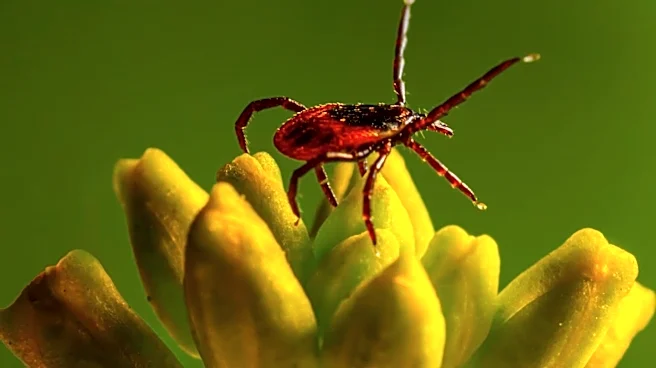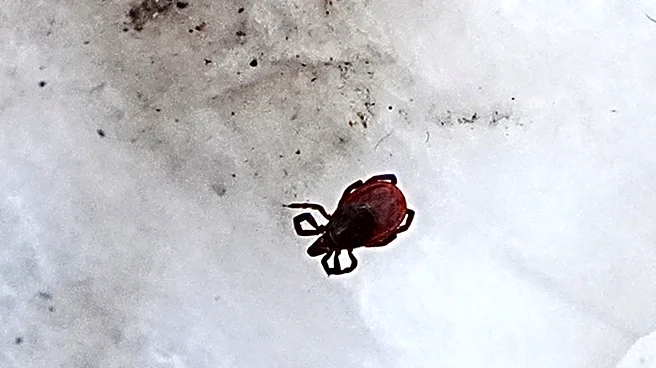







A year after Canandaigua City Council took on the issue of ticks and the prevalence of tick-borne illnesses in Ontario County, the numbers of cases remain on the rise.
Tick-borne illnesses have increased from 62 in 2017 to 337 in 2025, with the numbers trending 40% more this year to date than last, according to Matt Hanggi, communicable disease coordinator for Ontario County Public Health and member of a City Council ad-hoc committee. The committee is tasked with bringing the issue to the attention of residents and studying long-term strategies to reduce tick populations and exposure risks to residents.
“The problem is not going away,” Hanggi said during a presentation before Council's environmental committee on Aug. 10.
His statement is backed
by Rachel Ragosta, a member of the committee and emergency department physician’s assistant at F.F. Thompson Hospital in Canandaigua.
Ontario County is also seeing more cases of tick-borne illnesses such as anaplasmosis, alpha-gal syndrome, babesiosis, ehrlichiosis, Rocky Mountain Spotted fever, hard tick relapsing fever and Powassan encephalitis.
“We’re definitely seeing an uptick, and not just Lyme disease,” Ragosta said.
Awareness of the issue, however, appears to be increasing.

Building awareness of tick-borne illnesses in Ontario County
Members of the ad-hoc committee and Ontario County Public Health Department have been speaking about Lyme disease and other diseases carried by the ticks — 53% of which in Ontario County are infected with the disease, the highest rating in New York — to civic groups and local municipalities.
Awareness signs have been posted in heavily trafficked areas such as the Department of Motor Vehicles and Ontario County Clerk’s Office.
The Canandaigua Central School District also joined in on the effort, sending out a newsletter to parents with tips to prevent tick-borne disease and other information. A sign on the bridge leading to the Canandaigua Primary-Elementary School includes a QR code that enables the user to provide health officials with on-the-ground data such as where they are seeing ticks and where they may have been bitten.
Canandaigua City Councilmember Doug Merrill, who chairs the committee and whose efforts led to its formation, gets the general sense that the public is becoming more aware of the health threats posed by ticks.
“Our committee is receiving requests from several community groups to make presentations to their members, so the awareness and the interest in learning more is increasing, and that is encouraging and gratifying,” Merrill said. “Education will remain our primary objective throughout the three-year term of this committee.”
How to guard against ticks
The state Department of Health offers a variety of tips to keep in mind.
In tick-infested areas, whether on a trail in the woods or the garden in your backyard, the best protection is to avoid contact with soil, leaf litter and vegetation. For those who garden, hike, camp, hunt, work or otherwise spend time outside, there are ways of protection.
They include: Wear light-colored clothing with a tight weave to spot ticks easily. Wear enclosed shoes, long pants, and a long-sleeved shirt. Tuck pant legs into socks or boots and shirt into pants. Check clothes and any exposed skin frequently for ticks while outdoors.
Consider using insect repellent with DEET.
Stay on cleared, well-traveled trails. Walk in the center of trails. Avoid dense woods and bushy areas. Avoid sitting directly on the ground, on fallen logs or on stone walls.
Keep long hair tied back, especially when gardening. Bathe or shower as soon as possible after going indoors (preferably within two hours) to wash off and more easily find ticks that may be on you.
Do a final, full-body tick check at the end of the day (also check children and pets) and remove ticks promptly.
Are Ontario County residents heeding the message about ticks?
The guidance is helpful if followed. Researchers have discovered that people in Ontario County will protect their pets, Hanggi said.
“It’s no surprise,” Hanggi said. “Many of us protect our animals much better than we do ourselves.”
The numbers suggest that many people are not taking the precautions needed to fully protect themselves.
Some of this relates to the continuing notion that they will encounter ticks only when they are hiking in the woods, so routine activities in their own yards are not thought to be dangerous, Merrill said.
“We need to do a better job of making the connection between ticks and the large urban deer population,” Merrill said. “If they are seeing deer in their yards on a regular basis, they are at an increased risk of being bitten by a tick and they need to take precautions.”
What to do if bitten by a tick?
Members of the committee who work in the healthcare field offer tips on what to do if bitten by a tick. Most at risk are the elderly and kids ages 5 to 9, because they tend to be outdoors more often.
Most important, said Ragosta, remove the tick at home, preferably with fine tweezers, and don't wait. Then wash the area with alcohol or soap and water.
Symptoms of an infection may manifest themselves in three to 30 days.
A circular rash is seen in about 70% of patients, Agosto said. Flu-like symptoms such as headaches, new fatigue, swelling of a joint and body aches also may be present.
If possible, be prepared to share information with a clinician, such as the time of day when the person was bitten, where on the body and where in the region the person was bitten, and when it was removed. Take a picture of it and place the tick in a plastic bag for study.
When should a person seek immediate medical attention?
If the person is experiencing chest pain, shortness of breath, mouth and/or tongue swelling, difficulty breathing, new neurological symptoms and headaches, Ragosta said.
“Headaches unlike you’ve had before,” Ragosta said.
The information is especially pertinent now.
Tick season in Ontario County
The Finger Lakes region is nearing the end of prime tick season, which lasts from May to August.
But, with warmer winters and more thaws, Ontario County is seeing cases earlier in the season and at the end of the year. While ticks are small, especially the younger ones, they can still do damage because they may be missed. Adult ticks are easier to see on human bodies in the fall.
Portions of Ontario County have the highest densities of white-tail deer, which host ticks as do mice, chipmunks and squirrels, in the state.
“Ticks are active all year long,” Hanggi said.
As is the committee.
Presentations to community groups will continue throughout the county, Merrill said. So will encouraging tick education in Canandaigua schools and outside the school district.
The committee also will continue to identify tick hotspots so that warning signs can be place strategically. Its collaboration with Finger Lakes Community College in collecting ticks and attempting to identify the various infectious agents they carry may be expanded.
"The more we know about these ticks, the better we will be at protecting our residents," Merrill said.
Mike Murphy covers Canandaigua and other communities in Ontario County and writes the Eat, Drink and Be Murphy food and drink column. He can be reached at mmurphy@messengerpostmedia.com. Follow him on X at @MPN_MikeMurphy.
This article originally appeared on Rochester Democrat and Chronicle: Tick-borne illnesses are surging in Ontario County. What residents should know