






Before her third jail sentence in 1998, Samone Thomas-Parson was so certain addiction would kill her that she handed strangers her mother's phone number and address.
While in the Monroe County Jail on drug possession charges, Thomas-Parson made a deal with God. If He took away her craving for cocaine and other drugs, she would spend the rest of her life helping others free themselves.
This summer, that promise reached another milestone as she hit her 28th year of sobriety. And Thomas-Parson continues to help others, partly in the same Rochester neighborhood where she lived when she was younger.
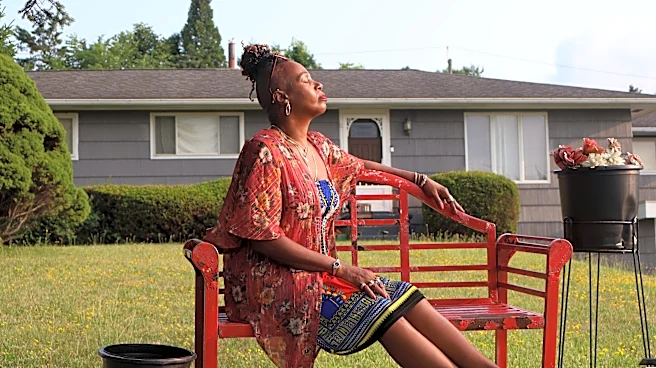
When you see her out talking to people in the area, greeting folks and learning about them, her hoop earrings glow in the afternoon sunlight and her exuberant
smile fits her current existence: she’s lived through crushing hardship and remains grateful for each day ahead.
Thomas-Parson, 56, works as a licensed practical nurse and helps others through the Recovery Houses of Rochester, managing a rehabilitation house in Bull's Head. As we examined some of the factors influencing neighborhoods like Bull's Head this summer, she stood out for her service, her personal story and how her arc matches some of the ways Rochester continues to change.

Residents have watched plans for Bull's Head come and go over the years, often with less visible change than promised. The area lost much of the commercial activity that once defined it, leaving vacant properties and underused lots along a gateway into Rochester from the west.
Policymakers now are directing millions of dollars to rebuilding the area's physical infrastructure in hopes that economic activity will follow. City leaders say the investment will create conditions for new development. Whether residents ultimately see those benefits may take years to determine.
Amid the struggles still playing out on the streets in people's daily lives, the recovery house where she works is tucked into a peaceful spot. A grassy and wooded lawn offers an inviting vegetable garden and some exercise equipment. The bus stops nearby. Residents work daily to rebuild themselves.
People who live in the house talked about their gratitude for the place, their focus on staying on track and how Bull's Head has changed and not changed.
Thomas-Parson can relate to them, since addiction once was a major part of her own life. Now, in 2026, the biggest personal challenge she faces is figuring out who she wants to be in the years ahead. She’s raised seven children with her ex-husband, and the kids have all made lives for themselves.


On any given day, she might be driving her uncle around in her 2013 Dodge Durango, drawing portraits of people she admires or reading about influential Black historical figures.
Other times, Samone might be found in her Pittsford home, reflecting on family memories, flipping through photographs that document both her family's journey and her own.
“What are you going to do, Samone?” she will ask herself. “What do you want for yourself now?”
The questions come after decades spent focusing on her recovery, building her career and raising her children in a safe environment.
Thomas-Parson moved her family from Camden, New Jersey, to Rochester in 1991. She was searching for a fresh start for herself, her children and uncle, Tyrone Thomas. He was also battling drug addiction at the time.

"A lot of it was, ‘take off this mask, put on this mask,’” Thomas-Parson said. “But when you take off the mask for those few seconds that you're changing masks, there you are.”
She said her addiction stemmed from trauma she experienced as a child, including being molested. The abuse she experienced as a child ultimately pushed her from home at age 13. She used cocaine for the first time when she was 17. She continued using it until she was 28. "I didn't have anything to soften the blow of life," she said.
Her addiction led to homelessness, unstable relationships and multiple jail stays, including what would become her final stint in jail in 1998.

After her release, Thomas-Parson committed herself to recovery through Narcotics Anonymous and a local halfway house. Narcotics Anonymous consists of other former and current addicts who would meet across Rochester and discuss their urges, learning more about one another in the process of recovering.
She credits a mentor, Judy Simser, who steered her toward change.
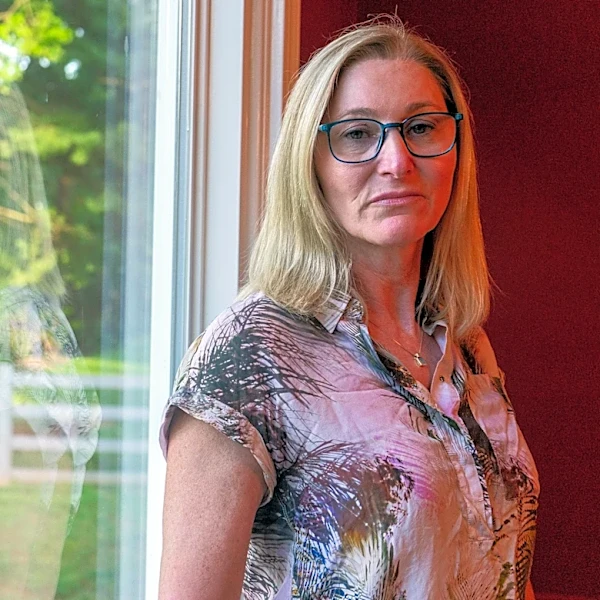
Simser, 77, founded the Pearl House, also known as the Pearl Nursing Center, after she lost her son to drug addiction.
They both recall their first interaction. Thomas-Parson knocks three times on the door with bruises on her body and a gash on her head. She asks for help, but doesn't want it immediately. Simser gets direct with her.
"She said, 'How about now?'" Thomas-Parson said.

Simser told her not to return for clothes because she may never make it back. The house provided all clothing, supplies and necessities she needed to begin her journey. The challenge forced her to make an immediate decision.
"I heard, 'Choose you this day who you're going to serve. Do you want to live or do you want to die?'" she said.
The halfway house required residents to attend daily recovery meetings, complete chores, cook meals and participate in outpatient treatment before reconnecting with their families. These daily activities were intended to help residents transition back to daily life, replacing habits they had developed while living on the streets.
During her addiction, there were times when others cared for her while she struggled with substance use and incarceration. She spoke openly about those years.

"I said I wanted to have a clean baby, not that I wanted to be clean," Thomas-Parson said while reflecting on one period of sobriety that happened during pregnancy.
When she could regain custody of her daughter, she said her focus was not simply bringing her child home. It was to better herself for her family. "I didn't rush to get her back," she said. "I just wanted to bring a whole mother to her instead of a half-behind mother."
Thomas-Parson shared her testimony in August at a Narcotics Anonymous meeting and mentioned the point when her perspective changed.
Participants passed around a coin, holding it as stories were shared. Once everyone prayed for Samone, she began her testimony.
One of her daughters expressed her frustrations with her past, without sugarcoating. Thomas-Parson had a similar experience with her own mother, who she said struggled to acknowledge, or accept, the abuse Thomas-Parson experienced.
During her addiction, she recognized that her children became the ones left behind. It was a sad full-circle moment. “I had to look" at the situation, she said. "I then had to turn the rearview mirror and look at me.”

Her daughter, Eratykah, said that decision shaped her childhood, as she came back with Samone when she was 2 years old. Eratykah now has a 1-year-old son, Sherod.
"Hearing her say she wanted to be a whole mother meant her being fully present and showing up for me," Eratykah said. "She had been through so much trauma in her life, and she didn't want to bring that lifestyle on me."
Today, Thomas-Parson points to her children's accomplishments as one of the clearest indicators of how far her family has come. Among her children are police officers, firefighters, educators and other professionals who serve the Rochester community. She said none have struggled with drug or alcohol addiction because she brought her children to her Narcotics Anonymous meetings, where the children could hear other people’s life stories.
"I told them to be cautious of what you like," she said. "Anything you like could be something that could be addictive."
Eratykah said she and Samone's other children still recall going to the meetings with their mother. At the time, it felt regular to her, but she grew up to know she was witnessing community around her.
"I can remember the room always smelling like coffee," she said. "Loud laughter and big voices filled up the room."
While rebuilding her family life, Thomas-Parson also rebuilt her career. She became a certified nursing assistant, later worked as a licensed practical nurse and eventually earned a bachelor's in nursing from Nazareth College.
Now she hopes to continue her education in mental health, an area she said connects directly to her experiences with addiction and trauma. "If I don't get that taken care of, I'm always going to want that way to run away," she said, reflecting on lessons learned through counseling and recovery.
Simser and Thomas-Parson come across people with diverse backgrounds and living situations that bring them to ask for help. The Pearl House had an 80% success rate, Simser said, but it is because they treat every person and situation differently, including Samone's.
"Every single person was an individual, and there was something different about every single one of them," Simser said. "We're all different. There's similarities, but if I started to categorize them, then I'm not serving the person in front of me."
That perspective is very important to Thomas-Parson now as she helps family members facing similar struggles.
"When I look at a homeless person, I could still see the human being inside them," she said. "It's really a man or a woman inside that body."

Recently, Thomas-Parson has been helping her 70-year-old uncle, who spent decades in addiction and homelessness in New Jersey. She helped arrange for him to come to Rochester after a period of treatment and recovery.
At nearly any point in any given week, Thomas-Parson is taking care of him, whether buying groceries, cooking, running errands or helping him get around.
Samone's presence extends beyond family. She moves easily from conversation to conversation, greeting neighbors, friends and strangers alike with the same compassion.

Simser said Thomas-Parson's faith, developed during recovery, continues to shape how she treats others.
She is that same person for her uncle that Simser was for her at one point. Amid it all, she doesn’t harp on the endless possibilities about if things didn’t work out, she just says one thing: “Thank you, God.”
Although addiction remains part of her story, Thomas-Parson said her recovery today looks different than it did in 1998.
Her children are adults. Several have jobs and families of their own, while her daughter is preparing to move back home temporarily because of rising housing costs.
Meanwhile, Thomas-Parson has begun re-examining relationships within her own family and setting boundaries she once avoided. Part of that process has included distancing herself from some relatives while maintaining forgiveness. She said she has spent the past few years learning that caring for herself does not mean abandoning or loving her family any less than before.

One lesson continues to guide her nearly three decades after she left jail. In Narcotics Anonymous, a phrase is often repeated: "Unaddressed issues will address you at some point."
After achieving 28 years of sobriety, Thomas-Parson said the statement still rings true. The drugs are gone, but the work of understanding herself continues.
"I've lived a few lives in 56 years," she said. "And every one of them taught me something."
The promise she made in a Monroe County jail cell became her career, calling and part of her legacy all in one.
This article originally appeared on Rochester Democrat and Chronicle: She thought addiction would kill her. Then she made a promise