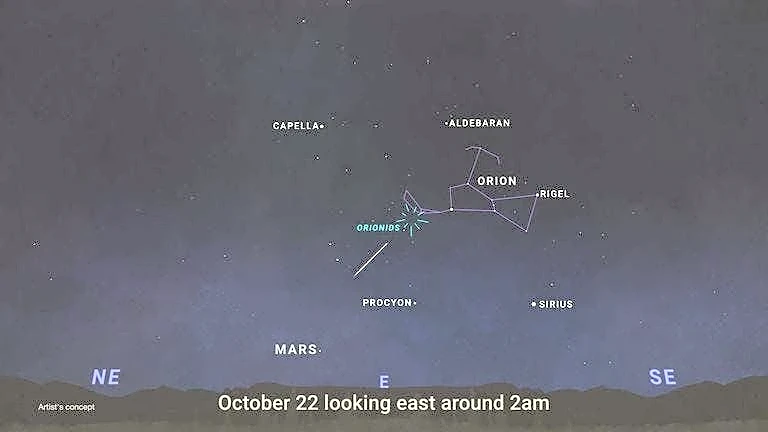









Astronomy enthusiasts can look forward to the annual Orionid meteor shower, which is expected to peak overnight Wednesday, Oct. 21, into Thursday, Oct. 22.
The fall meteor shower is caused by debris left behind by Halley's comet. The American Meteor Society says Orionids are known for their speed, producing meteors that travel through Earth's atmosphere at about 148,000 mph.
Those fast-moving meteors can leave glowing trails across the sky and occasionally produce especially bright fireballs.
Here's when and where to watch the Orionid meteor shower in New York, along with what to know about viewing conditions.
When will the Orionid meteor shower peak in New York?
The Orionid meteor shower became active Oct. 2 and is expected to remain active through at least Nov. 7, according to the American Meteor
Society.
The shower is expected to peak overnight Wednesday, Oct. 21, into Thursday, Oct. 22. In New York, the Orionid radiant, the point in the sky from which the meteors appear to originate, rises above the horizon around 10:16 p.m. Oct. 21, according to TimeandDate.com.
Sunrise across New York is expected shortly after 7 a.m. Oct. 22, ending the best opportunity for viewing before daylight.
On average, the Orionids produce about 10 to 20 meteors per hour under favorable viewing conditions, according to NASA. The meteors travel at about 41 miles per second.
For more specific viewing times based on your location, enter your ZIP code on TimeandDate.com's meteor shower page.
How to get the best views of the Orionid meteor shower in New York
For the best chance of seeing the Orionids, find a dark location away from streetlights and other sources of light pollution. Give your eyes about 20 to 30 minutes to adjust to the darkness, and avoid looking at your phone if possible.
The meteors can appear across much of the sky, so you do not need to look directly at the Orion constellation. Although the radiant rises in the east, viewing opportunities generally improve as it climbs higher in the sky.
The best viewing window is typically after midnight and before dawn, when the radiant is higher above the horizon.
Weather conditions also will affect visibility. The National Weather Service forecast for New York City calls for partly cloudy conditions overnight Wednesday, with temperatures dropping to around 45 degrees. Conditions may vary significantly elsewhere across the state, so skywatchers should check local forecasts before heading out.
The moon also could make viewing more difficult. The American Meteor Society says the moon will be about 77% illuminated and in a waxing gibbous phase during the Orionids' peak on Oct. 21-22. Its brightness may wash out some of the fainter meteors, though brighter meteors and occasional fireballs should still be visible under favorable viewing conditions.
What other meteor showers are happening in 2026?
Several other meteor showers are expected to peak before the end of the year. According to the American Meteor Society's meteor shower calendar, upcoming showers include:
- Southern Taurids: Active Sept. 20-Nov. 20; peak around Oct. 14.
- Northern Taurids: Active Oct. 20-Dec. 10; peak around Nov. 11-12.
- Leonids: Active Nov. 6-30; peak around Nov. 17-18.
- Geminids: Active Dec. 4-17; peak around Dec. 13-14.
- Ursids: Active Dec. 17-26; peak around Dec. 22-23.
The Geminids are another major annual meteor shower to watch for in December, while the Leonids offer another opportunity to catch shooting stars in November.
This article originally appeared on Rochester Democrat and Chronicle: See the Orionid meteor shower peak over New York this week: Best viewing times