



Students at an Orange County community college have discovered more remains of a mastodon during an excavation that began in a New York backyard.
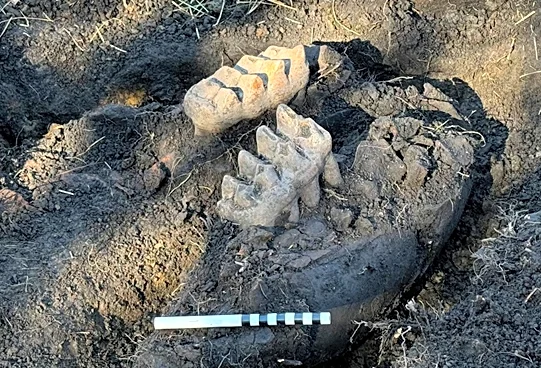
SUNY Orange researchers announced Oct. 5 that students and visiting archaeologists uncovered about 11 ribs, at least three additional vertebrae and bones from the animal’s feet. The remains were found at a site near Middletown where a resident discovered mastodon teeth in 2024.
Favorable weather conditions this summer allowed students in the college’s Archaeological Field Experience class to spend more time excavating. Additional lab days gave students time to sort and catalog their findings.
According to the National Park Service, American mastodons were prehistoric relatives of modern elephants that
lived across North America. SUNY Orange said the region was home to mastodons and some of its earliest human inhabitants thousands of years ago.
SUNY Orange plans to recruit student volunteers during the 2026-27 academic year to help clean and conserve some of the remains recovered during the summer excavation.
“This has become an incredible learning opportunity for our students,” said Dr. Cory Harris, chair of SUNY Orange’s Behavioral Sciences Department and a professor of anthropology and sociology. “We are excited to have them play a role in preserving and studying these remarkable pieces as we continue to learn more about this mastodon and the site where it was found.”
When were the mastodon remains first discovered?
The excavation began in fall 2024, when an Orange County resident found unusual objects in the backyard of a home near Middletown and brought them to SUNY Orange for identification.
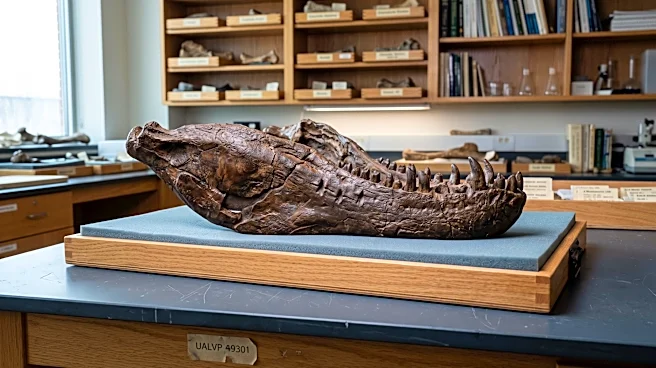
College researchers identified two of the objects as mastodon teeth and connected the family with the New York State Museum. An excavation followed, uncovering a complete mastodon jaw and additional skeletal remains.
The 2024 discovery was not the first mastodon find in Orange County. In 1972, a nearly complete mastodon skeleton was discovered near the Warwick-Chester border.
Known as “Sugar,” the male mastodon’s skeleton is now housed on SUNY Orange’s Middletown campus. The fossil, dated to about 7,910 B.C., stands nearly 9 feet tall and measures about 20 feet long. It also has an unusual tusk in its lower jaw.
Mastodon fossils have a long history in New York. The state’s first skeletal remains of the species were recovered in a discovery documented here.
This article originally appeared on Rochester Democrat and Chronicle: Students uncover more mastodon bones in NY backyard. See what they found