




New York Gov. Kathy Hochul declared a state disaster emergency Monday in response to a growing measles outbreak across rural areas of New York and neighboring states.
As of Saturday, Oct. 3, New York had 108 confirmed measles cases this year, including 101 outside New York City and seven in the city, according to the New York State Department of Health.
New York expands vaccine access
Hochul's executive order expands the pool of health professionals who can administer measles vaccines to include paramedics, advanced EMS providers, pharmacists and midwives.
The order also allows nurses, in addition to physicians, to order measles testing. The measures are intended to help the state respond more quickly to the outbreak and increase access to vaccination and testing.
"After reviewing
the latest data on measles cases in New York State, I am declaring a State Disaster Emergency to strengthen our ongoing efforts to confront this disease," Hochul said. "No one should get seriously ill or die from a vaccine-preventable disease."
92 cases reported since July
Since July 15, 92 measles cases have been reported among under-immunized rural communities in 18 counties, according to the state.
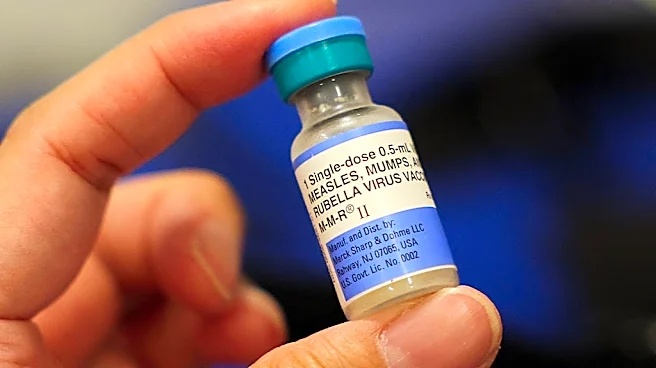
Local health departments have administered more than 1,000 doses of the measles, mumps and rubella vaccine across rural areas of New York since then.
The state has also launched a Measles Dashboard to allow the public and health officials to track cases and local health risks.
What to know about measles
Measles is a highly contagious respiratory disease. Serious complications can include pneumonia, hospitalization, brain swelling and death. Unvaccinated people, pregnant people, children younger than 12 months and people with compromised immune systems are at the greatest risk.
Measles is caused by a virus that spreads through the air when an infected person coughs or sneezes. People can also become infected by touching a contaminated surface and then touching their eyes, nose or mouth, although this is less common.
People who are unvaccinated or have recently been exposed to someone with measles should watch for symptoms including:
- High fever
- Rash
- Runny nose
- Cough
- Red eyes
Anyone who develops symptoms should contact their health care provider or local health department.
People experiencing symptoms who need medical care should call the facility before arriving so appropriate precautions can be taken.
State health officials urge New Yorkers to check their vaccination status and make sure they are up to date on their MMR vaccines.
This article originally appeared on Rochester Democrat and Chronicle: Hochul declares measles emergency in New York as cases top 100